显示标签为“sunflower oil”的博文。显示所有博文

Is Sunflower Oil Healthy?


Choosing healthier sources of fat can lower your risk for heart disease, and sunflower oil may help. Most of the fat in sunflower oil is unsaturated, and this oil is a nutrient-dense food, according to the 2010 Dietary Guidelines from the U.S. Department of Health and Human Services. In moderation, sunflower oil may provide certain health benefits as part of an overall balanced diet.


Linoleic Acid


Each 1 tablespoon serving of sunflower oil has 8.9 grams of linoleic acid, which is an omega-six polyunsaturated fatty acid that is an essential part of a healthy diet, according to the Linus Pauling Institute. You need at least 11 to 14 grams per day, but most people get too many omega-six fatty acids compared to an even healthier category of fatty acids called the omega-threes. The University of Michigan suggests lowering your intake of corn, cottonseed, soybean, safflower and sunflower oils in order to improve your ratio. Omega-three fatty acids are found in seafood, flaxseeds, walnuts and canola oil.


Calories and Fat


Sunflower oil provides 124 calories and 14 grams of fat per 1 tablespoons serving. About two-thirds of Americans are overweight or obese, and obesity increases your risk for chronic diseases such as heart disease and diabetes. However, a moderate amount of fat in your diet -- such as 20 to 35 percent of your calories from fat, or 44 to 78 grams fat per day on a 2,000-calorie diet -- can help you maintain a healthy weight while getting the nutrients you need, according to the 2010 Dietary Guidelines from the U.S. Department of Health and Human Services. In moderation, sunflower oil is a healthy fat that can help you achieve this range.


Vitamin E


A benefit of sunflower oil is that each 1 tbsp. serving provides 5.6 milligrams of alpha-tocopherol, a form of vitamin E that acts as an antioxidant in your body, according to the Linus Pauling Institute. Sunflower oil has more vitamin E than other good sources, such as most nuts, peanuts and olive, soybean, corn and canola oil. Consuming a good amount of vitamin E may strengthen your immune system and lower your risk for heart disease.


Other Information


Sunflower oil is low in saturated fatty acids, which are unhealthy because they raise your cholesterol levels. It is cholesterol-free and sodium-free, and it makes a healthy substitute for salted butter, which is high in saturated fat, cholesterol and sodium. Sunflower oil is also naturally free from trans fats, but it can contain trans fats if you eat processed, partially hydrogenated oil as an ingredient in packaged foods, such as snack crackers or cakes.



Bad Effects of Sunflower Oil


Sunflower oil can be a useful cooking oil, as it has a high smoke point. This means you can use it even at the high temperatures necessary for browning or searing foods without it producing harmful compounds. Consuming large amounts of sunflower oil may have some less desirable effects, however, so use it in moderation.


Saturated Fat Content


Sunflower oil contains 14 percent saturated fat. While it isn't one of the oils highest in saturated fat, other oils, including almond, walnut, flaxseed, hazelnut and canola oils, are lower in saturated fat. Saturated fat is one of the less healthy types of fat because it can raise your cholesterol and your risk of heart disease.


Omega-6 Content


Polyunsaturated fats, which consist of omega-3 and omega-6 fats, are healthier choices than saturated fats. Most Americans, however, get way more omega-6 fats in their diet than omega-3 fats. Having a high omega-6 to omega-3 ratio may increase your risk of certain chronic diseases, including arthritis, asthma, cancer and heart disease, according to an article published in Experimental Biology and Medicine in June 2008. Sunflower oil contains 7 percent polyunsaturated fats, all of which consist of omega-6 fats. If you use sunflower oil, make sure to eat plenty of omega-3-rich foods as well, such as seafood, flax and walnuts.


Calorie Content


As with any food, get too much sunflower oil in your diet and you could set yourself up for weight gain. Like other fats, sunflower oil contains 9 calories per gram, meaning each tablespoon has 124 calories. Although sunflower oil contains mostly healthy monounsaturated fats, you'll still want to use it in moderation, keeping your total fat intake to no more than 35 percent of calories and your saturated fat intake to no more than 10 percent of calories each day.


Best Type of Sunflower Oil


Avoid hydrogenated or partially hydrogenated sunflower oils, as these contain the least healthy type of fat -- trans fats. Trans fats increase your risk of cancer, heart disease and other health problems. You should look for high-oleic versions of sunflower oil instead, as these contain more of the heart-healthy monounsaturated fats.


sunflower process

Preparation

The first step in processing sunflower is to properly prepare the seed for oil removal. The seed is cleaned using magnets to remove metal and screening to remove impurities that can interfere with the process. The seed can be dehulled by cracking and removing the shell or can be sent to pressing with the shell still intact. Prior to mechanical pressing, the seed is heated and dried. Mechanical pressing removes approximately half to three quarters of the oil prior to solvent extraction.

Extraction

The seed is mechanically pressed (pre-pressed) to extract approximately half to three quarters of the available oil so that the solvent extraction can be run more efficiently. This is typical for seeds containing more than 20% oil. The solvent extraction process uses hexane or other solvents to wash the sunflower oil from the prepared flakes. The design of the equipment varies so that Crown can optimize the amount of solvent and bed depth needed to efficiently wash the flakes, the contact time of the solvent and flakes and the power and utilities needed to run the equipment. Sunflower is processed with the Model III Extractor.

Desolventizing

Once the oil has been removed by the solvent, the solvent must be removed from both the flakes and the sunflower oil. Heat and steam are used to strip and recover the residual solvent from the flakes. A distillation system is used to recover the solvent from the sunflower oil. The desolventized flakes are then a product and ready for sale as a good source of protein. The sunflower oil can be further refined from a crude product to an edible product.

Oil Refining and Processing

Extracted and desolventized sunflower oil must be further processed to make an edible product. Edible oils are refined to improve the flavor, odor, color and stability using processes that degum, neutralize, bleach and deodorize the oil. These refining processes remove contaminants such as phosphatides, free fatty acids and pro-oxidants.

Further processing of oils and fats is sometimes desired. Some oils are winterized or dewaxed and some are modified to change melting characteristics. Byproducts may be further processed to create value-added products or reduce costs.

Biodiesel

Biodiesel is a renewable fuel derived from fats and oils. Although any source of fat can be used, sunflower is one of the oils used in this industry.

Oleochemicals

There is a significant number of oleochemicals made from the byproducts of sunflower oil processing. Whether it’s glycerin from a biodiesel plant or fatty acids from a fat hydrolysis plant, Crown offers many different processes to add value to these fat byproducts.

Nutritional value of sunflower oil

Sunflower oil is a healthy edible oil known for its high content of linoleic acid. According to Professor Cao Wanxin of Xi'an Research Institute of Oil Research and Design of the National Grain Reserve Bureau, in the 21st century, cardiovascular and cerebrovascular diseases such as coronary heart disease, stroke, cerebral thrombosis, arteriosclerosis, hypertension and other diseases have increased, and long-term consumption of suitable oil products can There is a big improvement in the above symptoms. Sunflower oil is an excellent type of healthy oil. Sunflower oil has become the oil of choice for consumers and chefs. The world's consumption of sunflower oil ranks third among all vegetable oils.

Sunflower oil contains a variety of beneficial substances for humans such as sterols, vitamins, linoleic acid, etc. Among them, natural vitamin E content is the highest in all major vegetable oils; and linoleic acid content can reach about 70%. Sunflower oil can lower serum cholesterol levels, lower triglyceride levels, and lower blood pressure. Moreover, sunflower oil is light and transparent, and can preserve the flavor of natural food when cooking. Its smoke point is also high, which can eliminate the harm of oil smoke to the human body.

The refined sunflower oil is bright yellow or blue-yellow, with a fragrant smell and pure taste. The composition of fatty acids in sunflower oil is affected by climatic conditions. The sunflower oil produced in cold regions contains about 15% oleic acid and about 70% linoleic acid. The sunflower oil produced in warm regions contains about 65% oleic acid and linoleic acid 20 %about. The human digestibility of sunflower oil is 96.5%. It is rich in linoleic acid, which has a significant effect on lowering cholesterol, preventing hardening of the arteries and preventing coronary heart disease. In addition, the most physiologically active a tocopherol in sunflower oil is higher than normal vegetable oil. Moreover, the ratio of linoleic acid content to vitamin E content is relatively balanced, which is convenient for human body to absorb and utilize. Therefore, sunflower oil is an excellent edible oil with high nutritional value and good for human health.

90% of sunflower oil is unsaturated fatty acid, of which linoleic acid accounts for about 66%. It also contains vitamin E, phytosterols, phospholipids, carotene and other nutrients.

Sunflower oil also contains more vitamin E, which contains about 100-120 mg per 100 grams. It has a good function of delaying the aging of the human body cells and maintaining youthfulness. Regular consumption can play a role in strengthening the body and prolonging life.

Sunflower oil also contains more vitamin B3, which is effective in treating mental illness such as neurasthenia and depression. It contains a certain amount of protein and inorganic substances such as potassium, phosphorus, iron, magnesium, etc., which are effective for the treatment of diabetes and iron deficiency anemia, and are of great significance for promoting the healthy growth of bones and teeth of adolescents. It contains linoleic acid, which is an essential fatty acid, which helps the body's development and physiological regulation, and also has a positive effect on preventing dry skin and scaling.

The linoleic acid contained in sunflower oil is an essential fatty acid. It constitutes the basic component of various cells and has the functions of regulating metabolism, maintaining blood pressure balance, and lowering blood cholesterol.

Sunflower oil contains traces of plant alcohols and phospholipids, which prevent elevated serum cholesterol.

Sunflower oil is rich in carotene, which is more than peanut oil, sesame oil and soybean oil. Therefore, it can lower the concentration of serum cholesterol, prevent the occurrence of arteriosclerosis and vascular disease, and is very suitable for patients with hypertension and middle-aged and elderly people.

Sunflower oil also contains nutrients such as glucose and sucrose, and its calorific value is higher than soybean oil, peanut oil, sesame oil, corn oil, etc., which can produce 9.499 calories per gram. Its melting point is also low, suitable for absorption by the human body, the absorption rate can reach more than 98%. In addition, it is slightly heated and has a strong aroma. It is the best edible oil in addition to sesame oil.

Because sunflower oil is rich in nutrients and has many health functions for the human body, it is known as “advanced nutrient oil” and has been popular in the international market in recent years.

What Is Sunflower Lecithin?


Sunflower lecithin is a type of phospholipid abundant in sunflower seeds. This fatty substance is obtained by dehydrating a sunflower seed and separating it into three parts: the oil, gum, and other solids. Lecithin comes from the gum byproduct of this mechanical process. Nutritionally, it is an emulsifier that endows foods with a creamy, moist, smooth texture. It's often used in chocolates, faux butters and baked goods, such as muffins.

Although soy was once the dominant source for lecithin in foods, the type that comes from sunflowers has become favored by those seeking an alternative due to their concerns about soy. Many people have soy allergies, and most soy is genetically modified. Some critics also complain that chemical solvents are used in the processing of soy lecithin and that traces of those solvents remain in the food. A source of phytoestrogen, soy can allegedly make some people susceptible to cancers and thyroid dysfunctions, critics claim.

In contrast, sunflower lecithin is frequently organic and natural with no genetic engineering, according to agricultural studies.Instead of being processed with a chemical solvent, it is normally processed by cold-pressing. It is believed to have little to no side effects in most individuals, although some may experience allergies to this type of lecithin as well.


Besides using lecithin as a cooking ingredient, many people take it as a nutritional supplement. Nutritionists praise it as a beneficial source of phosphatidylinositol, phosphatidylethanolamine, and phosphatidylcholine. Phosphatidylcholine is a nutrient that aids in mental recall, muscle conditioning and maintaining the nervous system. Lecithin’s greatest benefit is that it has an abundance of essential fatty acids, which are helpful to the brain.

In overall fatty acid composition, nutritionists say sunflower lecithin has virtually as much benefit as the traditional soy lecithin. Soy lecithin has slightly more palmitic acid and alpha-linolenic acid, but lecithin from sunflowers has more stearic acid and linoleic acid, which is believed to help lower cholesterol levels. They are equal in the levels of oleic acid, which is touted for its ability to reduce the risk of heart disease. Some studies boast that sunflower has more choline while soy has more of the other phosopholipid components.

Nutritionists recommend roughly 1,200 mg of lecithin daily to achieve the nerve, brain, and muscle benefits. Supplements come in liquid, granule, and powder form, and tablets are sometimes available. Many users believe that the granules are the most effective form. They are often mixed into drinks like fruit juices or skim milk.

What is the vegetable oil refining process?

Process Description of Vegetable Oil Refining is as follows.

Water Degumming :

Water Degumming is first step in the Edible Oil Refinery Process. Oils contains Hydratable Phosphatide which absorb the water, that Hydratable Phosphatides are oil- insoluble which easily separated by centrifuge.

Water Degummed Gums are further process to convert into Lecithin and it is much demanded product in the market.


Alkali Refining :

Next step in Edible Oil Refinery is the is the traditional method used in past centuries and widely practiced form of refining method by treatment of the fats and oils with an alkali solution. The free fatty acid are converted into water soluble soaps which are removed by separators. Phospholipids, carbohydrates and proteins additionally can be changed to water soluble substances with hydration. When the Alkali Refining treatment, the fats and oils area unit washed with water to get rid of residual water soluble soaps after that oil passes in vacuum Dryer to remove Moisture.


Bleaching :

Next step in Edible Oil Refinery is the OIL received from previous stages contains traces of soap, iron and few ppm of Phospholipids and Carotenes, these contents area unit undesirable and needed to be removed in Bleaching Operation,  leaching Plant includes Steam Agitated Bleacher comprises of an acid treatment, a separate oil and earth compounding device with mechanical mixer (this arrangement ensures no carryover of bleaching earth into vacuum system), main bleaching vessel and Hermetic filters.

Bleaching Process Flow Diagram


De-Waxing / Winterization :

Next step in Edible Oil Refinery is A very easy demand of this method is to clear, good refined oil to satisfy bound specifications of cloud point.

We offers an ideal and extremely Effective Crystallization and Filtration Method. It's composed of Homogenizer, Crystallizer and self filter instrumentation with sequence cooling system.

We have developed an ideal dynamic coil Designed Crystallizer for Guaranteed 100% Uniform Cooling especially for Rice Bran Oil, Sunflower Oil & Cottonseed Oil and is already in operation with our valued consumer for highest quality of product. We tend to conjointly provide low budget crystallizer.

Self improvement filter instrumentation is also a modern style, having the ability of Maintaining Filtration Temperature and isn't laid low with close Temperature.

We area unit one in every of the foremost leading manufacturer and provider in India in the field of De-waxing Plants,Winterization Plant, self-cleaning filter equipment and dynamic coil designed crystallizer for uniform cooling.

Dewaxing Process Flow Diagram


Winterization Process Flow Diagram


Deodorization :

Next step in Edible Oil Refinery is the Deodorization Plant. We are leading manufacturer of oil Deodorization Plant which is best for Soybean Oil Refining, Sunflower Oil Refining, Cottonseed Oil Refining, Rice Bran Oil Refining, Mustard Oil Refining etc.

Deodorization process is used to remove unacceptable odour by steam distillation the odoriferous compound area unit strip off with the assistance of live injected steam into heated oil under high vacuum.


Physical Refining :

Next step in Edible Oil Refinery is the Physical Refining method is employed to get rid of free fatty acid using Steam Distillation technique at warm temperature and under high vacuum and it is followed by Deodorization and an extra technical facility is else before deodorization for removal of free fatty acid.

Physical Refining Process Flow Diagram


Fractionation :

Next step in Edible Oil Refinery is the Fractionation Plant is specialized to supply provide a low operating cost fractionation plant, which provides high Olein/soft Stearin yields at established management. We offer PLC (automation) for efficient working and reliability of the fractionation plant.

The separation of stearin & olein is continuously done on rotary vacuum drum filter / plate and frame filter and its principle is easy, whereas crystallization method involves an executive technique to develop and grow the particles size for simple & swish separation of stearin & olein.Our technique ensures you a perfect technology.


Acid Oil Plant :

Next step in Edible Oil Refinery is the Acid Oil Plant. We has designed an Environmental Friendly process for Acid Oil Plant and acid oil obtain from soap stock which coming from Alkali Refining of Oils and Fats etc. Soap Stock contain wash water, Bad quality of recovered oil. Soap Stock is pumped through screw pump to the Acid reactor for splitting. Soap stock charge in reactor and boiled in terms drying with steam heating cum agitation coil. After removing maximum Moisture pre calculated amount of acid (H2SO4) or HCL is added slowly. Splitting is done underneath continuous observation thus on maintain applicable acid value of final product to avoid excess acid consumption.

Application: Vegetable Oil, Palm Oil, Sunflower Oil, Cottonseed Oil, Soybean Oil, Groundnut Oil, Ricebran Oil & Mustard Oil.

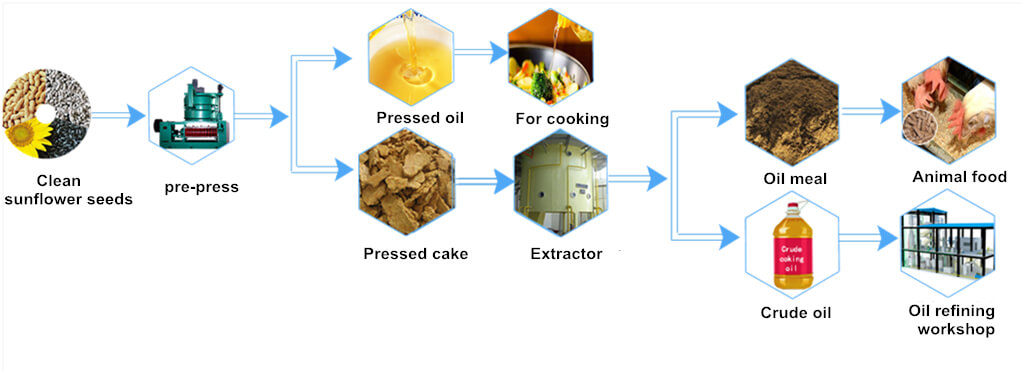
Sunflower Oil Production Process Introduction


Sunflower oil is an excellent vegetable oil which is extracted from sunflower seeds that begin with sunflower seeds pre-treatment, pre-pressing, embryonic material leaching, wet meal desolventizing and crude sunflower oil refinery process. Sunflower seed oil is rich in linoleic acid, which helps reduce blood cholesterol levels in the body, and is beneficial to protect cardiovascular health. Besides the unsaturated fatty acids, sunflower oil also contains vitamins E, folic acid, iron, potassium, zinc and other essential nutrients.
sunflower seed pre-press and meal extraction process

Currently, the sunflower oil sold on the market is mostly produced by de-shelled pre-squeezing and leaching process. De-shelled pressing-leaching technology is the key point of sunflower oil production line which avoids the negative impact of over-refining, high temperature, and acid and alkali effects on oils, so that the nutrients in the oil can be well preserved. For example, the content of vitamin E in de-shelled squeezed sunflower oil is 75.5mg/100g. However, by squeezing-leaching seeds with shell, every 100g sunflower oil only contains 41.62mg vitamin E. What’s more, there is no contact with alkane in the process of the un-shelled pressing-leaching process, which avoids the formation of trans fatty acids.

Sunflower Oil Processing Steps


The processing characteristics of first-grade sunflower oil are: First of all, sunflower seeds are selected and cleaned to remove impurities, and then the seeds are de-husked and crushed. After that the embryo is flaked and steamed in the frying pan, the fried product is pre-squeezed out of the oil and the remaining oil is extracted by solvent leaching, then the crude oil is purified through precipitation and filtration. Finally, the oil is dissolved, degummed, decolorized, deacidified and deodorized into the refined oil. More specifically, the operation steps and equipment for processing sunflower oil are as follows:


Select the sunflower seeds with the oil content of 30~50%, and the seed material contains certain impurities (sediment, stones, iron filings, etc.) which should be removed by cleaning sieve and magnetic separator.

Equipment


Oil cleaning sieve, magnetic separator.
Oil cleaning sieve is mainly to remove the impurities in the seed material, and the magnetic separator can remove iron filings.

Process features


(1.) The machine is driven by a vibrating motor, and the size of the excitation force, vibration direction, and the inclination of the sieve body can be adjusted according to the characteristics of the oilseed, which cleans up the oil more thoroughly and cleanly;
(2.) Oilseed cleaning could reduce the wear of subsequent equipment and the dust in the workshop is reduced, too;
(3.) Smooth operation, good cleaning effect, and high production efficiency.


Features of Sunflower Oil Production Line


Characteristics of the oil pressing and extracting


  • Compared with other oil extraction methods, the oil pre-pressing has the advantages of simple process, less supporting equipment, strong adaptability to oil varieties, flexible production, good oil quality, light color, and pure flavor.

  • However, the cake has a high residual oil content after squeezing, resulting in high power consumption and easy loss of parts. This method can be used to extract oil from peanuts, rapeseeds, sunflower seeds and other seeds or nuts. At the same time, the pre-pressed cake is sent to the leaching workshop to further extract the residual oil in the cake to achieve a better oil-making effect.


Characteristics of the oil refining process


  • For the refining part, we provide a full set of equipment for batch refining process, semi-continuous refining process, and full continuous refining process(more than 50 tons per day).

  • Batch refining process has a daily capacity of 1~30 tons of sunflower oil.  It has features of less investment, convenient operation and small footprint.

  • Semi-continuous refining process has a daily capacity of 30~50 tons of seed oil. It can be used for different types of oil refining, and it has advantages of low power consumption, better refining rate than batch-type and traditional semi-continuous processes.

  • Full continuous refining process has a production capacity of more than 50 tons per day. With characteristics of high refining yield and low consumption of auxiliary materials, full continuous refining process can meet the requirements of deep processing of products. The process requires continuous operation, which is suitable for larger scale production of the continuous production enterprises.


13 Amazing Benefits of Sunflower Oil

Sunflower Oil benefits includes reducing body fat, moisturizing the skin, reducing risk of cancer, fighting germs, reducing inflammation, strengthening the hair, treating athlete’s foot and reducing early signs of aging. Other benefits includes promoting digestion, boosting energy and acting as a facial mask.

What is a Sun Flower?

Sunflowers have a scientific name; they are scientifically referred to as (Helianthus annuus) and belong to the plant family of Asteraceae. It is composed with the cluster of small flower with alternate leaves and an erected stem. You may have found sunflowers in varying sizes, but most of them are large in size and have a beautiful yellow color.
Its componential benefits differ from each other, but here in this article; we will talk about the benefits of sunflower oil. It is non-volatile oil and is considered healthy for culinary purposes among all types of vegetable oils. Though it is commonly available in the market, the main producers of sunflower oil are Ukraine, Argentina and Russia. It has gained popularity in the international markets due to its incredible nutritional profile such as palmitic acid, oleic acid and stearic acid.

Nutritional Profile

Nutrition mg/gPercentage
Calories(884
Cholesterol0mg0%
Total fat100g153%
Monosaturated fat46g
Polysaturated fat36g
Saturated fat13g65%
Total carbohydrates0g0%
Sodium0mg0%
Calcium0%
Iron0%
Dietary fiber0%
Vitamin A0%
Vitamin C0%
Magnesium0%
Vitamin D0%
Vitamin B-60%
Vitamin B-120%

13 Amazing Benefits of Sunflower Oil

1. Cardio Vascular Disease

Heart diseases are fiercely rampant worldwide, and there are numerous reasons for it. While a lot of people are born with weak hearts, a majority of people do not abstain from living inactive lifestyles, eating foods that can destroy their mental and physical health. Inactivity and bad food equals to cardiovascular complications in the long run. But you can still minimize the risk by following a healthy diet routine. You don’t have to go far to treat such issues when some superb natural products are available in your surroundings. Sunflower oil contains a certain amount of phytochemicals, which are found to be beneficial for your heart. An appropriate amount of polysaturated and monosaturated fats makes this oil best for treating cardiovascular symptoms. The presence of selenium in oil is also instrumental in reducing the risk of hepatic degradation and cardiac problem.

2. Reduce Fats

As you can see form the nutritional profile of sunflower that it is rich in polysaturated and monosaturated fats. That makes it best for breaking down the accumulated fat in your body .It effectively maintains the HDL cholesterol in the body due to the presence of lecithin. The mode of mechanism is carried out when it adheres to cell lining and nerve cell.

3. Moisturizer

The viscous composition and emollient nature of this oil makes its moisturizing and this is something that your skin needs in a daily routine. Keep your skin fresh and repaired by using sunflower oil as its antioxidant source. Effectively remove dirt and free radicals from your skin using the oil. It is extensively used as dermal cream to treat certain skin infections such as eczema and edema.
Our dermal layers suffers the most from environmental exposure, but being rich in vitamin E, sunflower oil helps us to live free even in the most polluted of environments. It regenerates your damaged cells and keeps your skin safe from the harsh ultra violet rays of the sun.

4. Reduce Risk of Cancer

You are well aware now that antioxidants play a crucial role in skin nourishment. But its mode of action is not restricted for just your skin, it also steers you clear of chronic diseases as well. There is a compound found in sunflower oil known as tocopherol. This element eliminates free radicals form the body, cells that turn into cancerous tumors in the long run.

5. Fight Germs

Sunflower oil also has a significant role in our immune system. It boosts our immunity and makes us capable to cope up with extreme infectious conditions. It creates barrier and wipes out all foreign invaders from the body.

6. Reduces Inflammation

Reparatory illnesses can cause enormous pathological conditions and may become fatal sometimes when not treated at the earliest. Besides medication you can treat respiratory disease with sunflower oil.  It has also been tested that sunflower oil can reduce the severity of asthmatic symptoms due to its anti-inflammatory property.

7. Strengthen Hair

It can be beneficial for your hair due to light viscosity and flowery composition. The gamma alpha linoenic acids strengthen your hair and prevent it from breakage.

8. Guards Infants

New born babies are highly susceptible to infection. And you can use sunflower oil to protect them from certain infections as its chemical nature is quite light.

9. Treats Athlete’s Foot

Sunflower oil can also treat superficial infections such as athlete’s foot. In this fungal infection you feel burning, itching and stinging on your foot.

10. Reduce Early Signs of Aging

The well known antioxidants in sunflower oil effectively reduce early signs of aging. It drives out all toxins and particulates out of the body and gives you wrinkle-free and spotless skin.

11. Promote Digestion

The market are full of cooking oil products that contain preservatives and aren’t healthy for your heart health in the long run. They contain a lot of fat content, which can be dangerous for your overall health. But if you include sunflower oil in your cuisine you will immediately feel how light your food is and how awesome you feel after eating, the difference between sunflower oil and other cooking oils is easy to spot.

12. Anti-Aging Face-pack

This oil goes deep into your pores and provides a moisturizing effect. You can prepare your own facial-mask with 3 tablespoons of sunflower oil, lemon juice and 1 cup of plain yogurt that effectively lightens your skin tone and removes dead skin. Apply this pack for 20 minutes and rinse with water.

13. Boosts Energy

Its rich nutritional profile energizes you while discharging the excess glycogen from the bloodstream.

Side Effects

Sunflower oil side effects are correlated with diabetes because it increases your blood sugar level. You can also see from their nutritional profile that it is rich in omega-3 fatty acids overly consuming these fatty acids can put you at a health risk.

Bottom line

As sunflower oil has light taste, it is recommended you to include in your cooking process to avoid certain medical complications. This oil can change the flavor of your food and you can use it to prepare your salad too. And the surprising thing is!! You can add sunflower oil in your cake if you bored with the flavor of butter.

How to buy cooking oil?

Common edible oils are mostly vegetable oils, including corn oil, peanut oil, olive oil, camellia oil, canola oil, sunflower oil, soybean oil, sesame oil, walnut oil and the like.
Three tips for eating and drinking in your life:
1. depends on the color. Generally speaking, the higher the degree of refining, the lighter the color of the oil. Of course, all kinds of vegetable oils have a unique color, and it is impossible and unnecessary to refine to no color.
2. we must look at transparency. We must choose clear and transparent oil. The higher the transparency, the better.
3. you should smell and tasteless. Take one or two drops of oil on your palm. After rubbing your hands and heat, you can’t smell the smell (halal or irritating). If you have odor, don’t buy it.