Palm oil can be of two varieties: palm oil, made from palm fruit, or palm kernel oil, made from the seed inside the fruit. Both types are rich-tasting and common in tropical climates, such as in India and Malaysia. A vegetable oil, both types of palm oil are high in calories -- they are pure fat -- and they also contain high amounts of saturated fat. However, palm kernel oil also contains some healthy saturated fats in the form of medium-chain triglycerides. Moderate consumption of palm oil can be safe, although regularly using it can significantly raise your saturated fat and cholesterol intake.
High in Calories and Fat
A 1-tablespoon serving of palm oil has 120 calories, while the same serving size of palm kernel oil has 117 calories. Both types of oil have 13.6 grams of fat per serving. The U.S. Department of Agriculture recommends no more than 5 to 7 teaspoons of oil per day, including oils that are naturally found in foods, such as in nuts and seeds. The American Heart Association recommends that no more than 25 to 35 percent of your daily calories comes from fats -- including all oils, fats found in food and solid fats such as butter. For someone on a 2,000-calorie-per-day diet, this is between 50 and 70 grams of fat per day.
Could Increase Cholesterol Levels
While neither palm nor palm kernel oil contain any dietary cholesterol, a diet high in saturated fat increases your risk of heart disease as it encourages the buildup of plaque in your arterial walls. Each tablespoon of palm oil contains 7 grams of saturated fat -- that's almost half the daily limit in a 2,000-calorie diet. If you're consuming palm oil in addition to other saturated fat sources -- like dairy, meat and processed foods -- you might exceed your limit.
Can Cause Weight Gain
Palm oil naturally contains palmitic acid, a fatty acid that may increase your chances of weight gain and obesity. A 2005 issue of the "American Journal of Clinical Nutrition" included a study on the overall effects of a diet high in palmitic acid in healthy young adults. The study found that an increase in palmitic acid intake led to lower fat oxidation rates and a decrease in metabolism. As a result, researchers concluded that a diet high in palmitic acid may increase the chances of obesity and insulin resistance.
Choose Healthier Fats
According to Dr. Walter Willett of the Harvard School of Public Health and Amy Myrdal Miller, a registered dietitian, both writing for Harvard Health Publications, palm oil is less unhealthy for you than hydrogenated fats, which are high in trans fats as a result of the production process. However, palm oil, because it is still high in saturated fat, is considered a less healthy choice than vegetable oils that are naturally liquid at room temperature, such as olive oil or nonhydrogenated sunflower oil.
Expressed from the fruit of a palm tree, palm oil, like most other oils, contains about 120 calories and 13.6 grams of fat per tablespoon. The breakdown of saturated and unsaturated fats plays an important role in the comparison of palm oil to other vegetable oils. Palm oil supplies vitamin E, as well, which is another benefit to consider.
Saturated Fat Stats
Of the 13.6 grams of fat in a tablespoon of palm oil, 6.7 grams are saturated. The American Heart Association recommends that you limit the amount of saturated fat you eat to less than 7 percent of your total caloric intake. Doing so can help protect the health of your heart and keep your cholesterol levels low. Palm oil is higher in saturated fat than other types of vegetable oil. For comparison, a tablespoon of canola oil only has 1 gram of saturated fat. The same amount of olive oil has 1.9 grams of saturated fat. Palm oil is better than coconut oil, however, which contains 11.8 grams of saturated fat per tablespoon.
Unsaturated Fat Stats
While lowering the amount of saturated fat in your diet is a good way to reduce the risk of heart disease, increasing your intake of unsaturated fats can help protect the health of your heart, too. Both polyunsaturated and monounsaturated fats help reduce cholesterol levels, according to the American Heart Association. A tablespoon of palm oil contains 5 grams of monounsaturated fat and about 1.3 grams of polyunsaturated fat. Both canola and olive oil, for comparison, contain more unsaturated fats than palm oil, while coconut oil contains hardly any unsaturated fat.
Excellent Vitamin E
With 2.17 milligrams of vitamin E per tablespoon, palm oil is a good source of this essential nutrient. That amount is 14 percent of the 15 milligrams you need to include in your daily diet, according to the University of Maryland Medical Center. Vitamin E is an antioxidant that provides protection to your cells and that can reduce your risk of certain health problems such as heart disease and cancer. While canola oil has slightly more vitamin E per tablespoon, olive and coconut oil contain less vitamin E per serving.
Bottom Line
If you're concerned about your saturated fat intake or if you have high cholesterol, palm oil might not be the best choice for you. Palm oil, however, doesn't contain trans fats, which, like saturated fat, can raise your bad cholesterol level, and that's a plus. Palm oil also contains antioxidants, such as carotenoids and tocotrienols, that might provide protection against certain types of cancer, according to a 2007 article published in the "European Journal of Lipid Science and Technology."
Fresh fruit arrives from the field as bunches or loose fruit. The fresh fruit is normally emptied into wooden boxes suitable for weighing on a scale so that quantities of fruit arriving at the processing site may be checked. Large installations use weighbridges to weigh materials in trucks.
The quality standard achieved is initially dependent on the quality of bunches arriving at the mill. The mill cannot improve upon this quality but can prevent or minimise further deterioration.
The field factors that affect the composition and final quality of palm oil are genetic, age of the tree, agronomic, environmental, harvesting technique, handling and transport. Many of these factors are beyond the control of a small-scale processor. Perhaps some control may be exercised over harvesting technique as well as post-harvest transport and handling.
2. Threshing (removal of fruit from the bunches)
The fresh fruit bunch consists of fruit embedded in spikelets growing on a main stem. Manual threshing is achieved by cutting the fruit-laden spikelets from the bunch stem with an axe or machete and then separating the fruit from the spikelets by hand. Children and the elderly in the village earn income as casual labourers performing this activity at the factory site.
In a mechanised system a rotating drum or fixed drum equipped with rotary beater bars detach the fruit from the bunch, leaving the spikelets on the stem (Fig. 3).
Most small-scale processors do not have the capacity to generate steam for sterilization. Therefore, the threshed fruits are cooked in water. Whole bunches which include spikelets absorb a lot of water in the cooking process. High-pressure steam is more effective in heating bunches without losing much water. Therefore, most small-scale operations thresh bunches before the fruits are cooked, while high-pressure sterilization systems thresh bunches after heating to loosen the fruits.
Small-scale operators use the bunch waste (empty bunches) as cooking fuel. In larger mills the bunch waste is incinerated and the ash, a rich source of potassium, is returned to the plantation as fertilizer.
3. Sterilization of bunches
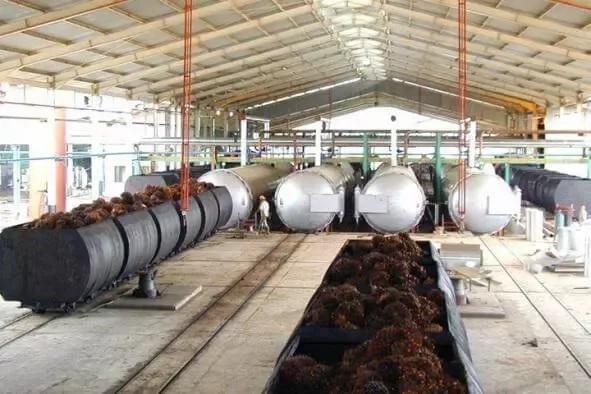
Sterilization or cooking means the use of high-temperature wet-heat treatment of loose fruit. Cooking normally uses hot water; sterilization uses pressurized steam. The cooking action serves several purposes.
Heat treatment destroys oil-splitting enzymes and arrests hydrolysis and autoxidation.
For large-scale installations, where bunches are cooked whole, the wet heat weakens the fruit stem and makes it easy to remove the fruit from bunches on shaking or tumbling in the threshing machine.
Heat helps to solidify proteins in which the oil-bearing cells are microscopically dispersed. The protein solidification (coagulation) allows the oil-bearing cells to come together and flow more easily on application of pressure.
Fruit cooking weakens the pulp structure, softening it and making it easier to detach the fibrous material and its contents during the digestion process. The high heat is enough to partially disrupt the oil-containing cells in the mesocarp and permits oil to be released more readily.
The moisture introduced by the steam acts chemically to break down gums and resins. The gums and resins cause the oil to foam during frying. Some of the gums and resins are soluble in water. Others can be made soluble in water, when broken down by wet steam (hydrolysis), so that they can be removed during oil clarification. Starches present in the fruit are hydrolyzed and removed in this way.
When high-pressure steam is used for sterilization, the heat causes the moisture in the nuts to expand. When the pressure is reduced the contraction of the nut leads to the detachment of the kernel from the shell wall, thus loosening the kernels within their shells. The detachment of the kernel from the shell wall greatly facilitates later nut cracking operations. From the foregoing, it is obvious that sterilization (cooking) is one of the most important operations in oil processing, ensuring the success of several other phases.
However, during sterilization it is important to ensure evacuation of air from the sterilizer. Air not only acts as a barrier to heat transfer, but oil oxidation increases considerably at high temperatures; hence oxidation risks are high during sterilization. Over-sterilization can also lead to poor bleach ability of the resultant oil. Sterilization is also the chief factor responsible for the discolouration of palm kernels, leading to poor bleach ability of the extracted oil and reduction of the protein value of the press cake.
Fig. 3 Bunch thresher (Centre de Formation Technique Steinmetz-Benin)
Fig. 4 Fruit sterilizer (Centre de Formation Technique Steinmetz-Benin)
4. Digestion of the fruit
Digestion is the process of releasing the palm oil in the fruit through the rupture or breaking down of the oil-bearing cells. The digester commonly used consists of a steam-heated cylindrical vessel fitted with a central rotating shaft carrying a number of beater (stirring) arms. Through the action of the rotating beater arms the fruit is pounded. Pounding, or digesting the fruit at high temperature, helps to reduce the viscosity of the oil, destroys the fruits’ outer covering (exocarp), and completes the disruption of the oil cells already begun in the sterilization phase. Unfortunately, for reasons related to cost and maintenance, most small-scale digesters do not have the heat insulation and steam injections that help to maintain their contents at elevated temperatures during this operation.
Contamination from iron is greatest during digestion when the highest rate of metal wear is encountered in the milling process. Iron contamination increases the risk of oil oxidation and the onset of oil rancidity.
Palm oil is one of the major sources of edible oil. It is extracted from a fleshy mesocarp of the palm fruit. Setting up a palm oil production plant is necessary since global demand is on the rise. But there are many requirements for setting up a palm oil processing plant in Ghana which demands a feasibility study. These requirements include palm oil production machine, available market, money , and labor. The project of setting up the palm oil mill plant should be technically, financially and environmentally feasible.
Palm oil
Opportunity First, you need to identify if there is a business opportunity in a given area, country or region. A growing demand for palm oil provides an economic opportunity. The abundance of palm trees guarantees a continuous supply of palm fruits. Palm oil processing is labor intensive. The youthful workforce provides cheap labor depending on area of operation. There should also be an opportunity to manufacture further refined products.
Technical Feasibility Advanced methods of production require new palm oil processing equipment which can be expensive. You need palm fruit reception machine, palm fruit sterilizing machine, palm fruit threshing machine, palm fruit digesting & pressing machine, crude palm oil clarification machine and others. High costs can discourage intending processors from investing and setting up new palm oil mill plants. You can choose to set up small scale palm oil mill plant, medium-sized palm oil mill plant or large scale palm oil mill plant and so on.
Financial Feasibility Setting up the palm oil processing plant and purchasing equipment requires funds. It also takes into consideration wages and salaries to be paid to employees. Available funds determine the size of the plant and amount of palm oil produced. Economic stability and profitability of palm processing need to be analyzed. There should be demand for palm oil to guarantee profits in the long run. A feasibility study will help determine if the business plan has enough resources to fund the project. Financial implications of oil processing form the basis of the processing business. Palm oil economics uses profitability models like Benefit-Cost Ratio to determine the cost of palm fruits, transportation, hiring/purchasing equipment, availability of labor and market price. Environmental Feasibility An environmental impact assessment needs to be carried out as provided by the law. It helps to determine any negative impacts when establishing and operating the plant. Fortunately, all by-products from a palm oil processing plant are recyclable. Empty palm fruit bunches, palm shells can be used as fuel of boiler.
In conclusion, a financially, technically and environmentally feasible project benefits all whenever an opportunity presents itself. The owner of the palm oil processing plant will earn profits. Local people will get jobs, palm oil, and refined products. The products are also recyclable. Carrying out a feasibility study and following laws of the land determines the success of a palm oil processing enterprise.
Palm oil production process introduction:
Palm oil production process Palm oil production process is quite diffferent from other oil seeds processing, such as the soybean, peanut,sunflower etc. Palm oil production process machinery is a complicated project which include a series of processes.Palm fruits consists a lot of fatty acid enzyme, which would hydrolyze palm oil. That's the reason why palm fruit must be sent into processing in 24 hours. Palm oil production process includes 6 parts: Palm bunches receiving, sterilizer, threshing, mashing and pressing, crude oil clarifying and palm kernel recovery.
I already knew that oil palm is so popular for growers because it’s so productive – one hectare can produce up to ten times more oil than other oilseeds – but I didn’t really get the scale of it all, didn't know the whole process of from palm fruit bunches to RBD palm oil, from this article , you will know any what do you want to know. Main section of palm fruit
The trees start being productive at around 3 years and then they keep producing for around 25 years. 136 trees/ha=20-23tonsFFB/ha/year CPO=4-5T/Hectare/year CPKO = 1t/hectare/year 15-20bunches/tree/year FFB = 1000-3000 individual palm fruit FFB = 10-25kg FFB = 20%CPO;2%CPKO Weight of each palm fruit= 8-13g
Plantation staff in indonesia
In Indonesia, the industry average is 4.14 tons of palm oil per year per hectare; enormous compared to, for example, soy’s average of around half a tons per hectare.
On the one plantation there are hundreds of staff, doing all kinds of jobs from harvesting to working in the mill to office work. This fairly simple seeming supply chain requires an army of manual labor.
As well as locals, these workers are from all over Indonesia; from Papua, Java, Sulawesi, Sumatra and many of the other islands spread out across this vast archipelago. This is common in Indonesia, people travelling for work opportunities but the scale of it here seems different as it’s on such a huge scale.
From one tree to the next, the harvester walks along with a steel pole – that weighs around 12kgs and has a saw blade at one end – and a wheelbarrow.
Plantation staff is confirming wheter the palm fruit is ripe To work out which fruit bunches are ready to be harvested, he’ll spy ripe fruit scattered on the ground. First he saws off the surrounding palm fronds and then he cuts down the fruit bunch.
Weighing around 25kgs, the fruit bunch is moved to the road. Later, they’re collected by trucks which will take the fruit to the palm oil mill plant.
Nothing is wasted; even the individual fruits that fall from the bunch are caught and thrown into the truck
Once the fruit bunches have been collected from all over the plantation, the trucks go to the palm oil mill plant. First they’re weighed and then they drop off their loads.
Trucks dump the fruit bunches into palm fruit reception station Trucks dump the fruit bunches into palm fruit reception station, which then move along to the steriliser station for some steam sterilizing.
Palm fruit bunches is sterilizing
From the steriliser station, the fruit bunches have softened, loosening the fruit. The threshing machine does the rest of the job, completely separating the parts of the fruit bunch.
The leftover fibre and shells are used as fuel, powering the mill as well as all other electricity needs on the plantation.
The empty fruit bunches are used as organic fertiliser and the fruit is taken over to the press where the oil is squished out to make the oil.
There are two types of oil:
Palm oil (Crude Palm Oil – CPO) – made from the pulp of the fruit. It’s edible and used in food products like biscuits, instant noodles, bread and many many other food items.
Palm kernel oil – made from the seed of the fruit. It’s used mainly in cosmetics and shampoos, etc.
The crude palm oil is pumped into trucks and then taken to the oil plant – which is essentially just enormous holding tanks. The crude palm oil is pumped into trucks and then taken to the oil plant
These trucks are unloading crude palm oil at the bulking station. The oil is pumped into the tanks; held, waiting, ready to be sent to the palm oil refinery plant. Apparently the oil can’t be stored for too long as it doesn’t quite go off, but it isn’t as fresh. Large scale palm oil refinery plant which refine crude palm oil to RBD palm oil
Weighing in at the palm oil refinery plant. This is where crude palm oil goes to be refined, bleached and deodorized resulting in RBD palm oil.
The control room: the workers monitor and manage the palm oil refining process.
Finally the refined oil is pumped back into a truck ready to go back to storage to be traded; bought by those who will turn it into food, cosmetics and biodiesel.
Obviously this is an example of one producer and their supply chain and there are many other stories that could be written. This is just one part of the supply chain showing just one part of this world.
Transport palm fruit to factory after truck weighing so as to make prompt settlement and production cost subsequent.
2.Unloading fruit
Fresh Fruit Bunches (FFB) are sent to fermentation tank through transportation machinery after sieving and impurities removing. The time from picking up to fermentation should be less than 24 hours, or the free fatty acid(FFA) will rise, which will not be conductive for further processing and production of palm oil from palm oil making machine.
3.Digestion of the fruit
Digestion is the process of releasing the palm oil in the fruit through the rupture or breaking down of the oil-bearing cells. The digester commonly used consists of a steam-heated cylindrical vessel fitted with a central rotating shaft carrying a number of beater (stirring) arms. Through the action of the rotating beater arms the fruit is pounded. Pounding, or digesting the fruit at high temperature, helps to reduce the viscosity of the oil, destroys the fruits’ outer covering (exocarp), and completes the disruption of the oil cells already begun in the sterilization phase. Unfortunately, for reasons related to cost and maintenance, most small-scale digesters do not have the heat insulation and steam injections that help to maintain their contents at elevated temperatures during this operation.
Contamination from iron is greatest during digestion when the highest rate of metal wear is encountered in the milling process. Iron contamination increases the risk of oil oxidation and the onset of oil rancidity.
4.Threshing(removal of fruit from the bunches)
The fresh fruit bunch consists of fruit embedded in spikelets growing on a main stem. Manual threshing is achieved by cutting the fruit-laden spikelets from the bunch stem with an axe or machete and then separating the fruit from the spikelets by hand. Children and the elderly in the village earn income as casual labourers performing this activity at the factory site.
Threshing machine will separate both palm fruits and empty fruit bunches(EFB) after FFB soften duirng fermentation. Empty fruit bunches (EFB). EFB are sent to send to garden as fertilizer, fuel or other purposes after conveying and hoarding.
5.Pressing (Extracting the palm oil)
Palm fruit by stirring and squeeze broken by mashed tank, and then put into the screw press machine to press oil. Then, containing sand, water, and oil liquid part put into the purifier separation to get crude palm oil. The press cake (including fiber and nuclear) into the next process.
6.Clarification and drying of oil
The main point of clarification is to separate the oil from its entrained impurities. The fluid coming out of the press is a mixture of palm oil, water, cell debris, fibrous material and ‘non-oily solids’. Because of the non-oily solids the mixture is very thick (viscous). Hot water is therefore added to the press output mixture to thin it. The dilution (addition of water) provides a barrier causing the heavy solids to fall to the bottom of the container while the lighter oil droplets flow through the watery mixture to the top when heat is applied to break the emulsion (oil suspended in water with the aid of gums and resins). Water is added in a ratio of 3:1.
The diluted mixture is passed through a screen to remove coarse fibre. The screened mixture is boiled from one or two hours and then allowed to settle by gravity in the large tank so that the palm oil, being lighter than water, will separate and rise to the top. The clear oil is decanted into a reception tank. This clarified oil still contains traces of water and dirt. To prevent increasing FFA through autocatalytic hydrolysis of the oil, the moisture content of the oil must be reduced to 0.15 to 0.25 percent. Re-heating the decanted oil in a cooking pot and carefully skimming off the dried oil from any engrained dirt removes any residual moisture. Continuous clarifiers consist of three compartments to treat the crude mixture, dry decanted oil and hold finished oil in an outer shell as a heat exchanger.
7. Fiber separation The extruded cake-like fibers are broken into the wind selection system to separate the fibers from the core.
8.Nucleolar separation
The nucleolar is divided into kernel and shell by nuclear crusher after separated with fiber. Then, after washing and winnowing separation system separate the nuclear and shell. The shell is stored as fuel for entering the boiler fuel system. The kernel is stored after drying.
Palm kernel oil extraction process, including crushing, rolling billet, steaming and pressing. Its production process and equipment similar to the general oil.
10.Steam boilers
The fibers and core shells are transported to the boiler for use as fuel. Steam boilers are mainly used to provide steam for power generation, fermentation and heating, the steam boiler fuel used in the manufacture of palm oil is separated from the fiber and shell.
11.Sewage treatment
Used the sewage of the pipeline, the process wastewater through the sewage treatment facilities, discharge standards.
Process Description of Vegetable Oil Refining is as follows.
Water Degumming :
Water Degumming is first step in the Edible Oil Refinery Process. Oils contains Hydratable Phosphatide which absorb the water, that Hydratable Phosphatides are oil- insoluble which easily separated by centrifuge.
Water Degummed Gums are further process to convert into Lecithin and it is much demanded product in the market.
Alkali Refining :
Next step in Edible Oil Refinery is the is the traditional method used in past centuries and widely practiced form of refining method by treatment of the fats and oils with an alkali solution. The free fatty acid are converted into water soluble soaps which are removed by separators. Phospholipids, carbohydrates and proteins additionally can be changed to water soluble substances with hydration. When the Alkali Refining treatment, the fats and oils area unit washed with water to get rid of residual water soluble soaps after that oil passes in vacuum Dryer to remove Moisture.
Bleaching :
Next step in Edible Oil Refinery is the OIL received from previous stages contains traces of soap, iron and few ppm of Phospholipids and Carotenes, these contents area unit undesirable and needed to be removed in Bleaching Operation, leaching Plant includes Steam Agitated Bleacher comprises of an acid treatment, a separate oil and earth compounding device with mechanical mixer (this arrangement ensures no carryover of bleaching earth into vacuum system), main bleaching vessel and Hermetic filters.
Bleaching Process Flow Diagram
De-Waxing / Winterization :
Next step in Edible Oil Refinery is A very easy demand of this method is to clear, good refined oil to satisfy bound specifications of cloud point.
We offers an ideal and extremely Effective Crystallization and Filtration Method. It's composed of Homogenizer, Crystallizer and self filter instrumentation with sequence cooling system.
We have developed an ideal dynamic coil Designed Crystallizer for Guaranteed 100% Uniform Cooling especially for Rice Bran Oil, Sunflower Oil & Cottonseed Oil and is already in operation with our valued consumer for highest quality of product. We tend to conjointly provide low budget crystallizer.
Self improvement filter instrumentation is also a modern style, having the ability of Maintaining Filtration Temperature and isn't laid low with close Temperature.
We area unit one in every of the foremost leading manufacturer and provider in India in the field of De-waxing Plants,Winterization Plant, self-cleaning filter equipment and dynamic coil designed crystallizer for uniform cooling.
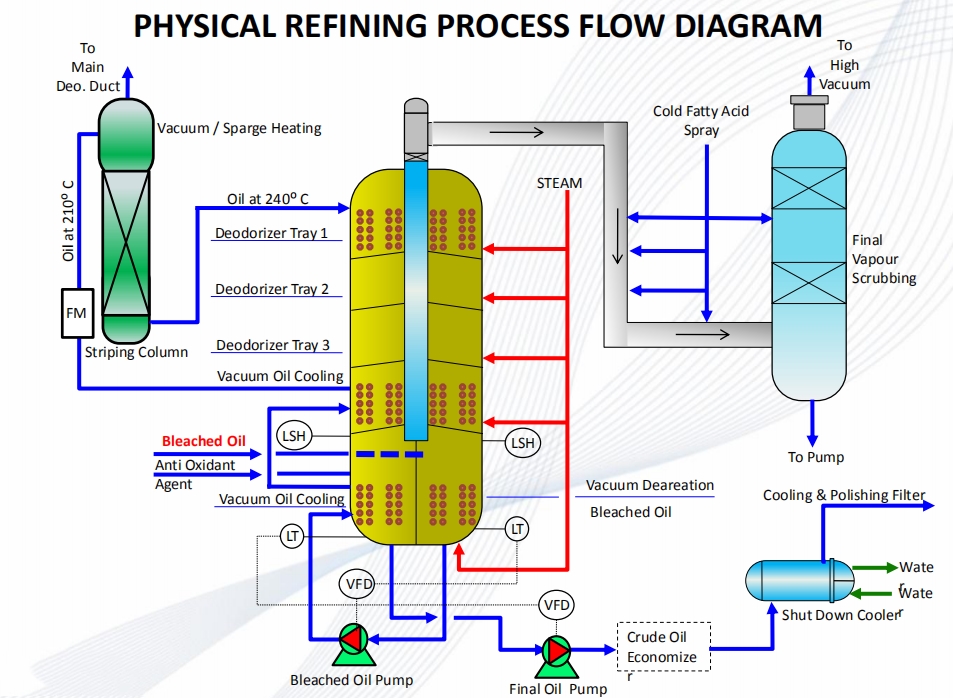
Deodorization process is used to remove unacceptable odour by steam distillation the odoriferous compound area unit strip off with the assistance of live injected steam into heated oil under high vacuum.
Physical Refining :
Next step in Edible Oil Refinery is the Physical Refining method is employed to get rid of free fatty acid using Steam Distillation technique at warm temperature and under high vacuum and it is followed by Deodorization and an extra technical facility is else before deodorization for removal of free fatty acid.
Physical Refining Process Flow Diagram
Fractionation :
Next step in Edible Oil Refinery is the Fractionation Plant is specialized to supply provide a low operating cost fractionation plant, which provides high Olein/soft Stearin yields at established management. We offer PLC (automation) for efficient working and reliability of the fractionation plant.
The separation of stearin & olein is continuously done on rotary vacuum drum filter / plate and frame filter and its principle is easy, whereas crystallization method involves an executive technique to develop and grow the particles size for simple & swish separation of stearin & olein.Our technique ensures you a perfect technology.
Acid Oil Plant :
Next step in Edible Oil Refinery is the Acid Oil Plant. We has designed an Environmental Friendly process for Acid Oil Plant and acid oil obtain from soap stock which coming from Alkali Refining of Oils and Fats etc. Soap Stock contain wash water, Bad quality of recovered oil. Soap Stock is pumped through screw pump to the Acid reactor for splitting. Soap stock charge in reactor and boiled in terms drying with steam heating cum agitation coil. After removing maximum Moisture pre calculated amount of acid (H2SO4) or HCL is added slowly. Splitting is done underneath continuous observation thus on maintain applicable acid value of final product to avoid excess acid consumption.
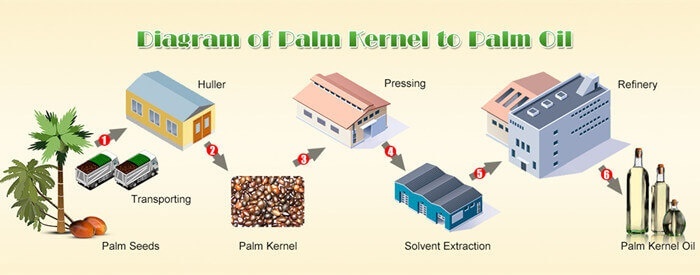
The oil extracted from palm kernels is called palm kernel oil. The oil content of palm kernel is around 50%~55%. Fresh palm kernel oil is edible. Its high stability, free of cholesterol, free of trans fatty acids make it particularly popular in frying use and are good for human health. The palm kernel oil liquid would turn to solid fat as the temperature of storage environment changes, and the solid fat can be used as a substitute for cocoa butter. Because palm kernel oil & coconut oil have a similar effect, but palm kernel oil is more moderate and contains more unsaturated fatty acids than coconut oil. (PS: a sufficient supply of unsaturated fatty acids is good for human skin which can protect the skin, and in particular prevents skin damage and aging, making the skin shiny and translucent. )
In industrial production, palm kernel is used to make oil fatty acids, fatty alcohols, and glycerol. For cosmetic applications, the kernel oil is extracted and made into handmade soap, shampoo, laundry detergent, toothpaste and other personal care products and home care products. All in all, palm kernel oil is widely used in food, chemical, pharmaceutical, cosmetics, plastics and other industries.
Processing Steps of Plam Kernel Oil Production Plant
Pretreatment is necessary for efficient oil extraction from raw palm kernel. In palm kernel oil industrial production, oil raw materials are usually palm kernel or pressed cake. If the material is palm kernel, the main pretreating steps are palm nut cleaning, shelling and separation, crushing, flaking and steamed frying. If your raw material is a press cake from palm oil press workshop, you need to do this: The material cake should be cracked by a screw conveyor and conveyed into a fiber separator drum for fiber separation. After these simple treatment, you can get cleaner palm kernel, the rest of the process is the same:
Palm Nut Cleaning
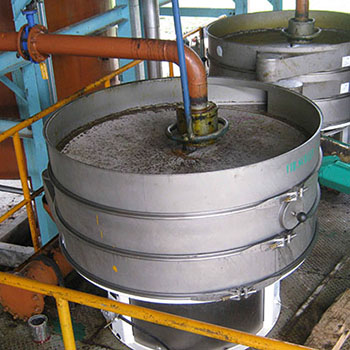
The raw palm nut’s impurity should be cleaned firstly otherwise it would cause damage to the screw press machine. The magnetic selector is installed for removing metal debris, while the vibrating sieve is used for removal of sand, fines or other undesirable impurities. And the stones could be removed by gravity stoner.
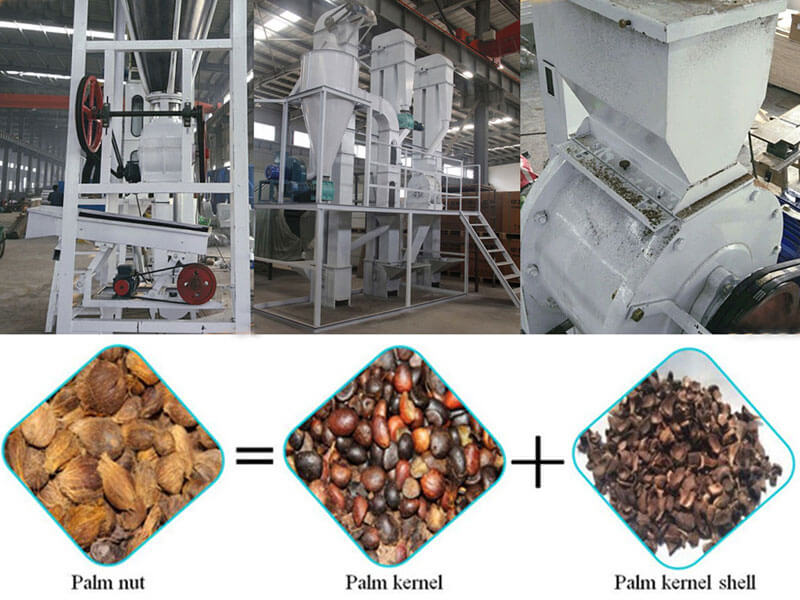
Palm Nut Shelling and Separation
By palm kernel husking and separating system, the clean palm nut is cracked and divided into palm kernel and shell. First of all, the palm nut is husked by our high-quality palm nutcracker with a husking rate of 85-95%. Next, the cracked shell and kernel are separated by air separator machine, through the air duct, shell and kernel could be firstly separated onto V-shaped screen’s upper layer and the lower layer, finally, the rest kernel on the upper layer could be dropped from the screen holes by screen vibrating. After separating, the kernel content in the shell and the shell content in the kernel are less than 5%. Shelling can increase the oil yield, improve the quality of crude oil & cake, reduce abrasion of equipment and increase the effective production of equipment. The palm shells are always sent to the boiler room for fuel use.
Crushing
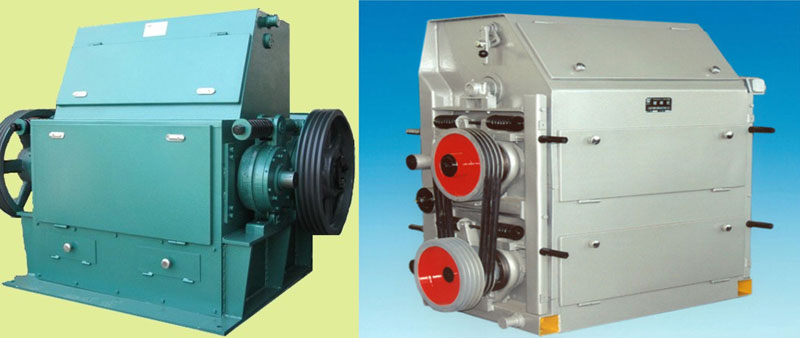
Since palm kernel is relatively large and hard, in order to better improve the oil yield, the palm kernel needs to be secondary crushing after husking. The main crushing equipment is rolling crusher, which can break kernels into small pieces and easy to produce oil. It has a simple structure, stable performance and easy to operate.
Flaking
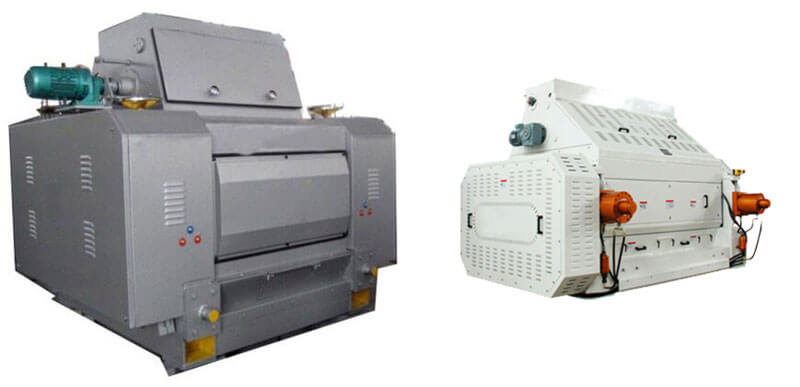
Flaking machine is mainly made up of two or more opposite rotating rolls (high nickel chrome molybdenum alloy). When the kernel pieces are in the middle of the two rollers, they are squeezed by instantaneous pressure to form flakes, meanwhile, the crude oil is rolled out firstly. This machine is widely used in oil plants and individual oil processing mill, easy to operate and maintain. After flaking, the palm kernels are easy to be steamed.
Steamed cooking
The purpose of steamed cooking is to completely destroy the oil cells by high temperature and moisture, so that the protein is denatured, the oil is steamed out and collected, the viscosity and the surface tension of the oil are reduced, the elasticity and plasticity of the material are adjusted, and the enzymes are passivated. Steamed cooking equipment is a steam frying pan, which can process the raw palm kernel flakes into matured flakes by heating, spraying and steaming. The equipment can also be used as a softening pot, softening can improve the quality of rolled flakes, thereby increasing the oil yield, and can improve the quality of crude oil. It is the necessary equipment for vegetable oil factory.
Palm Kernel Processing Plant Customized for You
According to different production capacity and customers’ different requirements on the products, our company can make rational choice and combination of palm kernel oil production processes, choose the best technological process, as well as sophisticated equipment manufacture and automatic control system to provide customers with perfect technical services. For example, either single machine or production line are both for sale. Our palm kernel oil production line’s capacity is 10-100 tons per day and its residual oil rate is 5%, and we provide you with palm kernel oil production and refining process design, manufacture, installation, commissioning and after-sales service if it is needed.
Typical palm oil extraction process: fresh fruit bunches (FFBs) reception, sterilizing, fruit bunches threshing, fruit digesting and oil extraction. The crush palm oil is generally further processed in palm oil refinery plant to manufacture edible oil.
Extraction of per Ton Fresh Fruit Bunch
Fruit Reception – The First Step of Palm Oil Extraction
The palm fruits are as bunches when arriving the fruit reception/receiving station of palm oil extraction plant. Before the processing of oil extraction, they are weighed in trucks by use of weighbridges. It should be underlined here that the quality of final palm oil is initially affected by the quality of bunches arriving at the palm oil mill. The palm oil extraction process or machine can only prevent or minimize the further deterioration, but cannot enhance this quality.
Effect Factors of Final Palm Oil Quality and Composition
The field calculates that influence the structure and last nature of palm oil:
Oil Palm Tree Species
Oil Palm Tree Age
Agronomic
Natural
Gathering Technique
Handling And Transport
Maybe some measures can be took during harvesting and transporting. However, most of the above factors are beyond control, especially in scale-scale palm oil extraction plant. The following is the complete process flow of large palm oil mill.
Process of Scale-scale Palm Oil Extraction Plant
Technique of Palm Fruit Harvesting
The oil content of the palm fruit is very low in the early phases of formation and it increases as the fruit grow. When the fruits is maturity, the oil content is about 50% of mesocarp weigh. The fresh fruits apt to be bruised in many cases before extraction of palm oil, especially during the processes of harvesting, loading and unloading. However, the FFA (free fatty acids) in the bruised part of fruit can increase to 60% rapidly in just an hour, which greatly affects the composition and quality of final palm oil. The answer to reduce the damage to palm oil extraction quality is to send the fresh fruit bunches to process and extracting the fruits as early as possible once harvested, at the latest within 48 hours.
About Oil Palm
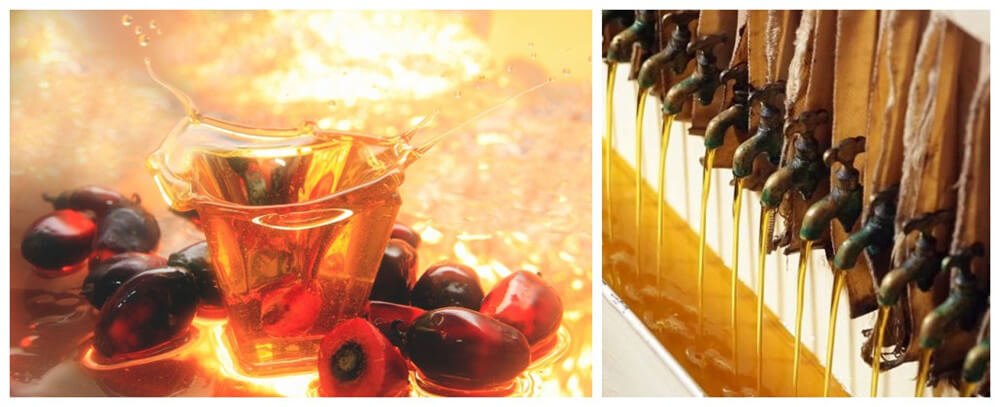
Oil palm is mainly distributed in countries with high rainfall in tropical climates, such as Malaysia and Nigeria. Due to its economic importance as a high-yielding wellspring of edible and specialized oil, oil palm is now grown as plantation crop. The palm bears its fruit in bunches varying in weight from 10 to 40 kg. The individual fruit, ranging from 6 to 20 gm. The fruit is comprised of exocarp (outer skin), mesocarp (pulp) and central nut. The central nut consists of shell (endocarp) and kernel. The palm oil is extracted from the fibrous matrix of palm pulp, while palm kernel oil is extracted from the kernel.
Palm oil is derived from the fruit of the oil palm tree, which is grown in tropical regions of Asia and Africa. While palm oil producers rely on different techniques to extract this oil, the basic steps involved in palm oil production remain the same. Manufacturers must plant a supply of oil palms, and oversee their care through maturity. The fruit of the tree can then be harvested and processed to release the oil. The final step in palm oil production involves purifying the oil to meet the demands of various users.
The majority of global palm oil production occurs at large plantations in Malaysia and Indonesia. Producers in these countries grow very large oil palm crops, which thrive in the tropical conditions found in this part of the world. Once the fruits of oil palm have matured, crews cut them off the trees in large bunches using machetes or other tools. The fruits are collected, often by hand, and transferred to processing sites located locally and abroad. During this time, it is critical to handle the fruit with care to minimize bruising, which can negatively impact oil production.
Next, the fruits go through a process known as threshing, in which each piece of fruit is separated from the rest of the bunch. Large processing plants place the fruit in rotary drums to complete this process, while small palm oil production facilities perform threshing by hand. After the fruits have been separated from one another, they are steamed, or simply cooked in hot water. This weakens the pulp of the oil palm fruit and helps to break it down so the oil can be extracted more effectively. Cooking or steaming also helps with sterilization and sanitation.
After threshing, the next step in palm oil production involves pressing the fruit to separate the oil from the skin and pulp. Some facilities place the fruit into large rotating drums, which start to break down the fruit and release some of the oil. This is followed by pressing, wherein heavy metal plates are mechanically pressed into the fruit to squeeze out the oil. Pressing machines may use hydraulic or pneumatic power to process large batches at once. The oil is then diluted with water and filtered through a screen to help remove debris and impurities.
At this stage, the oil can be sold as a low-quality palm oil or sent on for further processing. During fractionation, palm oil is heated to separates out the various triglycerides contained within. This helps to separate low-quality oil from higher quality oils, which are rich in essential fatty acids but contain less saturated fat than unpurified palm oil.
The rapid expansion of the palm oil industry has led to excessive deforestation, destruction of tropical rain forests, and endangered species of wild flora and fauna. The Amnesty International survey revealed that the labor infringement problem caused by this is equally shocking.
About 50 % of the products in the supermarket contain palm oil or raw materials made from palm oil. Because of its low price and wide range of uses, the market has a strong demand for palm oil. This oil extracted from palm fruit is made into cooking oil for cooking and processed foods such as chocolate, biscuits or cereals. It can also be made into raw materials such as glycerin, and detergents, as well as toothpaste, soap, shower gel, shampoo and other beauty products contain glycerin.
Indonesia is the world’s most large palm oil producing country
Indonesia has an annual output of 35 million tons of palm oil , accounting for 45% of global supply. About 3 million people work in the palm oil industry in the country, at least one-third of the world’s palm oil industry. Indonesia has a strong labour law. However, weak law enforcement has led companies to commit systematic human rights violations against workers in palm plantations without being held accountable.
The regions with the greatest demand for palm oil are India , the EU and China.
Global demand for palm oil has grown rapidly, with only 61 million tons of palm oil consumed in 2015 alone. In 1990, this figure was less than 15 million. The regions with the largest imports of palm oil are India, the European Union, and China . In 2016, the three places imported a total of 20 million tons of palm oil.
The world’s largest palm oil producer suspected of violating labor rights
Singapore-based agribusiness Wilmar International ( Wilmar ) controls the world’s more than 43% of palm oil trading , company earnings in 2015 amounted to $ 38.78 billion. Workers working in the plantations of the company and its suppliers have worked hard to support their families but earned only a modest salary. In some extreme cases, they earn only $2.50 a day. Wilmar claims that its total in Indonesia and Malaysia in the industry 6 more than thousand employees .
Some of the world’s largest company by means of these violations Mu Lee
Amnesty International has tracked the flow of palm oil from Indonesia’s plantations to nine multinational companies. The nine companies have a total turnover of $325 billion.
Eight of the nine companies are members of major international institutions working to make palm oil “sustainable”. In fact, more than 2,000 companies are members of the Roundtable Sustainability Palm Oil. The agency was established in 2004 to rectify the palm oil industry that has caused many environmental pollution scandals. However, Amnesty International’s report reveals that even if palm oil contained in a product is certified “sustainable” by the agency, the product may still involve human rights violations.
Amnesty International has tracked the flow of palm oil from nine investigated plantations to nine multinational food and commodity companies. A list of products containing palm oil products is then sent to these companies to confirm whether the palm oil contained in these products originates from Wilmar International and Indonesia.
Colgate-Palmolive Colgate Palmol
Colgate’s oral care, personal care and home care products all contain palm oil derivatives. Colgate has also confirmed that palm oil comes from a refinery associated with plantations surveyed by Amnesty International, but does not disclose which products are made from such palm oil derivatives.
Colgate said that whether to continue to withdraw oil from Wilmar International depends on whether the company can systematically resolve the human rights violations detailed in its public report. Colgate requires suppliers at all levels to comply with its “non-exploitation policy”.
Nestlé Nestle
Nestlé has confirmed that Kit Kat chocolate, lion caramel crispy biscuit chocolate, American cuisine, and crisp cereals contain palm oil. However, Nestlé did not disclose to Amnesty International which of the products contained palm oil from six Fengyi International refineries built in Indonesia.
Unilever Unilever
Unilever’s AXE/Lynx Body Fragrance, Ben and Jerry’s Ice Cream, Bedley Edible Oil, Birds Eye Ice Cream, Cup a Soup Instant Soup, Dove Beauty, Knorr Soup Bag And products such as vaseline beauty products contain palm oil or palm oil.
Unilever confirmed that Wilmar International’s industry in Indonesia is indeed one of its major palm oil suppliers. Palm oil supplied by Wilmar International is widely used by Unilever in food, home care and personal care products, but Unilever has not disclosed which of these products contain palm oil from Wilmar International’s Indonesian industry.
Proctor & Gamble (P&G) Procter & Gamble
Procter & Gamble’s Llano fabric softener, Bilang washing powder, Head & Shoulders shampoo, Pantene Pro-V shampoo, cover girl sexy shimmer eyeshadow and other products contain palm oil. P&G confirmed that it obtained palm oil from Wilmar International and Indonesia, but said that only a small amount of palm oil derivatives came from Fengyi. Procter & Gamble is unwilling to confirm which products containing palm oil are made from the Indonesian industry of Wilmar International.
Kellogg’s Kellogg
Kellogg’s CrunchyNut food line, Pop Tarts biscuits, Nutri-Grain cereals and other products contain palm oil. However, the company denied that the palm oil in these products came from Wilmar International.
Kellogg confirmed that palm oil contained in the potato chips produced and sold in mainland China comes from Wilmar International and a refinery associated with the plantations surveyed by Amnesty International. China’s Pinto chips are produced by a joint venture between Kellogg and Wilmar International.
Reckitt Benckiser Reckitt Benckiser
Li Jieshi’s Claires cleansing products, Wei Ting hair removal products and designer detergents contain palm oil. Li Jie confirmed that Wilmar International is one of the top five palm oil suppliers, and the company obtained raw materials made from palm oil from a refinery associated with the plantation surveyed by Amnesty International.
Palm oil from Wilmar International was used to make soap when it was used by Li Jie. This soap is sold all over the world, and a small amount of this palm oil is used to make cooking oil sold in the United States. Li Jieshi said that the origin of such soaps includes Indonesia, China, the United Arab Emirates, Egypt, South Africa, Nigeria, Sri Lanka, Bangladesh and India.
AFAMSA
AFAMSA manufactures animal feed, candles, soaps and detergents from palm oil derivatives.
AFAMSA confirmed that Wilmar International supplies palm oil and a range of derivatives. Amnesty International has tracked that palm oil has flowed into AFAMSA from a refinery associated with the plantations surveyed by Amnesty International.
Archer Daniels Midland Company (ADM) Archer Daniels Midland Company
Archer Daniels Midland uses palm oil to produce a range of cooking oils and other foods such as cooking oil and margarine.
The company confirmed that palm oil supplied to Wilmar International was used for industrial and food purposes. The factory that supplies palm oil to the company is picking up the plantations surveyed by Amnesty International. Olenex, a joint venture between Archer Daniels Midland and Wilmar International, sells refined vegetable oils and animal and vegetable oils to the European Economic Area and Switzerland. Archer Daniels Midland is a minority shareholder of Wilmar International (holding 23% of its shares). The company is reluctant to disclose which products contain palm oil from Wilmar International.
Elevance
Elevance Renewable Sciences confirmed that the company’s joint venture with Wilmar International has located processing equipment in Gresik, Indonesia, and is located in a larger facility belonging to Wilmar International. The joint venture also obtained palm oil from Wilmar International. Amnesty International also found that the joint venture and another company based in Indonesia to export raw materials made from palm oil to Elevance in the United States. However, Elevance did not disclose which products contain such raw materials made from palm oil.


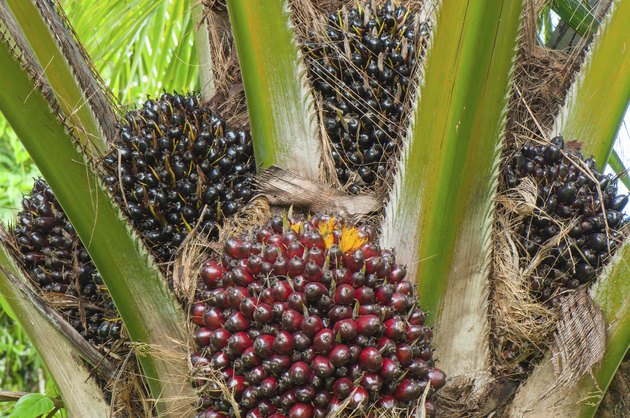






 Oil palm is mainly distributed in countries with high rainfall in tropical climates, such as Malaysia and Nigeria. Due to its economic importance as a high-yielding wellspring of edible and specialized oil, oil palm is now grown as plantation crop. The palm bears its fruit in bunches varying in weight from 10 to 40 kg. The individual fruit, ranging from 6 to 20 gm. The fruit is comprised of exocarp (outer skin), mesocarp (pulp) and central nut. The central nut consists of shell (endocarp) and kernel. The palm oil is extracted from the fibrous matrix of palm pulp, while palm kernel oil is extracted from the kernel.