显示标签为“Oil Production Plant”的博文。显示所有博文

10-20T/D Edible Oil Production Line

10-20T/D Edible Oil Production Line


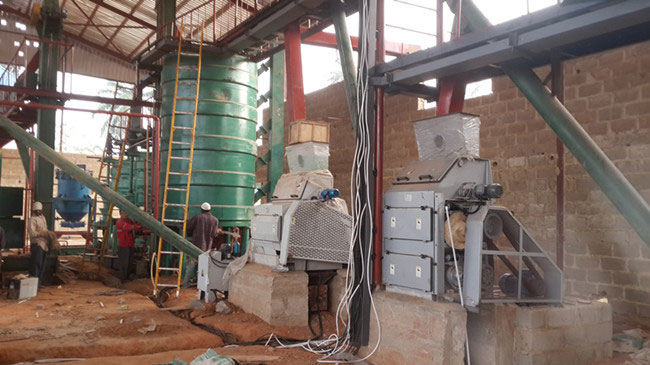
Our company is specialized in customizing small capacity edible oil production lines. The 10-20T/D edible oil production line is suitable for family-style workshops and small oil factory. Various machines are available for your oilseeds pretreatment, oilseeds pressing, crude oil refining and refined oil packing. The oil processed by this line can be sold to supermarkets directly.

Advantages of 10-20T/D Edible Oil Production Plant


1. Suitable for peanuts, sunflower seeds, soybean, sesame, palm kernel, copra and other oilseeds.
2. High oil yield and low residuals.
3. Low investment, energy saving.
4. Highly automatic machines save time and labor.
5. All machines can be customized as per your requirement.
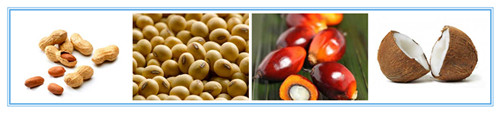

10_20_oil_seed
10_20T_peanut_oil


Main Machines for 10-20T/D Edible Oil Production Plant


1. Oil Seeds Screw Conveyor


Screw conveyor is suitable for conveying oilseeds from one place to another place, or from lower place to upper place. It can be chosen to increase working efficiency and saving labor. It is typical of simple structure, low cost, good airproof and easy operation.

2. Oil Seeds Cleaning Machine


We provide oil seeds cleaning machine for you to remove the impurities in the oilseeds. The machine uses sieving method to remove coarse and fine impurities. It has a compact structure and small floor space.
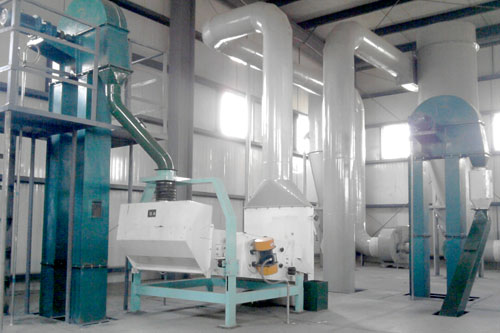
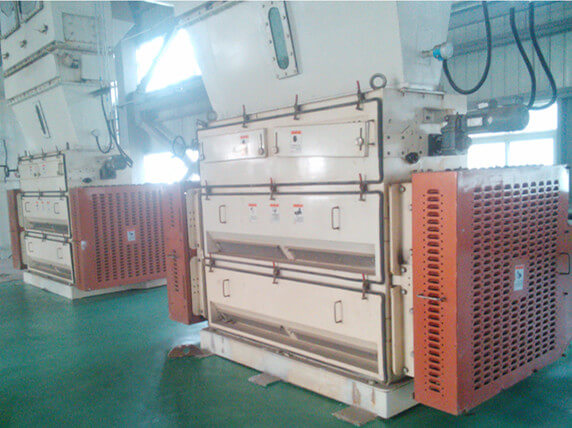
oilseeds cleaning equipment

3. Oil Seeds Roasting Machine


Hot pressing can reach high oil yield and give oil fragrant flavor. We provide rotary drum oil seeds roasting machine with various capacity.

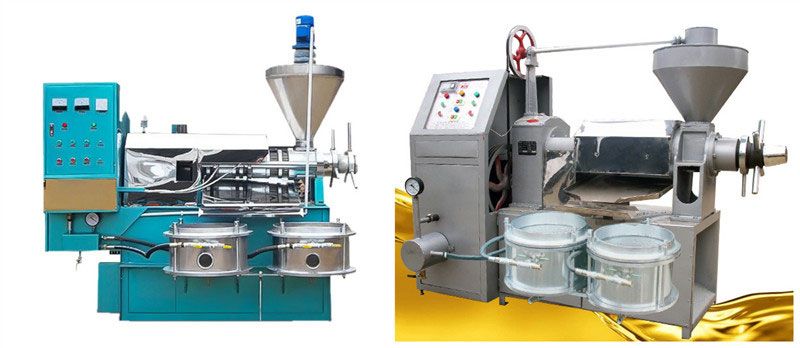
4. Integrated Oil Press Machine


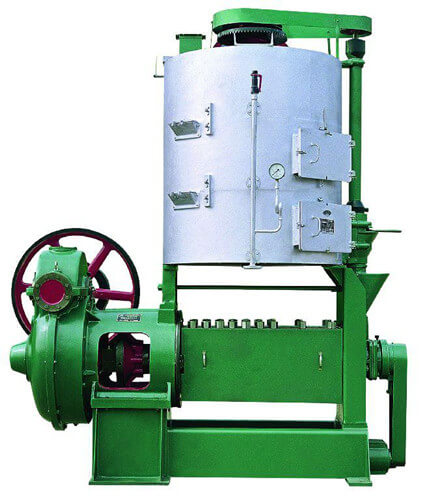
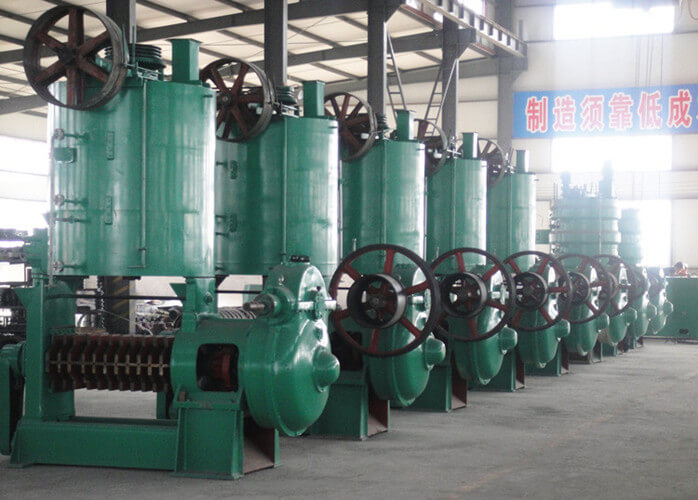
Integrated screw oil press is equipped with automatic temperature control system and oil filtering device, having both pressing and filtering function. Adopting mechanical pressing methods, the oil is edible without any chemical solvent.
5. 1-5T/D Edible Oil Refining Plant
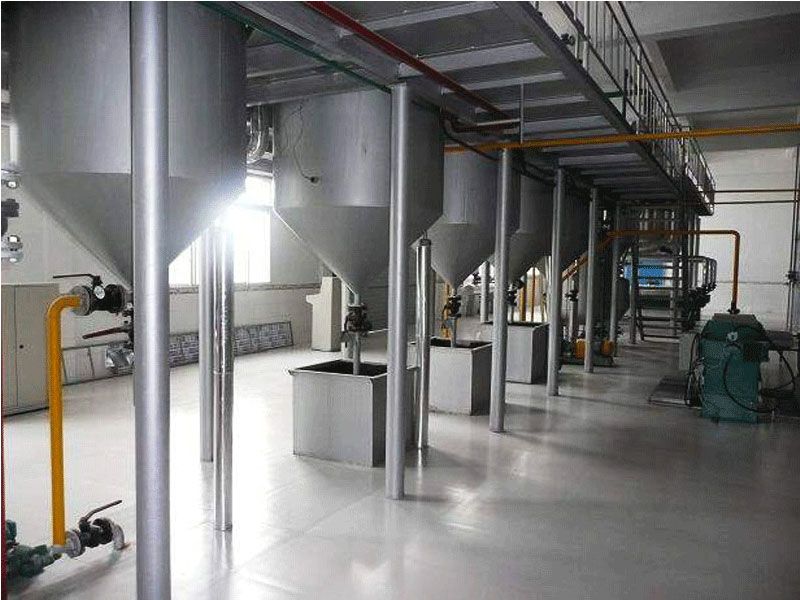

edible oil refinery project
1-5T/D oil refinery equipment is recommended for small oil plant to get high-grade edible oil of good color and high quality. As oil yield is different for different oilseeds, the capacity required for refinery will differ too. If you are processing 20 tons soybeans, we suggest you install 1-3T/D refinery plant. For 20 tons sunflower seeds, 5T/D refining line is suggested.

6. Edible Oil Filling and Packing Machine


Refined oil can be packed and sold in supermarkets. We provide semi-automatic and fully automatic filling machine for quantitative filling of various oils. The machine is easy to operate, filling speed can be adjusted and filling capacity is easily set.

Canola Oil Processing Plant

Canola Oil Processing Plant Introduction


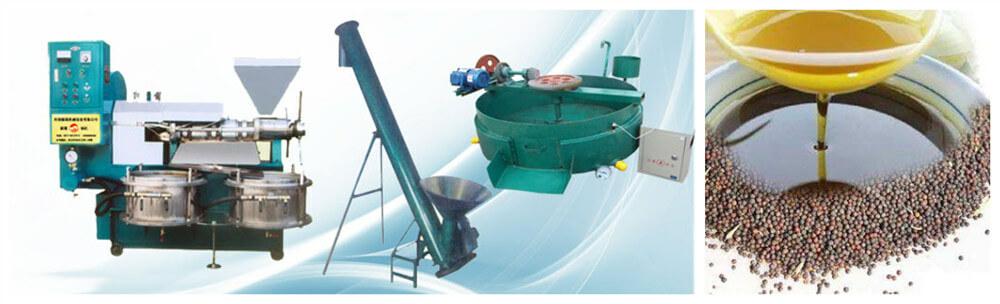
Canola oil processing plant is a small scale plant to extract canola oil by pressing method. By using the canola oil processing equipment, the rapeseeds are cleaned, roasted, screw pressed and refined. The rapeseed oil press machine adopted has the functions of automatic barrel heating, pressing and oil filtering. The feeder equipped helps increase production efficiency and save labor. The refined rapeseed oil can be filled into bottles for sale. Meanwhile, we provide canola oil extraction plant which extracts oil from canola cake by the solvent for medium and large-scale oil production. Our canola oil processing equipment can be customized according to your requirement.


rapeseed oil pressing machine line

Features of Canola Oil Processing Equipment


1. Small capacity, low investment, simple process, easy to operate, low labor intensity.
2. The rapeseed oil press machine integrates the functions of pressing and filtering.
3. Canola oil extraction plant is equipped with refining equipment to produce high-quality healthy oil.
4. Suitable for small oil mill or small rapeseed oil processing plant.
5. The oil cake produced can be used for solvent extraction.
6. Canola oil processing equipment can be customized according to your requirement.

The Process of Canola Oil Processing Plant


1. Canola Cleaning


The cleaning process can reduce the abrasion of equipment, ensure safe operation, reduce oil loss, increase oil yield and improve the quality of oil and oil cake. Canola oil extraction plant adopts rapeseed selector, gravity destoner, and magnetic separator to remove the clay, stone, metal and other impurities in the rapeseeds.

2. Canola Roasting


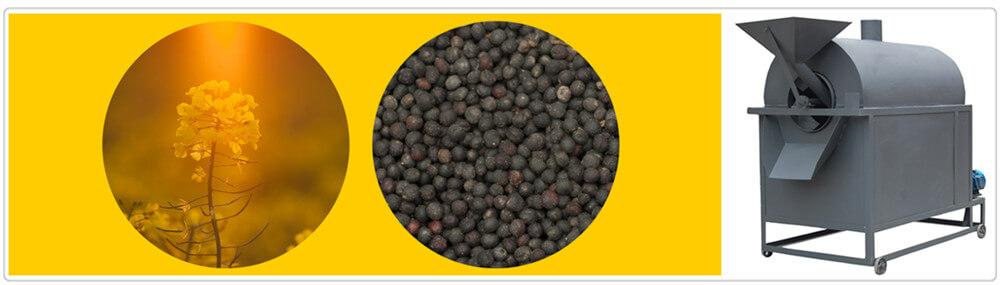
rotary rapeseed roaster

Adopt rotary roaster or flat bottom roaster for rapeseeds roasting to achieve the desired temperature and moisture. The flat bottom roaster adopts conduction oil as the heat source and stirs the materials with the mixing blade. The rotary roaster has the rapeseeds turned within the rotating drum for uniform heating.

3. Canola Oil Press Machine


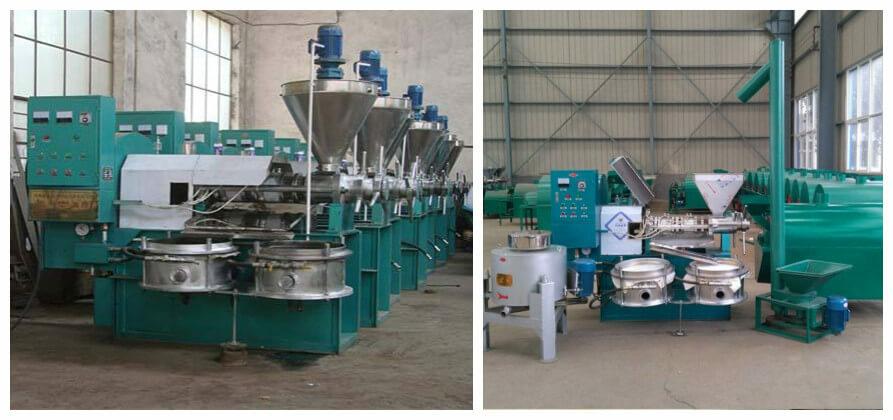
rapeseed oil press machine for sale

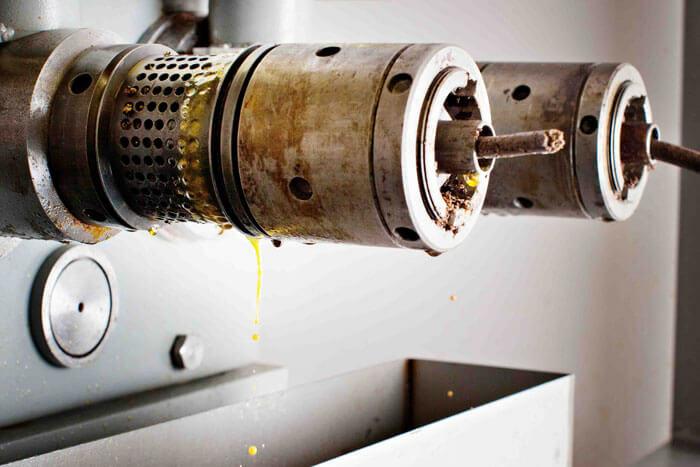
With the aid of feeder, the roasted rapeseeds enter the canola oil press machine. The worm rotates along with the main shaft to push the materials forward. With the reducing of the volume of the pressing chamber, the pressure within the chamber increases gradually. Rapeseed oil press machine is equipped with the automatic barrel heating system. Meanwhile, the friction force produces heat. The cells of the materials are destroyed and the oil flows out. When the oil flows onto the filtering barrel, by the vacuum pump, the oil is pumped into the barrel and the residues are left on the filter cloth, thus the pure oil is obtained. 

4. Canola Oil Refining


1) Degumming


Degumming is to remove the phospholipids in the crude rapeseed oil. The crude oil is preheated and phosphoric acid is added.

2) Alkali refining


Alkali refining is to remove the free fatty acids in the crude oil. Alkali acid is added to reacts with free fatty acid. When the soapstocks precipitate obviously, stop stirring and settle for several hours. Then remove the soapstocks.
Preheat the clean oil and add hot saline-alkaline water. Settle and discharge the wastewater. Wash with hot water for several times.

3) Decolorization


Decolorization is to remove the pigments in the canola oil. Pump the oil into the decolorization tank and dehydrate under vacuum. Add bleaching clay and stir for 20 minutes. Then the oil is cooled and filtered.

4) Deodorization


Deodorization is to remove the odor substances in the oil. The decolorized oil is pumped into the deodorization tank for vacuum deodorization by steam distillation. The oil is then cooled and filtered.

Tea Seed Oil Production Line


Tea Seed Oil Production Line Introduction


Tea seed oil production line adopts low-temperature screw pressing technology to extract oil from raw tea seeds. The oil extraction production line is compact in design, has a small footprint, and it is easy to operate and easy to maintain. It is widely used in small and medium oil production plants.

Production Process of  Tea Seed Oil Extraction Line


The comprehensive production process of tea seed oil is as follows:

Seed material→drying→cleaning and removing impurities→shelling→separation→seed kernel→crushing→water conditioning→pressing→crude oil (pressed cake)→fine filtration (leaching)→pure tea seed oil (oil cake).


1. Drying


If the water content of the harvested tea seed is too high, the husk is hard to be broken and the plasticity is large. The squeezing is easy to excrete. Therefore, Camellia seeds with high water content should be dried so that the moisture content does not exceed 5% in order to dehull and roll the embryos. Tea seed drying is very important in oil extraction, and the quality of tea seed drying has a direct effect on the oil yield.


1.1 Changes of heat and steam pressure in drying tea seed

The drying process of tea seeds is divided into three stages: 1. In the preheating stage, the heat supplied by hot air to camellia seed is used to increase the temperature of the camellia seed, and a small portion of the heat is used to vaporize the free water of the camellia seed. With the increase of the temperature of the camellia seed, The partial pressure of steam on the surface is also rising, and the water vaporization rate is also increasing rapidly; 2. In the constant-speed drying stage, the water vapor pressure on the surface of tea seed is in the saturation state corresponding to the temperature of the tea seed at this time. The drying speed is constant, which is equal to the diffusion rate of the moisture from the surface of the camellia seeds to the surrounding medium, and the moisture content decreases linearly; 3. In the slow-down period of drying, the moisture inside the camellia seeds is transferred to the surface and evaporated–that is, the heat and moisture transfer process, until the moisture contained in the camellia seeds is balanced with the humidity of the hot air, and the temperature of the material rises to the same temperature as the medium.

1.2 Tea seed drying method

The tea seed is generally dehydrated by low-temperature baking and drying method because the outside of the tea seed kernel is covered with a densely organized tea seed husk, which hinders the heat transfer and moisture evaporation processes of the tea seed kernels. Most of the moisture is concentrated in tea seed kernels. A plate dryer is used to control the steam pressure of the interlayer which should be heated to about 0.2MPa, and the tea seed kernel with a moisture content of about 8% is dried to a moisture content of about 4% to minimize the free moisture in the kernel and facilitate water conditioning.

2. Cleaning and Removing Impurities


The purpose of cleaning is to increase the oil production rate, to improve the quality of tea seed oil and the utilization value of oil cake, to improve the treatment ability of the machine, to reduce the wear degree of the equipment, and to increase the processing capacity of the equipment. Cleaning methods include screening, destoner machine, magnetic separation, removal of side-by-side mud, dry specific gravity sorting and other methods.


The camellia seeds after drying should be cleaned of empty shells, dirt, and other debris. And the process requirements for seed cleaning are as follows: The maximum impurity content of the clean oil tea seed is less than 0.2%; the amount of tea seed in the waste is less than 0.5%.

3. Shelling and Separation


The impact mill is used to break the seed husk, and the husk is thin, and after drying, it contains few moistures and is easily broken. The requirements of shelling and kernel shell separation are: high shell breaking rate, no seed leakage, small powder degree; and there are two main indicators for the separation of kernel shells, that is, shell percentage in kernel and kernel percentage in the shell. Obviously, the lower the kernel percentage in the shell, the better the oil output rate, which is beneficial to the full utilization of raw materials and the increase of oil yield and cake yield.
The kernel percentage in the shell can be set to 0.3%. The shell percentage in the kernel is hoped to be as low as possible, but there are two points to consider: one is that, with a low shell content, the squeezing chamber of the oil press is easily locked by the pressed material, causing slippery buckling. The squeezing is difficult to carry out. The second is to consider the solvent leaching of the cake. When the cake contains fewer shells, there is no skeleton, the material layer is easily compacted, and the solvent penetrates difficultly, resulting in high residual oil in the oil cake, affecting leaching efficiency and solvent consumption. Based on the above two points, after repeated testing, we found that the best value for shelling is to separate about 75% of the tea seed shell content.

4. Crushing


A toothed roll crusher is used to crush the kernels containing a certain amount of shells. The purpose is to granulate and homogenize the seeds of different sizes so that they have the largest surface area and are conducive to the water conditioning. However, the degree of powder cannot be too large, so the spacing between the two-toothed rollers should be strictly controlled.

5. Water Conditioning


After the addition of water, the entire structure of the tea seed kernel has changed greatly, which facilitates the extrusion of the oil. Considering the plasticity and elasticity of the squeezed material, the water content is generally controlled at about 2%.


Low-Temperature Oil Pressing Advantages


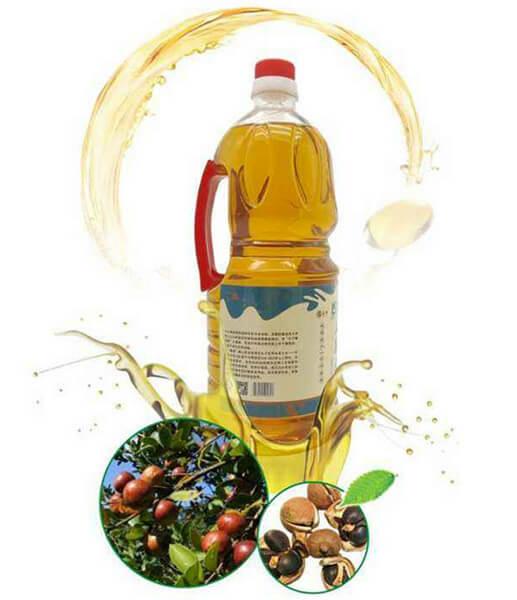
cold pressed teaseed oil

  • Improve the quality of raw tea seeds and ensure the quality of raw tea seeds;

  • Avoid the dark color of tea seed hulls affecting the product color;

  • Avoid the poor quality of mildew tea seed materials into the production process, which ensures the crude oil quality;

  • Avoids the dark color and odor of tea oil caused by high temperature;

  • Compared with the traditional technology, low-temperature tea seed oil pressing technology has the advantages of simple process, good oil quality, energy saving, low investment in equipment, small area, etc. The finished tea seed oil obtained through this pressing process has light yellow, clear and transparent look, fresh fragrance. It is not only good edible oils but also has health care functions and can be used as makeup oil, thus improving the economic and social benefits of tea seed.


Corn Oil Extraction Plant


Introduction to Corn Oil Extraction Plant


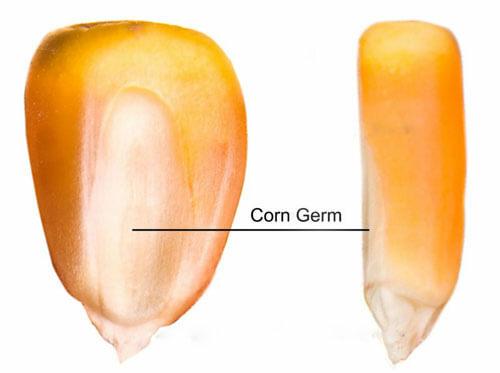
Corn oil extraction plant extracts corn germ from corn and produces corn germ oil by solvent extraction method. The corn oil production line includes corn germ extraction process, corn germ pretreatment and prepressing process, corn germ cake solvent extraction process and crude corn germ oil refining process. Corn oil extraction plant is suitable for large-scale corn oil production. Adopt prepressing extraction technology, this corn oil plant has a large capacity and short extraction time. The crude oil obtained has few impurities, shallow color, and high quality. For small and medium scale production, corn oil processing plant by the pressing method is provided.


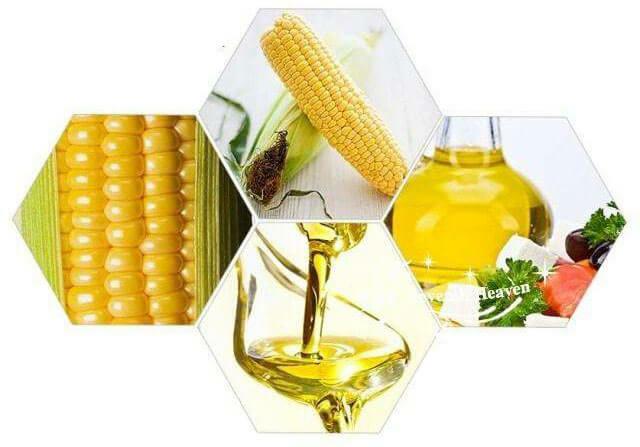
corn oil

Features of Corn Oil Processing Plant


1. We can provide corn oil plant with different capacity according to your requirement.
2. Optional corn germ extraction line provides equipment with advanced design.
3. Corn oil extraction plant adopts prepressing extraction technology, the crude oil obtained has high quality.
4. Corn oil production line adopts negative evaporation technology, which helps saving energy, improving oil quality and ensuring safe operation.
5. Rational design of corn oil refinery helps shorten the dewaxing time and increase capacity.

The Process of Corn Oil Production Line


corn germ for making corn oil


1.Dry Method


The dry method extracts corn germ mechanically without moisture adjusting. This method has a simple process, low power consumption and no pollution. It is mainly used for producing corn flour.

2. Wet Method


Wet method is used in starch industry. The cleaned corn is soaked in sulfurous acid solution and then crushed. Adopt hydrocyclone the corn germ is separated. The corn germ has high moisture content and is dried before storage. This method has high efficiency of 85%-95%and high corn germ purity above 70%.

3. Half-wet Method


Half-wet method is suitable for fermentation industry. The cleaned corn is moistened and crushed. Adopt winnowing equipment, the bran is separated. Adopt gravity separator, the endosperm is separated from the mixture of corn germ and endosperm. The mixture enters the roller-crushing mill. The germ is flattened while the endosperm is crushed. Then by using plansifter, the germ and endosperm are separated. The corn germ is dried by pipe bundle drier and then enters the oil pressing workshop in the corn oil plant. High efficiency above 85%, low power consumption, no pollution, low cost.


Flaxseed Oil Production Line


The Best Flaxseed Oil Processing Method


Flaxseed oil contains an adequate amount of linolenic acid and the oil is usually extracted by low-temperature physical squeezing in the flaxseed oil production line. Because flaxseed oil has a balanced proportion of linolenic acid and linoleic acid, which is 1:4, and it is scientifically proven that when the ratio of linolenic acid to linoleic acid is 1:4, the human body can be in the healthiest state, and it is very difficult for various external bacteria to invade. Flaxseed oil can meet human health standards.
However, linolenic acid is highly heat-sensitive and easily oxidized. When the critical temperature is exceeded, the activity of linolenic acid begins to be destroyed. Therefore, when making flax seed oil, it is necessary to choose the physical pressing method at low temperature without any heating treatment. Low-temperature physical squeezing retains the activity of linolenic acid, and no additives in the whole process to maintain the natural quality of raw materials. Second, the physical pressing temperature is lower than the melting point temperature of the wax, so that the pressed flaxseed oil is free from the “dewaxing” procedure and avoids the damage caused by the dewaxing process.

cold pressing method for making natural flaxseed oil

Processing Steps of Flaxseed Oil Physical Press Line


The pressing production process keeps the most effective ingredients in flaxseed, such as polyunsaturated fatty acids, protein, dietary fiber, vitamins, trace elements and so on. The pressed oil is more suitable for a special supplement for human health. Normal temperature pressing method refers to the flaxseed oil extraction at room temperature under great pressure from physical machinery without the traditional process of high-temperature frying or steaming, so the normal temperature pressed oil still distributes in the undeformed protein cells and contains rich ingredients (linolenic acid and other nutrients).
The steps of flaxseed oil press line are mainly: Flaxseed selecting → screening → cleaning up impurities → crushing → flaking → conditioning →normal temperature pressing → residue separation → degumming →dehydrating → debittering → crystallization → cryogenic filtration → physical pressed linseed oil


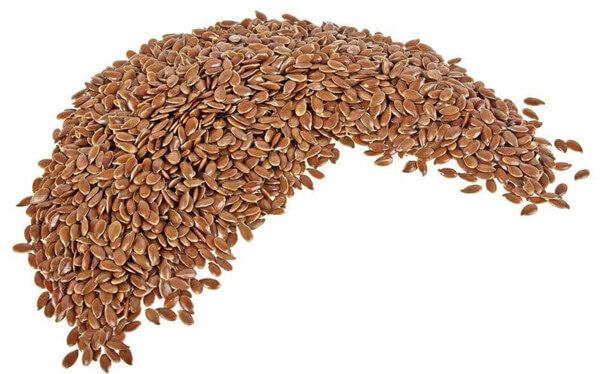
best flaxseeds for making flaxseed oil

Due to the unique production technology of normal temperature pressed linseed oil, the requirements for raw materials are more stringent, therefore, fresh and plump flax seeds should be selected. The acid value of oil produced by immature and aged grains is higher and the flavor is poor, while mildew and broken grains are liable to be polluted by aflatoxin, so immature, damaged, mildewed and aged grains cannot be used to produce flaxseed oil. In addition, the following indicators should also be controlled: oil≥32%, moisture≤9%, impurities≤2%, acid value (KOH)≤1.0mg/g, peroxide value≤5mmol/kg.

At present, the commonly used raw materials for pressing flaxseed contains 38%~45% of oil and 6.5%~8.5% of moisture


Advantages of Our Flax Seed Oil Production Line


  • First, our oil pressing line has flexible production capacity, it can be equipped with complete industry standard equipment or can also be customized according to the actual needs of different customers. The equipment has large processing capacity and low failure rate, which ensures higher working efficiency. The normal continuous working hours of the equipment are fully guaranteed and the service life is long, which can create greater economic benefits and production capacity for the users.

  • Second, the material of our low-temperature oil pressing line must be carefully selected, and the whole temperature during the oil extraction procedure is relatively low. Therefore, the color of the extracted crude oil is lighter and the acid value is lower. Generally, our production line does not require chemical refining, but only needs to go through hydration degumming, activated charcoal debittering, cooling, filtration, dewaxing, etc. which avoids the effect of chemical refining process such as alkali refining, decolorization of activated clay and high temperature vacuum deodorization on the quality of flaxseed oil.


low-temperature pressed flaxseed oil


Application of Low-Temperature Pressed Oil


Our production line uses pure physical methods to extract flaxseed oil, so no chemical reagents or chemical residue reagents are added during the extraction process, and the oil is suitable for making excellent high-quality cooking oil and cosmetics, or pharmaceutical additives. The oil has a unique flavor, which can be widely used for cooking various foods and dishes. It has high nutritional value and health care and ensures high antioxidant activity. What’s more, our low-temperature oil press line is especially suitable for producing special oils and fats in small-batch oil workshop.


Rice Bran Oil Extraction Plant


Rice Bran Oil Extraction Plant Introduction


Rice bran oil extraction plant produces rice bran oil using expansion extraction technology. The rice bran oil plant includes rice bran pretreatment & expanding workshop, rice bran oil solvent extraction workshop and rice bran oil refining workshop. Rice bran oil production line adopts rice bran expander to make the rice bran into porous expanded pellets, which improves solvent permeability and increases extraction efficiency. Adopts negative pressure evaporating system and mineral oil system, having the features of saving energy and good crude oil quality. Rice bran oil refinery plant adopts physical deacidification and deodorization technology, having high refining yield and the oil obtained has shallow color and good quality.
rice bran oil

Advantages of Rice Bran Oil Plant


1. Rice bran oil processing plant adopts expansion technology, which increases extraction efficiency, reduces residual oil rate and improves the quality of the extracted oil.
2. Rice bran oil extraction plant adopts negative pressure evaporating system, having the low evaporating temperature, the extracted oil has good quality and shallow color, saving steam consumption.
3. Rice bran oil extraction plant adopts mineral oil system to reduce solvent consumption.
4. Rice bran oil refinery plant adopts physical deacidification and deodorization technology, having good deacidifying and thermal decoloring effect, high refining yield, good oil quality.
5. The decolorization process of the rice bran oil refinery plant combines premixing with steam stirring, having good decolorization effect. The negative pressure operation ensures the quality of the oil.

The Process of Rice Bran Oil Production Line


Rice Bran Pretreatment & Expanding Workshop


rice bran→rice bran cleaning→rice bran and broken rice separation→conditioning→expanding→drying and cooling→to solvent extraction workshop


rice bran oil pretreatment workshop

1. Rice Bran Cleaning


First, the rice bran enters the cleaning screen in the rice bran oil plant to remove the impurities. Then roller magnetic separator is adopted to remove the iron impurities. Iron impurities can cause damage to the expander and influence the expansion effect.

2. Rice Bran and Broken Rice Separation


The rice bran goes through rice bran & broken rice separator to remove broken rice and whole rice. This process can ensure normal operation of the rice bran oil processing plant, reduce residual oil rate in the meal, reduce solvent consumption and increase the oil yield. The broken rice can be used for sugar and liquor making.

3. Rice Bran Conditioning


Conditioning is to preheat the rice bran and adjust the moisture content. The moisture content can decide the elasticity and plasticity of the expanded materials. Preheating can improve the expansion effect and increase the capacity. The rice bran enters the conditioner for conditioning process in the rice bran oil production line.

4. Rice bran Expanding


The conditioned rice bran enters the rice bran expander and direct steam is injected. By the rotating of the main worm shaft, the materials are extruded, heated, sheared and kneaded, the temperature and pressure increases and the materials are extruded out. With the sudden decrease of the pressure, the moisture evaporates rapidly and the materials expand and form the porous pellets.
Adopting expansion technology in the rice bran oil production line can increase extraction efficiency, reduce residual oil rate in the meal, increase the capacity of the oil extractor, reduce power consumption and improve the quality of the extracted rice bran oil.

5. Drying and Cooling


The expanded materials have high temperature and high moisture content and shall be dried and cooled to meet the requirement of the extraction process. Usually, chain dryer or pneumatic dryer is adopted in the rice bran oil processing plant for the drying and cooling of expanded rice bran.


Cottonseed Oil Extraction Plant


Introduction to Cottonseed Oil Extraction Plant


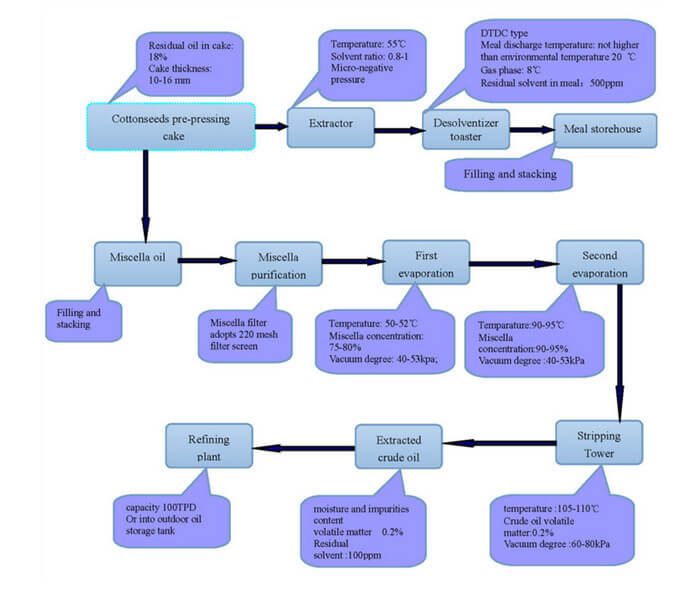
Cottonseed oil extraction plant adopts solvent extraction method to extract cottonseed oil. The cottonseed oil plant includes cottonseeds pretreatment and prepressing workshop, cottonseed cake solvent extraction workshop and crude cottonseed oil refinery plant. The residual oil rate in the cottonseed meal is lower than 1%. Cottonseeds contain a toxic pigment which called gossypol, of which the content is 0.15%-1.8%. Cottonseed kernels contain 0.5%-2.5% of gossypol. After processed by the cottonseed oil refinery plant, the gossypol content in the oil is less than 0.01%. The products of the cottonseed oil processing plant are cottonseed oil, cottonseed meal, cottonseed hull, and soapstock.


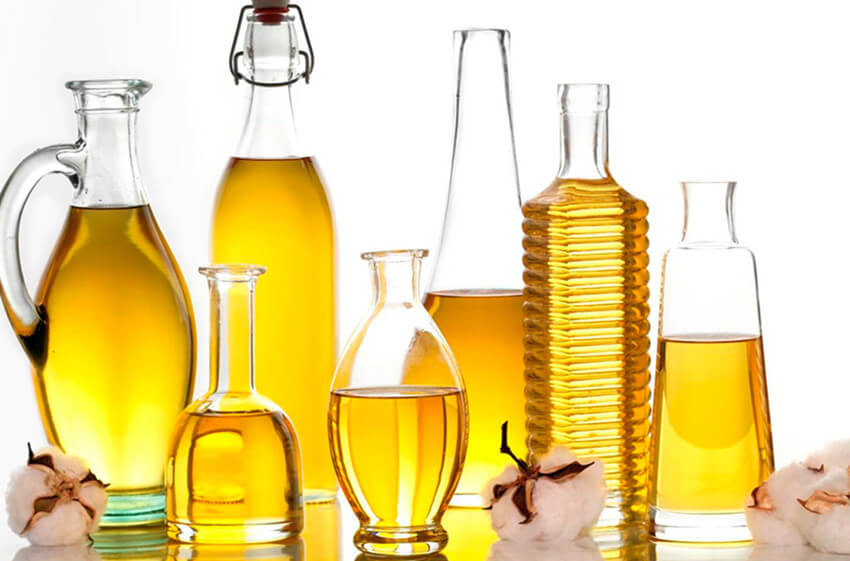
cottonseed oil

Features of Cottonseed Oil Processing Plant


1. Cottonseed oil mill plant has high automation degree, continuous operation, saving labor.
2. The pre-pressed cake has low residual oil rate and is easy for solvent penetration.
3. Cottonseed oil extraction plant has multiple oil extractors for selection and advanced mineral oil system.
4. Adopting negative pressure evaporation system, saving energy and reducing steam consumption.
5. Low residual oil rate in the meal, good oil, and meal quality.

The Process of Cottonseed Oil Plant


Section I:  Cottonseeds Pretreatment and Prepressing Workshop


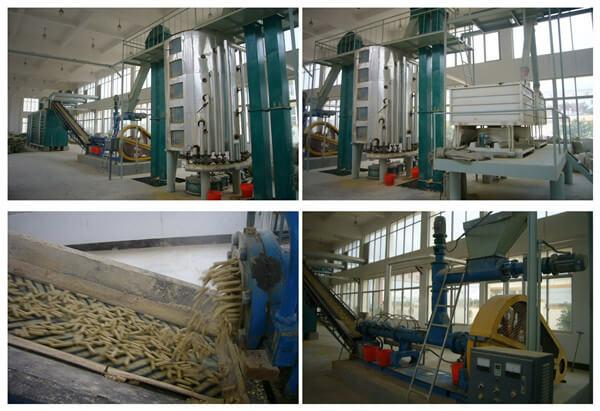
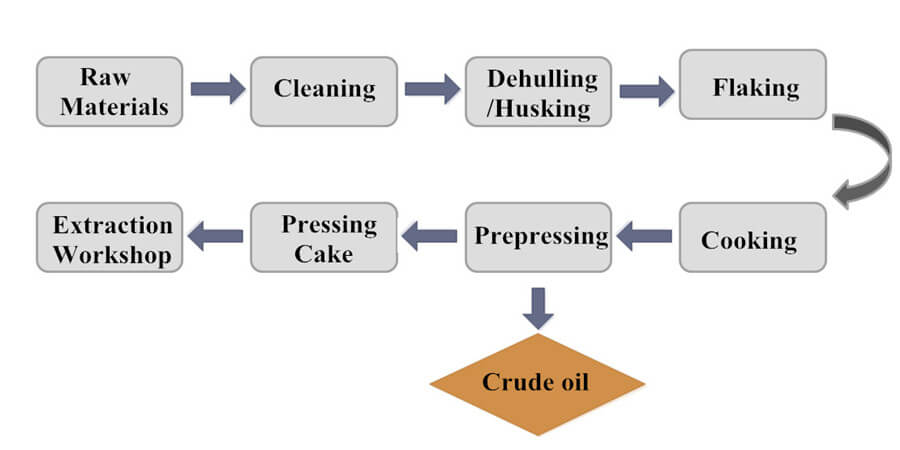
cottonseed oil pretreatment and prepressing processes


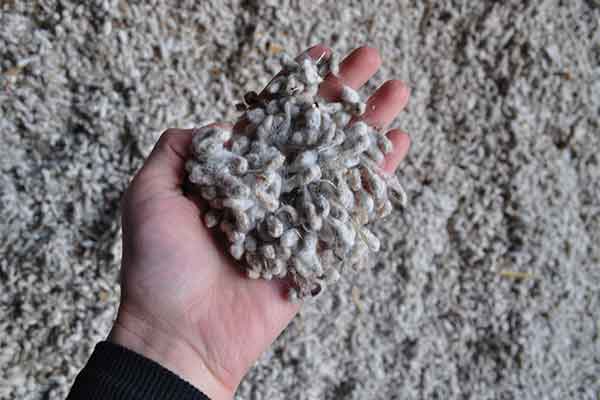
If your cottonseeds are with lint, then you need to add cottonseed delinting machine in the cottonseed oil plant.

delinted cotton seeds


Section II: Cottonseed Cake Solvent Extraction Workshop


cottonseed oil extraction processes

Oil Extraction


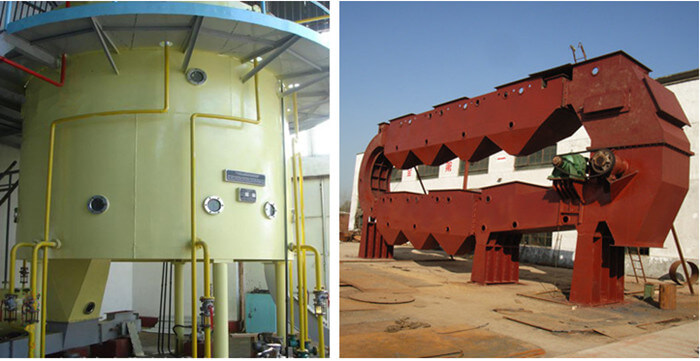
Oil extraction is using the organic solvent to extract oil from the pre-pressed cake inside the oil extractor. Multiple oil extractors such as loop type extractor, rotocel extractor and towline extractor can be used for the cottonseed oil extraction plant. After oil extraction, miscella and the solvent containing wet meal are obtained. The miscella is pumped into the hydrocyclone to remove the fines and then the miscella enters the miscella tank in the cottonseed oil extraction plant.

cottonseed oil extractor

Wet Meal Desolventizing


The wet meal from the oil extractor enters the DTDC desolventizing the cottonseed oil extraction plant.After pre-desolventizing, desolventizing, drying, and cooling, the solvent is removed and the dry meal is obtained and sent to the meal storehouse for packaging. There is automatic feed valve on the desolventizing layer to keep constant material level.

Evaporating and Stripping


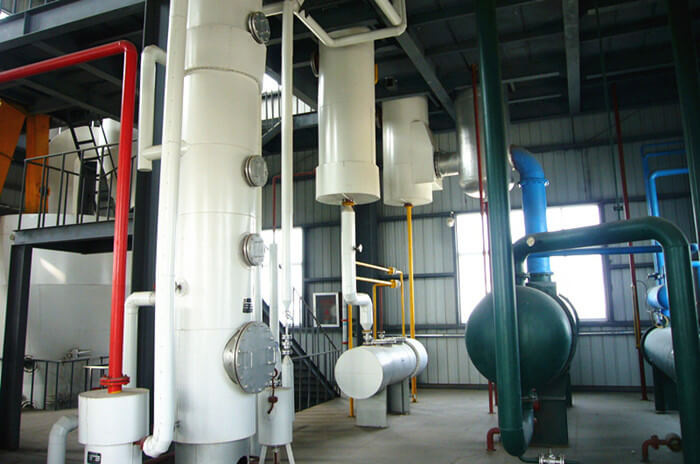
The miscella in the miscella tank enters the first long tube evaporator, the second long tube evaporator and the disk stripping column to remove the solvent. The whole system works under negative pressure. The crude oil obtained goes to the cottonseed oil refinery plant.
d. Solvent recovery: The solvent vapor enters the condensing system. The solvent recycled enters the solvent holding tank for circulation. The wastewater is discharged into the water seal tank. The vent gas in the cottonseed oil extraction plant enters the mineral oil system for further recovery of solvent. Solvent recovery can reduce solvent consumption and ensure safe production.

cottonseed oil extraction machine evaporator


Section III: Crude Cottonseed Oil Refinery Plant


cottonseed oil refinery plant

1. Degumming


Phospholipids are easy to adsorb bleaching clay and reduce bleaching effect. Meanwhile, the gossypol in the crude oil can react with phospholipids to form bound gossypol which can’t be removed. By degumming, the filtered cottonseed oil is preheated and phosphoric acid is added to change nonhydratable phospholipids into hydratable phospholipids.

2. De-acidification


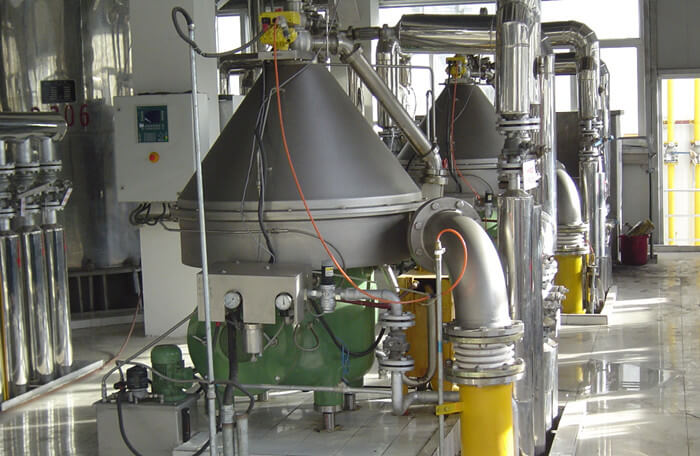
Cottonseed oil is mixed with alkali which reacts with free fatty acids to form soapstocks. The mixture is centrifuged to separate the soapstocks from oil. The soapstocks have strong adsorbability and can adsorb some pigment, protein, phospholipids, mucilage and other impurities. The free gossypol also reacts with alkali to form the salt, which is adsorbed on the soapstocks to be removed. The oil is washed with hot water to remove the residual soapstocks. The wastewater is separated from the oil in a second centrifuge. The oil is then dehydrated under vacuum.

3. Bleaching


The degummed and neutralized oil is mixed with bleaching earth and then the mixture is sent into the bleaching tower in the cottonseed oil refinery plant. By heating under vacuum, the residual gossypol and other pigments in the oil are adsorbed on the clay. The mixture from the bleaching tower is pumped into the leaf filter to remove the waste clay.

4. Deodorization


The bleached oil is pumped into the deodorization tower in the cottonseed oil refinery plant to remove the free fatty acids and odor substances so that to improve the flavor, stability, color, and quality of the oil. The deodorization process is performed under high temperature and high vacuum.

5. Cottonseed Oil Fractionation Plant


cottonseed oil fractionation equipment

Cottonseed oil fractionation plant can obtain liquid oil and solid fat by cooling crystallization and solid-liquid separation. The plant has the features of advanced technology, fully automatic, high liquid oil yield and high solid fat purity. Cottonseed oil contains a fair amount of saturated fatty acid and thus has a high melting point. At low temperature, part of triacylglycerol crystallized and precipitated, which restricts the application, transportation and trade of cottonseed oil. By cottonseed oil fractionation, liquid oil and solid fat are obtained. The liquid oil can be used to make mayonnaise and salad dressing. The solid fat can be used for the manufacturing of frying oi, margarine, shortening, cocoa butter substitute, etc.


Palm Kernel Oil Production Line


What is Palm Kernel Oil?


The oil extracted from palm kernels is called palm kernel oil. The oil content of palm kernel is around 50%~55%. Fresh palm kernel oil is edible. Its high stability, free of cholesterol, free of trans fatty acids make it particularly popular in frying use and are good for human health. The palm kernel oil liquid would turn to solid fat as the temperature of storage environment changes, and the solid fat can be used as a substitute for cocoa butter. Because palm kernel oil & coconut oil have a similar effect, but palm kernel oil is more moderate and contains more unsaturated fatty acids than coconut oil. (PS: a sufficient supply of unsaturated fatty acids is good for human skin which can protect the skin, and in particular prevents skin damage and aging, making the skin shiny and translucent. )
palm kernel oil processing

In industrial production, palm kernel is used to make oil fatty acids, fatty alcohols, and glycerol. For cosmetic applications, the kernel oil is extracted and made into handmade soap, shampoo, laundry detergent, toothpaste and other personal care products and home care products. All in all, palm kernel oil is widely used in food, chemical, pharmaceutical, cosmetics, plastics and other industries.


Processing Steps of Plam Kernel Oil Production Plant


Pretreatment is necessary for efficient oil extraction from raw palm kernel. In palm kernel oil industrial production, oil raw materials are usually palm kernel or pressed cake. If the material is palm kernel, the main pretreating steps are palm nut cleaning, shelling and separation, crushing, flaking and steamed frying. If your raw material is a press cake from palm oil press workshop, you need to do this: The material cake should be cracked by a screw conveyor and conveyed into a fiber separator drum for fiber separation. After these simple treatment, you can get cleaner palm kernel, the rest of the process is the same:

Palm Nut Cleaning


The raw palm nut’s impurity should be cleaned firstly otherwise it would cause damage to the screw press machine. The magnetic selector is installed for removing metal debris, while the vibrating sieve is used for removal of sand, fines or other undesirable impurities. And the stones could be removed by gravity stoner.

Palm Nut Shelling and Separation


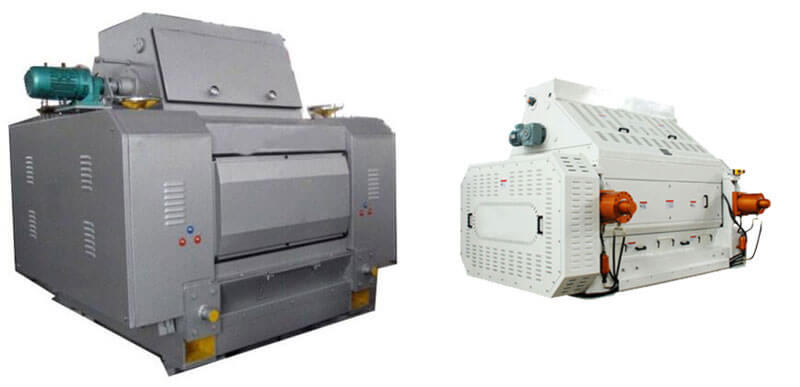
palm kernel cracking machines
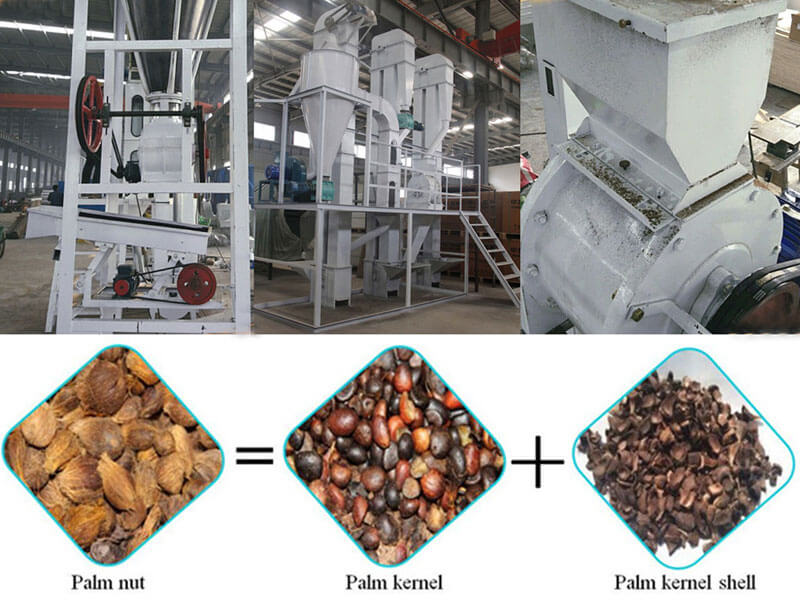
By palm kernel husking and separating system, the clean palm nut is cracked and divided into palm kernel and shell. First of all, the palm nut is husked by our high-quality palm nutcracker with a husking rate of 85-95%. Next, the cracked shell and kernel are separated by air separator machine, through the air duct, shell and kernel could be firstly separated onto V-shaped screen’s upper layer and the lower layer, finally, the rest kernel on the upper layer could be dropped from the screen holes by screen vibrating. After separating, the kernel content in the shell and the shell content in the kernel are less than 5%. Shelling can increase the oil yield, improve the quality of crude oil & cake, reduce abrasion of equipment and increase the effective production of equipment. The palm shells are always sent to the boiler room for fuel use.

Crushing


palm kernel crushing machine
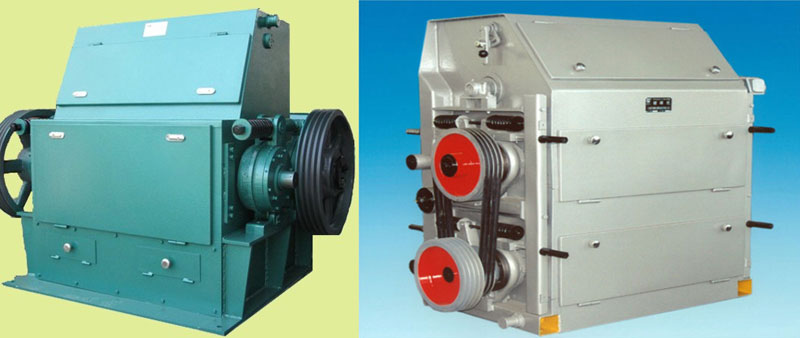
Since palm kernel is relatively large and hard, in order to better improve the oil yield, the palm kernel needs to be secondary crushing after husking. The main crushing equipment is rolling crusher, which can break kernels into small pieces and easy to produce oil. It has a simple structure, stable performance and easy to operate.

Flaking


palm kernel flaking machine
Flaking machine is mainly made up of two or more opposite rotating rolls (high nickel chrome molybdenum alloy). When the kernel pieces are in the middle of the two rollers, they are squeezed by instantaneous pressure to form flakes, meanwhile, the crude oil is rolled out firstly. This machine is widely used in oil plants and individual oil processing mill, easy to operate and maintain. After flaking, the palm kernels are easy to be steamed.

Steamed cooking


vertical palm kernel steam cooking machine
The purpose of steamed cooking is to completely destroy the oil cells by high temperature and moisture, so that the protein is denatured, the oil is steamed out and collected, the viscosity and the surface tension of the oil are reduced, the elasticity and plasticity of the material are adjusted, and the enzymes are passivated. Steamed cooking equipment is a steam frying pan, which can process the raw palm kernel flakes into matured flakes by heating, spraying and steaming. The equipment can also be used as a softening pot, softening can improve the quality of rolled flakes, thereby increasing the oil yield, and can improve the quality of crude oil. It is the necessary equipment for vegetable oil factory.


Palm Kernel Processing Plant Customized for You


According to different production capacity and customers’ different requirements on the products, our company can make rational choice and combination of palm kernel oil production processes, choose the best technological process, as well as sophisticated equipment manufacture and automatic control system to provide customers with perfect technical services. For example, either single machine or production line are both for sale. Our palm kernel oil production line’s capacity is 10-100 tons per day and its residual oil rate is 5%, and we provide you with palm kernel oil production and refining process design, manufacture, installation, commissioning and after-sales service if it is needed.


Walnut Oil Equipment for Pressing Production Line


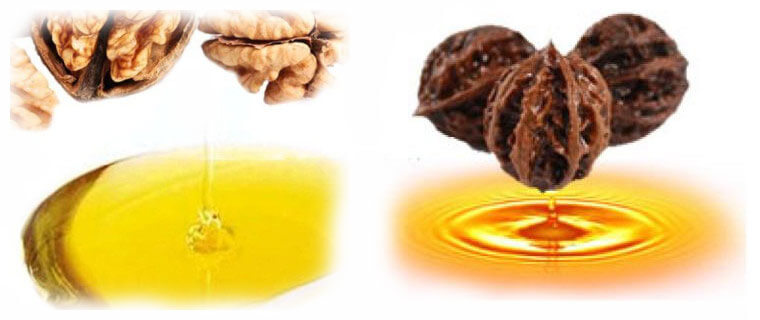
Walnut oil press equipment adopts twice pressing method to obtain walnut oil. The equipment mainly includes walnut hulling machine, walnut shelling machine, hydraulic oil pressscrew oil presswalnut oil refining equipment, etc. Walnut processing equipment can retain the nutrition in the walnut kernel, has high oil yield and low residual oil rate in the cake. The nutrition in the walnut cake is also retained and the cake is well prepared for deep processing. The refined walnut oil has high quality and can be packaged directly for sale. Walnut oil press equipment is suitable for small-scale walnut oil production. We also supply walnut oil extraction equipment which is suitable for large-scale walnut oil processing plant.

walnut oil

Features of Walnut Processing Equipment


1. Walnut processing equipment adopts twice pressing technology to maximize the oil yield.
2. The nutrition in the walnut kernel is retained in the walnut oil and cake.
3. The complete process helps you to process walnut from hulling to refining.
4. Walnut oil refining equipment is easy to operate, has low energy consumption, good refining effect and the quality of oil is effectively increased.

Processes of Walnut Oil Production Line


walnut hulling→walnut grading, shelling and separating →walnut oil pressing→twice pressing→crude walnut oil filtering→walnut oil refining


The harvested walnuts are put into the walnut hulling machine to remove the walnut hulls.
This walnut processing machine integrates the functions of hulling and washing. It adopts high speed rotating hob to cut off the hulls. The uncut hulls are removed by the steel brush in the walnut machine. The hulled walnuts are washed to remove the mucus on the surface.


Coconut Oil Plant Introduction


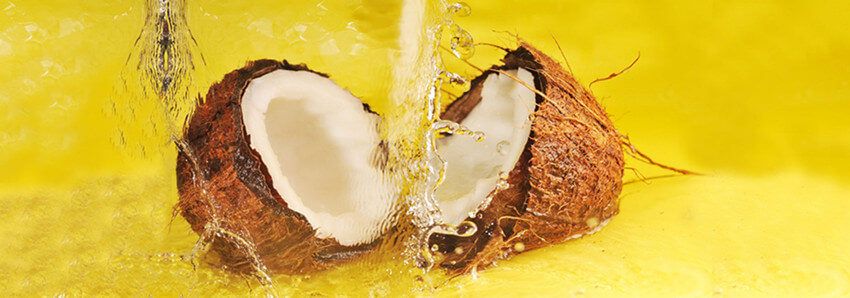
Coconut oil plant adopts twice pressing technology to produce coconut oil from the dried copra. The coconut oil production line mainly includes copra pretreatment and oil pressing process, oil refining process. Copra cake produced after pressing can be used as animal feed. We provide 30-1000 TPD coconut oil processing machine and 1-600 TPD coconut oil refinery machines. The moisture content of copra for oil pressing should be controlled within 7%-10%. We also provide crude copra oil solvent extraction plant which can make residual oil in cake lower than 0.8%.

coconut oil

Advantages of Coconut Oil Processing Machine


1. The coconut oil plant has low energy consumption and long service life.
2. The copra oil machine can minimize oil loss, increase the oil yield, improve product quality and improve the quality of oil and cake.
3. Continuous mechanization reduces human labor and labor costs.
4. Advanced dust removal system ensures the neat and clean of the workshop.
5. Adopts automatic welding technology, coconut oil refinery machines look beautiful and clean.

Processes of Coconut Oil Production Line


The coconut oil production line mainly includes crushing section, cooking section, oil pressing section, degumming & de-acidification section, bleaching section and deodorization section. Common coconut oil plant processing steps: Copra→Cleaning→Crushing→Cooking→Pre-pressing→Twice Pressing→Filtration→Crude Oil


1. Copra Cleaning


Coconut oil production line adopts magnetic separator to absorb the metal impurities in the copra so that to avoid damaging the crusher.

2. Copra Crushing


cppra crushing machine
Adopting toothed roll crusher, the copra is crushed into small pieces, which is convenient for cooking and oil pressing. The pieces crushed by the toothed roll crusher have a uniform size.

3. Cooking


copra cooking machine
The crushed copra is sent to the top layer of the vertical cooker, which cook the copra pieces to meet the requirement for pre-pressing. The cooker adopts agitating blades to ensure the uniform cooking.

4. Pre-pressing


copra oil prepressing machine

As copra has a high oil content of 52-72%, twice pressing technology is adopted to press the copra oil as much as possible. The cooked copra is lifted into the pre-press machine by elevator. This coconut oil processing machine can get 70% oil out and the residual oil rate in the cake is about 15-20%. The copra oil machine is continuous having a large capacity and small land occupation.

5. Twice Pressing


copra oil twice-pressing machine
The pre-pressed cake is sent to the oil pressing machine and pressed again to reduce the residual oil in the cake to the minimum. The copra oil press adopted has high production efficiency and is easy to operate and maintain. The residual oil rate in the cake after twice pressing is around 5-8%.

6. Crude Copra Oil Filtration


The pre-pressed and twice-pressed copra oil is filtered to lower the impurity content, making a better preparation for the copra oil refinery;

7. Copra Cake Packing


The oil cake after twice pressing will be crushed & measured, and then bagged and sealed.


Improved Sesame Oil Production Line Introduction


The sesame oil production line has been improved by combining modern hydraulic oil pressing workshop with traditional roasting, dedusting, and cooling methods. In the sesame oil manufacturing process, it combines modern pipelining production with traditional frying equipment, which can not only increase production efficiency but also preserve traditional flavors. The superior oil production line not only retains the effect of roasting and dedusting on the fragrance of sesame oil in the traditional process but also reduces the time and space occupied by traditional techniques such as grinding, stirring and oil oscillating separation. Moreover, the improved oil pressing line also has features of modern hydraulic press technology, such as a high degree of mechanical automation, high production efficiency, etc.

Steps of Sesame Oil Hydraulic Production Line


Sesame seed selection has a great influence on product quality, and the main purpose of selecting is removing impurities and immature seeds. First, choose mature sesame which is full, moderately dry and wet; then use magnetic separator, screening machine, stoning machine and winnowing machine to complete the process of material feeding, screening, stone remover, magnetic separation, and complete process of dust-removing and air purification, which can reduce the damage to the subsequent machine.


Advantages of Improved Sesame Oil Production Line


1.Our improved oil hydraulic pressing process adopts high-low temperature combined baking method, which can minimize the loss of protein content in sesame seeds and other nutrients (such as vitamin B and linoleic acid). At the same time, the oil production rate is increased and the production cost is reduced. The structure of the national edible oil is improved: the oil could be also used for cooking and eating, while not limited to seasoning.
2.The modern pressing workshop’s oil output rate is 2 to 3 points higher than the traditional oil output rate. And it is labor saving: For small-scale oil manufacturing, 1 to 2 people can organize the entire pressing workshop.

Application of Sesame Oil Production


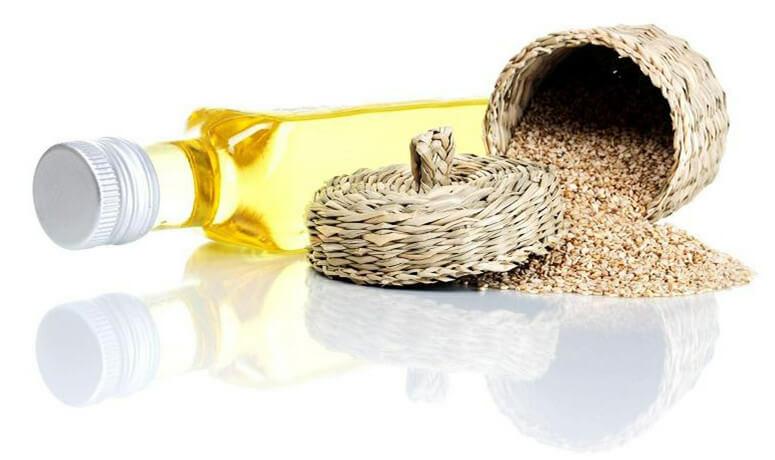
Sesame oil


sesame oil

Sesame oil has a wide range of application. In addition to seasoning food, sesame oil is widely used in health food, medicine, metal, printing, and dyeing industry. Sesame oil, like olive oil and peanut oil, is an all-natural oil that can be used directly without chemical refining.

Oil cake


Every time the oil is finished, it will produce a lot of oil residue. We can use the oil residue again to make some special snacks, such as sesame cake, etc. Residues can also be used to feed chickens, fish, flowers. Since there is also a large human demand for oil cake in the market, our sesame oil production line truly realizes high output and low consumption.


Peanut Oil Production Line


Fragrant Peanut Oil Production Line


The peanut oil production line is the extraction process of fragrant oil from peanut kernel by adopting the unique pressing technology. Peanuts are high-oil-containing oilseeds. Currently, the unique pressing processes are suited to extract high-flavored edible oils, which has really achieved “no chemical production”. The fragrant peanut oil obtained by pressing process maintains the natural ingredients and aroma of peanut oil, and it is rich in antioxidant vitamin E and has a long shelf life, so there is no need to add chemical antioxidants for storage; it is a pure natural oil products that are produced by combination of modern and traditional technology. With the improvement of living standards, the fragrant peanut oil is deeply loved by consumers for its unique pure fragrant flavor and have a broad market prospect. And the production line can be customer-made according to material variety, factory location, and labor resource.

pressed peanut oil manufactured by peanut oil pressing production line


Peanut Oil Production Process and Operating Points


In order to ensure the nutrition, flavor, and safety of fragrant peanut oil and reduce the cost, we adopt a physical squeezed method in the peanut oil production line. And the features of the pressing line are: (1) Extraction adopts pure physical pressing method to completely avoids the contact of raw materials and chemical solvents throughout the entire production process; (2) To abolish the unfavorable refining process which affects the quality of finished oil, such as solvent leaching, alkali refining and deodorization, so as to ensure the natural nutrients in the refined oil. (3) The refined oil is stored in an underground storage and the cooling water coil technology is used to ensure long-term storage.

1. Production Processes


1.1 Raw Material


The raw material which is used to produce fragrant peanut oil is fresh, full-grained, undamaged, mildew-free, free of insects and has not undergone an aging period. Raw materials would be cleaned by removing immature, damaged, and moldy grains during the cleaning process.

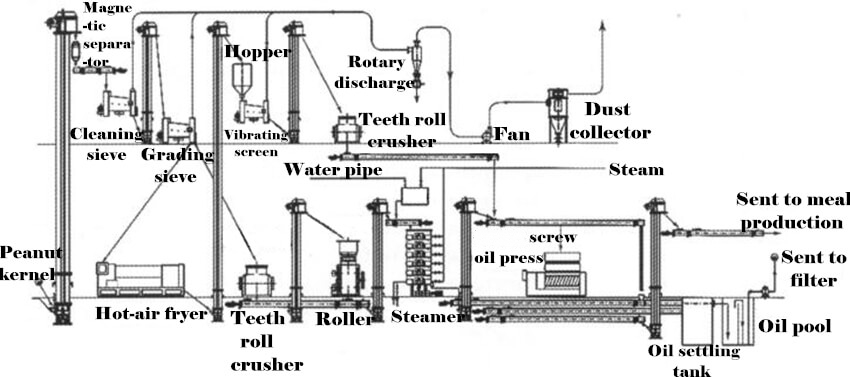
1.2 Process Flow of Peanut Oil Production Line


1.3 Process Parameters and Procedures


Peanuts are cleaned and shelled, medium-sized peanuts are screened (about 25% of the treated amount), and the rest are large- and small-sized peanuts (about 75% of the treated amount). The large-sized and small-sized peanuts are broken, rolled and steamed. The medium-sized peanuts are crushed and cleaned by red skin eliminator, then being baked. Finally, the three sized materials are mixed and then pressed in the press to obtain the crude oil. After pressing, the oil is settled and filtered to produce a fragrant peanut oil.

1.4 Operating Points


Stones, metals, etc. may damage mechanical equipment; moldy, insect-infested peanuts will seriously affect the quality of the oil. In order to reduce oil loss, improve oil yield, ensure high quality of oil, and prolong the service life of equipment, the cleaning process should be strictly controlled. Metals could be removed by magnetic separation, using magnets to remove magnetic impurities in raw materials. Other impurities like stones are removed by self-regulation vibrating sieve, using peanuts and impurities’ difference in the particle size and weight, with the help of peanuts and impurities in the relative movement of the screen surface.

  • Equipment: Self-regulation vibrating sieve, magnetic separator


The magnetic separator has the horizontal and vertical type. The separator is made of stainless steel, and the raw peanut flows through the body and the magnet separator extracts contaminants.Self-regulation vibrating sieve is widely used for separating impurities of large, medium and little-sized in grain, the machine has many features like the simple structure, smooth operation, low noises and consumption, good cleaning results, etc.


1.5 Peanut Oil Storage


The appropriate condition for peanut oil storage is 8% moisture content and the temperature which does not exceed 20℃. Sealed storage can prevent the infection of pests and the influence of the outside temperature and humidity, which is conducive to maintaining a low temperature.

Peanut oil is stored at a temperature below 15℃ in a sealed container to prevent lipase hydrolysis and oxidation, and to avoid the increase in acid number and peroxide value. The average temperature of the ground below 4m is below 20℃, so the storage house is built underground.


Factors That Affects the Fragrance of Peanut Oil


groundnut oil

The Effect of Peanut Raw Material Itself


The oilseed used to produce fragrant peanut oil requires full grain without aging period. Immature, broken, mildew and aged grains cannot be used to produce aromatic peanut oil: The acid value of oil produced by immature and aged grains is higher and the flavor is poor, while moldy and damaged grains are liable to be contaminated by aflatoxin. Therefore, in the production process, these oilseeds must be separated for the ordinary secondary oil processing alone.

The Effect of Baking Temperature


Hot-air roasting is a key process for the production of fragrant peanut oil. The flavor of peanut oil has a direct relationship with the baking temperature. The temperature is too low and the fragrance is lighter; the temperature is too high and the oil is prone to scorching. The baking temperature is generally controlled at 180℃~ 200℃. In order to prevent the gelatinization and spontaneous combustion of the oil, it should be cooled immediately after baking.

The Influence of Steaming


The steaming of embryo is another important step in the production of strong fragrant peanut oil. The level of oil content, flavor and color, and the content of phospholipids and pectin-soluble components in fragrant peanut oil are directly related to the steaming process. High-moisture steaming embryo technology should be adopted to adjust the moisture content of the oil in the steaming cooker to 12% to 13%; within the pressure range that the equipment can withstand, try to increase the pressure of indirect water vapor, generally controlled at 0.6MPa~MPa; and enterprises with conditions shall be encouraged to use hot water steam. In the process of steam cooking, it is necessary to make the phospholipids and peptic substances absorb water to combine with the protein, which is the key to guarantee the qualified test of the refined oil 280℃ heating and improve the transparency of refined oil.


Soybean Oil Production Line Overview


The soybean oil production line is the process of treating soya bean with the press method or leaching method to obtain more crude oil and then refined to obtain edible refined oil. Pressed soybean oil has natural colors, aromas and flavors, and retains raw material’s various nutritious ingredients when comparing with the leached oil. The physical pressing line requires raw materials to be carefully selected, and the soya bean is pre-treated through cleaning, crushing, softening, rolling and extruding. After that, the cleaned beans are added during the pressing process and the oil is extracted from the pressing machine, and the finished oil is produced by using high-tech physical refining filtration purification technology. The physical pressing method maintains the original flavor of soybeans, rich in vitamin E, and has a long shelf life. And the screw pressed oil has no additives, no solvent residue, and no soap content. Soybean oil pressing line is a combination of modern and traditional technology that produces pure natural soybean oil.


Main Sections of Completed Soybean Oil Production Line


Before the oil is prepared, the pretreatment of soybeans requires cleaning, crushing, softening, rolling, extruding, etc. for the soybean oil processing industry.

1.1 Soybean Cleaning


Soybean should be cleaned first. The main purpose of this section is to remove the impurities of soybeans. The impurities are mainly plant impurities (such as bean stems, pods, etc.), metal impurities and non-metallic impurities.

1.1.1 Main equipment


  1. Magnetic separator: adopts magnetic force to remove metal impurities by using the magnetic difference of various ores or materials, the metal impurities are usually nails, small iron wire, etc. Removal of metal impurities avoids the abrasion on the machine in the subsequent work.

  2. Vibrating cleaning screen: The raw material may contain soil, leaves, stems and other ball impurities, which need to be cleaned up before the subsequent process. High-frequency vibration equipment can effectively remove impurities by using differences between oil and impurities in particle size, with the help of the relative movement between impure oilseed and sieve surface, finally, the impurities larger than or less than oilseed can be removed through the sieve hole. This kind of cleaning sieve is suitable for medium and large factories.


1.2 Soybean Crushing


After cleaning, the soybeans are sent to the crushing section, the main purpose is to crush the soybeans and separate the soybean skins from the bean kernels.


1.2.1 Toothed roll crusher


Generally, soybeans are required to be broken into 4 to 8 valves, and the powdery degree (when crushed beans passing through 20 meshes screen) is less than 10%. The crusher is preferably a toothed roll crusher with cutting, impacting and bending effects. Toothed roll crusher is mainly used for crushing such large granular material like soybeans, so as to produce the excellent embryo and improve the yield. The machine has the characteristics of small noise, high output, uniform crushing granularity, low power consumption, small footprint, simple structure, flexible and reliable, convenient maintenance and so on.

1.2.2 Purposes of crusher


  • Crushing makes the oil material with a certain granularity to facilitate compact rolling.

  • Crushing increases the surface area of the oilseed, which is conducive to the transfer of temperature and moisture in the softening process of the oilseed and ensure the softening effect.

  • The seeds are crushed into small granules, which is good for the next oil press section.


1.3 Soybean Softening


Softening is through the adjustment of oilseed moisture and temperature to improve the elasticity of seed so that it has the best conditions for rolling. Softening is mainly used for seeds with low oil content, low water content, poor physical properties and hard texture. Soybeans have low oil content and poor plasticity, which need to be softened before rolling. Softening temperature should be based on the level of soybean moisture. When soybean moisture is 13%~15%, the softening temperature is usually controlled at 70~80℃, and the softening time is 15~30 minutes. The commonly used softener for soybeans is a horizontal softening pot, which has a better softening effect.

1.3.1 The main function of softening


  • It gives the soybean kernel certain plasticity and makes it easy to roll out the thin flakes when flaking.

  • Softening can reduce the powder degree and sticky roller phenomenon, to ensure the quality of the flakes.


1.3.2 Working principle of horizontal softener


The material enters the drum through the inlet, and with the rotation of the drum, the material is constantly turned over. Meanwhile, the drum is equipped with a heating tube and steam is passed through the tube, the material is heated, steamed and rotated at the same time. According to the softening condition of the material, the softening time of the material can be controlled by adjusting the rotating speed of the rotary drum to optimize the softening effect.

1.3.3 Features of horizontal softener


  • The rotation of the horizontal softening pot makes the material turn over more evenly, and without dead angle. With the improvement of avoiding the dead angle of layer softening pot, which causes the phenomenon of burnt paste, the horizontal softener can soften the material evenly and thoroughly.

  • The horizontal softener avoids the abrasion of the scraper and heating layer, so the equipment has long service life, low failure rate and low maintenance cost.

  • Because of its unique structure, the volume of horizontal softening pot is much smaller than that of layer type, the arrangement of it in workshop is easier, the area of occupation is small, and the investment of equipment is greatly reduced.


1.4 Soybean Rolling


Soybean rolling is the process of using the mechanical function to roll the oilseed from the granular to flake.

1.4.1 Purpose of soybean rolling


The purpose of rolling is to destroy the cell structure of oilseed, increase the surface area of seed and shorten the distance of oil flowing out, which is beneficial to the extraction of oil. In order to ensure the quality of rolled flakes, the moisture and temperature of materials before rolling should be strictly controlled.

1.4.2 Soybean rolling equipment structure


  • Feeding mechanism: keep flowing and distributing uniformly

  • Roller: main working part

  • Distance adjusting device: spring type, lever type, hydraulic type

  • Baffle and scraper

  • Transmission device


1.5 Soybean Extruding


Soybean extruding is the process of using extrusion equipment to break through the crushed, rolled soybean into porous, expanded granular material. Extrusion is a kind of high temperature and short time processing. At present, the commonly used soybean extruding machine is low moisture single-screw extruder, and the material is extruded by heating, pressing, gluing and vacuum extrusion. Generally,  extrusion temperature can reach 110~200℃, and the residence time in the extruder is for the l~3 minutes.


Soybean Oil Application


1. In Food Industry


Liquid soybean oil is sold as “vegetable oil” or as a component of processed food like margarine, shortening, mayonnaise and various flavoring oils. The refined soybean oil is pale yellow, clear, transparent, odorless, and has a good taste. It can be used for cooking without foam and smoke. It is mainly used as cold salad oil in addition to as the cooking, frying oil. And the remaining soya bean cakes are used as animal feed.

2. In Chemical Industry


The Soya lecithin, one of the extracts from soybean oil sediments, can also be used in the chemical field. For example, the soya lecithin can be used as antioxidants, color enhancers, catalysts, emulsifiers, grinding aids, and viscosity modifiers in paints and inks. It can evenly disperse pigments, prevent sedimentation, stabilize water-based paints, impart luster to dry film, and improve the fluidity of printing inks; The addition of phospholipids to the paint shortens the kneading time during the manufacturing process and prevents pigment precipitation. And it can produce a good color, increase painting performance, so that the brushing surface is dry, smooth, soft and bright.