Compressor out of the high-pressure gas (gaseous refrigerant and lubricants), into the Big Oil Expeller, into the Big Oil Expeller guide leaves, along the guide leaves were spiral flow, by centrifugal force and gravity, the lubricating oil from the working gas Separated from the inner wall of the cylinder. The working gas is drawn from the center pipe through the hollow baffle. Separated lubricants, concentrated in the lower part of the Big Oil Expeller, can be regularly discharged, or the use of float valve, so that the oil automatically returned to the compressor crankcase. The flow rate in the centrifugal manifold is recommended as ammonia 10-25 m / s and Freon 20-20 m / s.
In a vapor compression refrigeration system, the compressed ammonia vapor (or freon vapor) is in a superheated state at high pressure and high temperature. Because it is discharged when the flow rate is high, high temperature. Part of the cylinder wall of lubricating oil, due to the role of high temperature inevitably into the oil and oil droplets and oil droplets together with the refrigerant vapor discharge. And the higher the steam temperature, the faster the flow rate, the more oil discharged.
Filtered Big Oil Expellers are used in freon refrigeration systems, often referred to as freon Big Oil Expellers.
When the high-pressure refrigerant gas discharged from the compressor enters the separator, the flow rate suddenly decreases and changes direction due to the large flow cross section, and the filtering action of the layers of the metal wire when the intake air is applied is about to be mixed into the gas refrigerant The lubricating oil is separated and dripped under the bottom of the container. When the amount of oil accumulated to a certain height, then through the automatic return valve, back to the compressor crankcase. In normal operation, due to the intermittent operation of the float valve, making the return pipe when the cold heat, back to the oil when the tube is hot, do not return to the oil when the pipe on the cold. If the return pipe has been cold or has been hot, which indicates that the float valve has failed, must be overhauled, maintenance can be used when the manual return valve for oil. This Big Oil Expeller structure is simple, easy to manufacture, the application is common, but the oil effect is less than the filler type.
The centrifugal Big Oil Expeller has better oil separation effect and is suitable for large-scale refrigeration systems. The exhaust of the compressor is passed into the cylinder along the tangential direction through the Big Oil Expeller inlet tube, and then moves along the spiral guide vane at high speed and flows from top to bottom. By the role of centrifugal force in the exhaust of the larger density of oil droplets on the cylinder wall separated from the wall down, deposited in the bottom of the tube. The vapor is drawn from the perforated tube in the center of the cylinder. The side of the tank is fitted with a float valve. When the oil level rises to the upper limit, the oil is opened through the float valve to automatically discharge the compressor crankcase or oil collector. In addition, a cooling water jacket is provided outside the Big Oil Expeller so that the mixed vapor is cooled by the cooling water therein and further separated by reducing the flow rate and changing the flow direction.
Big Oil Expeller clogging method
1, the air filter is damaged or not suitable for use; replace the damaged air filter core, if not suitable for use, you can use heavy air filter or the compressor suction to clean air.
2, oil filter failure; replace the oil filter core, the use of genuine filter.
3, oil and gas separator core damage or improper replacement of the separator core, the use of genuine filter core.
4, lubricating oil deterioration; refer to "maintenance - lubricants" part of the problem.
5, running in extreme environments such as high temperature, high humidity, or high pressure; operating compressors at rated oil and gas separator pressure and oil temperature to speed up the replacement cycle of lubricating oil or filters.
6, lubricants are contaminated; replacement of lubricants, in accordance with routine maintenance table maintenance and maintenance of air filter core oil filter.
7, different grades or different types of lubricating oil mixed; do not mix different grades, different types of lubricating oil, do not use different manufacturers of lubricants.
8, use the wrong lubricant; see the operating manual Lubricant section.
9, improper use of lubricants; according to the recommended use of lubricants.
Edible Oil Refining Machine Technology
Small scale oil refining machine is designed with own heat source, electric control system. User only need to prepare power, water, fuel, caustic soda, phosphoric acid and clay etc to complete the oil refining process.
Major process during high grade oil refining process:
Neutralization pot: For acid refining, alkali refining and water washing.
Decolorization pot: Bleach oil and remove pigment.
Deodorization pot: Remove odor of oil(Made of stainless steel).
Heat conduction oil furnace: Provide heat energy for production,the temperature can reach 280℃.
Vacuum pump: Provide vacuum degree for decolorization and deodorization,up to above 755mgHg.
Air compressor: Dry decolorized bleaching clay.
Filter press: Filter bleaching clay.
Steam generator: Provide steam for deodorization & distillation
Operation instruction of edible oil refining machine unit:
Preparation for starting equipment:
1.Test crude oil,and test acid value and color,if you have laboratory, please do sample test.
2. Connect cooling water
3. Prepare bleaching clay,caustic soda(NaOH) and coal;
4. Connect electric power.
5. Check whether vacuum pump,air compressor,filter and heat conduction oil pump are ok.
6. When changing heat conduction oil,must heat it for 5 hours about 98℃.If there is no steam to spill from head tank,it’s ok to heat it to 280℃ slowly.
Alkaline refining operation instruction:Starting equipment: Light heat conduction oil furnace,control the temperature of heat conduction oil at about 98℃.Start vacuum pump,after it’s normal,it’s ready to be used.Operation process of batch refining:
(1)feeding oil
(2)heating
(3)acid refining
(4) alkali refining
(5)water washing 2-3 times
(6)drying and dehydration, the total time is about 24 hours.
Alakli refining operation methods include low temperature concentrated alkali method(initial temperature is 20-30℃,alkalinity is 20-30Be) and high temperature light alkali method(initial temperature is 75℃,alkalinity is 10-16Be) according to alkalinity and oil temperature,the former is used widely,and the latter is mainly used for crude oil with low acid value,light color and little impurities.
Water washingAfter soap-stock is discharged,continue to heat oil to 90℃,then add hot water for water washing and stirring.Water temperature should be about 5-10℃higher than oil temperature.If water temperature is too low, it will cause emulsification easily.After finishing adding water,continue to stir t for 5 mins,then static settlement for 4 hours, discharge soap water,water wash 2-3 times repeatedly,it depends on clear oil quality. Heat water washing clear oil to 105℃ slowly,stir and dehydrate for 1 hour,water washing clear oil can also suck into decolorization pot directly for vacuum drying for 30mins.
Decolorization operation instructionStart vacuum pump,vacuum degree is higher than 700mmHg.Suck alkali refining oil after water washing into decolorization pot,stir it and at the same time,heat it to 90℃,and then stir it for 30 minutes, to decrease the moisture to below 0.1%,then suck little decolorizer(bleaching clay,active carbon),additive amount depends on color of oil, generally speaking, it’s 2-5% of oil weight, stir it for 30 mins, after decreasing temperature to 70℃,then use compressed air to press it into filter to separate bleaching clay from oil,and then get decolorant oil.
Deodorization operation instructionDecolorant oil is sucked into deodorization pot by vacuum pump, when vacuum degree reaches above 755mmHg,start distillation and at the same time, time for deodorization.
1.Deodorization time: 4 hours
2.Deodorization temperature: 240℃/755mmHg 260℃/759mmHg
3.Deodorization vacuum degree: above 755mmHg.
4.During the whole timing process:must steam distillation.
5.After finishing deodorization,continue to shut off direct steam under vacuum condition,shut off heat conduction oil,open cooling water valve,when the temperature of oil decreases to about 40-80℃,shut off vacuum pump valve, after inspection by sampling is qualified,it will be packed and the whole high class cooking oil production process is finished.
Caution with high grade oil refining machine:
1. After changing heat conduction oil every time,the temperature of heat conduction oil furnace must be kept at about 90℃ and circulated for above 5 hours.
2. About neutralization pot and decolorization and deodorization equipment,heat energy must be distributed and adjusted reasonably.When deodorizing,must guarantee the temperature of deodorized oil at 240-260℃,other equipments are mainly adjusted by valves.
3. After maintenance,all heat conduction pipelines must use graphite gasket,adopt high temperature valves when changing valves.
4. Before lighting heat conduction furnace, must start heat conduction oil pump firstly, after heat conduction oil furnace’s flameout, heat conduction oil pump must remain in operation, it can not be shutted off until the temperature of heat conduction oil decreases below 100℃.
Major process during high grade oil refining process:
Neutralization pot: For acid refining, alkali refining and water washing.
Decolorization pot: Bleach oil and remove pigment.
Deodorization pot: Remove odor of oil(Made of stainless steel).
Heat conduction oil furnace: Provide heat energy for production,the temperature can reach 280℃.
Vacuum pump: Provide vacuum degree for decolorization and deodorization,up to above 755mgHg.
Air compressor: Dry decolorized bleaching clay.
Filter press: Filter bleaching clay.
Steam generator: Provide steam for deodorization & distillation
Operation instruction of edible oil refining machine unit:
Preparation for starting equipment:
1.Test crude oil,and test acid value and color,if you have laboratory, please do sample test.
2. Connect cooling water
3. Prepare bleaching clay,caustic soda(NaOH) and coal;
4. Connect electric power.
5. Check whether vacuum pump,air compressor,filter and heat conduction oil pump are ok.
6. When changing heat conduction oil,must heat it for 5 hours about 98℃.If there is no steam to spill from head tank,it’s ok to heat it to 280℃ slowly.
Alkaline refining operation instruction:Starting equipment: Light heat conduction oil furnace,control the temperature of heat conduction oil at about 98℃.Start vacuum pump,after it’s normal,it’s ready to be used.Operation process of batch refining:
(1)feeding oil
(2)heating
(3)acid refining
(4) alkali refining
(5)water washing 2-3 times
(6)drying and dehydration, the total time is about 24 hours.
Alakli refining operation methods include low temperature concentrated alkali method(initial temperature is 20-30℃,alkalinity is 20-30Be) and high temperature light alkali method(initial temperature is 75℃,alkalinity is 10-16Be) according to alkalinity and oil temperature,the former is used widely,and the latter is mainly used for crude oil with low acid value,light color and little impurities.
Water washingAfter soap-stock is discharged,continue to heat oil to 90℃,then add hot water for water washing and stirring.Water temperature should be about 5-10℃higher than oil temperature.If water temperature is too low, it will cause emulsification easily.After finishing adding water,continue to stir t for 5 mins,then static settlement for 4 hours, discharge soap water,water wash 2-3 times repeatedly,it depends on clear oil quality. Heat water washing clear oil to 105℃ slowly,stir and dehydrate for 1 hour,water washing clear oil can also suck into decolorization pot directly for vacuum drying for 30mins.
Decolorization operation instructionStart vacuum pump,vacuum degree is higher than 700mmHg.Suck alkali refining oil after water washing into decolorization pot,stir it and at the same time,heat it to 90℃,and then stir it for 30 minutes, to decrease the moisture to below 0.1%,then suck little decolorizer(bleaching clay,active carbon),additive amount depends on color of oil, generally speaking, it’s 2-5% of oil weight, stir it for 30 mins, after decreasing temperature to 70℃,then use compressed air to press it into filter to separate bleaching clay from oil,and then get decolorant oil.
Deodorization operation instructionDecolorant oil is sucked into deodorization pot by vacuum pump, when vacuum degree reaches above 755mmHg,start distillation and at the same time, time for deodorization.
1.Deodorization time: 4 hours
2.Deodorization temperature: 240℃/755mmHg 260℃/759mmHg
3.Deodorization vacuum degree: above 755mmHg.
4.During the whole timing process:must steam distillation.
5.After finishing deodorization,continue to shut off direct steam under vacuum condition,shut off heat conduction oil,open cooling water valve,when the temperature of oil decreases to about 40-80℃,shut off vacuum pump valve, after inspection by sampling is qualified,it will be packed and the whole high class cooking oil production process is finished.
Caution with high grade oil refining machine:
1. After changing heat conduction oil every time,the temperature of heat conduction oil furnace must be kept at about 90℃ and circulated for above 5 hours.
2. About neutralization pot and decolorization and deodorization equipment,heat energy must be distributed and adjusted reasonably.When deodorizing,must guarantee the temperature of deodorized oil at 240-260℃,other equipments are mainly adjusted by valves.
3. After maintenance,all heat conduction pipelines must use graphite gasket,adopt high temperature valves when changing valves.
4. Before lighting heat conduction furnace, must start heat conduction oil pump firstly, after heat conduction oil furnace’s flameout, heat conduction oil pump must remain in operation, it can not be shutted off until the temperature of heat conduction oil decreases below 100℃.

What is the vegetable oil refining process?
Process Description of Vegetable Oil Refining is as follows.
Water Degumming :
Water Degumming is first step in the Edible Oil Refinery Process. Oils contains Hydratable Phosphatide which absorb the water, that Hydratable Phosphatides are oil- insoluble which easily separated by centrifuge.
Water Degummed Gums are further process to convert into Lecithin and it is much demanded product in the market.
Alkali Refining :
Next step in Edible Oil Refinery is the is the traditional method used in past centuries and widely practiced form of refining method by treatment of the fats and oils with an alkali solution. The free fatty acid are converted into water soluble soaps which are removed by separators. Phospholipids, carbohydrates and proteins additionally can be changed to water soluble substances with hydration. When the Alkali Refining treatment, the fats and oils area unit washed with water to get rid of residual water soluble soaps after that oil passes in vacuum Dryer to remove Moisture.
Bleaching :
Next step in Edible Oil Refinery is the OIL received from previous stages contains traces of soap, iron and few ppm of Phospholipids and Carotenes, these contents area unit undesirable and needed to be removed in Bleaching Operation, leaching Plant includes Steam Agitated Bleacher comprises of an acid treatment, a separate oil and earth compounding device with mechanical mixer (this arrangement ensures no carryover of bleaching earth into vacuum system), main bleaching vessel and Hermetic filters.
Bleaching Process Flow Diagram

De-Waxing / Winterization :
Next step in Edible Oil Refinery is A very easy demand of this method is to clear, good refined oil to satisfy bound specifications of cloud point.
We offers an ideal and extremely Effective Crystallization and Filtration Method. It's composed of Homogenizer, Crystallizer and self filter instrumentation with sequence cooling system.
We have developed an ideal dynamic coil Designed Crystallizer for Guaranteed 100% Uniform Cooling especially for Rice Bran Oil, Sunflower Oil & Cottonseed Oil and is already in operation with our valued consumer for highest quality of product. We tend to conjointly provide low budget crystallizer.
Self improvement filter instrumentation is also a modern style, having the ability of Maintaining Filtration Temperature and isn't laid low with close Temperature.
We area unit one in every of the foremost leading manufacturer and provider in India in the field of De-waxing Plants,Winterization Plant, self-cleaning filter equipment and dynamic coil designed crystallizer for uniform cooling.
Dewaxing Process Flow Diagram

Winterization Process Flow Diagram

Deodorization :
Next step in Edible Oil Refinery is the Deodorization Plant. We are leading manufacturer of oil Deodorization Plant which is best for Soybean Oil Refining, Sunflower Oil Refining, Cottonseed Oil Refining, Rice Bran Oil Refining, Mustard Oil Refining etc.
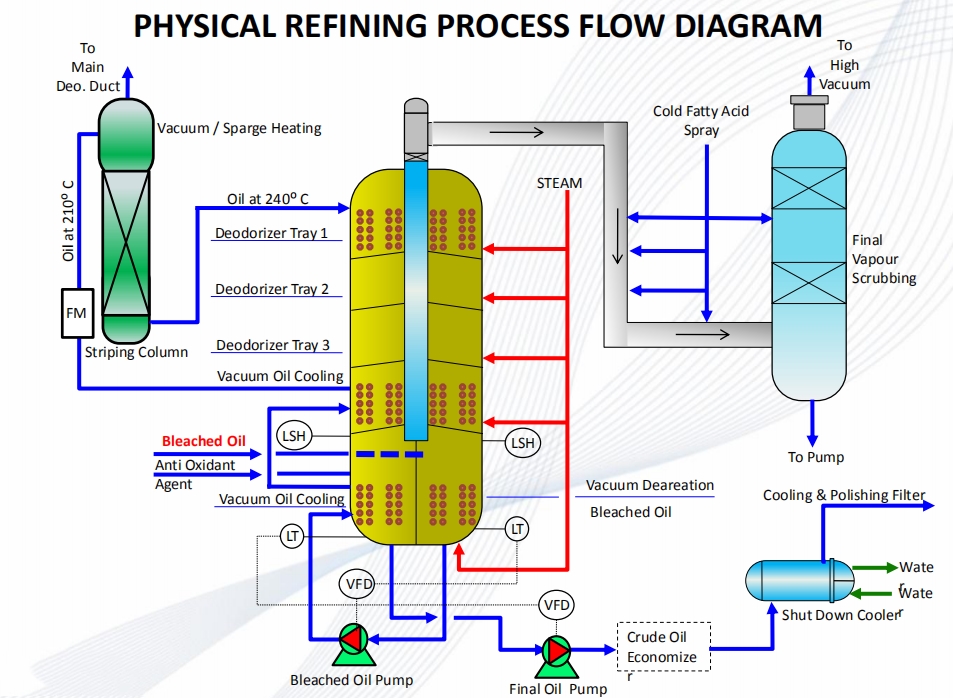
Deodorization process is used to remove unacceptable odour by steam distillation the odoriferous compound area unit strip off with the assistance of live injected steam into heated oil under high vacuum.
Physical Refining :
Next step in Edible Oil Refinery is the Physical Refining method is employed to get rid of free fatty acid using Steam Distillation technique at warm temperature and under high vacuum and it is followed by Deodorization and an extra technical facility is else before deodorization for removal of free fatty acid.
Physical Refining Process Flow Diagram
Fractionation :
Next step in Edible Oil Refinery is the Fractionation Plant is specialized to supply provide a low operating cost fractionation plant, which provides high Olein/soft Stearin yields at established management. We offer PLC (automation) for efficient working and reliability of the fractionation plant.
The separation of stearin & olein is continuously done on rotary vacuum drum filter / plate and frame filter and its principle is easy, whereas crystallization method involves an executive technique to develop and grow the particles size for simple & swish separation of stearin & olein.Our technique ensures you a perfect technology.
Acid Oil Plant :
Next step in Edible Oil Refinery is the Acid Oil Plant. We has designed an Environmental Friendly process for Acid Oil Plant and acid oil obtain from soap stock which coming from Alkali Refining of Oils and Fats etc. Soap Stock contain wash water, Bad quality of recovered oil. Soap Stock is pumped through screw pump to the Acid reactor for splitting. Soap stock charge in reactor and boiled in terms drying with steam heating cum agitation coil. After removing maximum Moisture pre calculated amount of acid (H2SO4) or HCL is added slowly. Splitting is done underneath continuous observation thus on maintain applicable acid value of final product to avoid excess acid consumption.
Application: Vegetable Oil, Palm Oil, Sunflower Oil, Cottonseed Oil, Soybean Oil, Groundnut Oil, Ricebran Oil & Mustard Oil.
Water Degumming :
Water Degumming is first step in the Edible Oil Refinery Process. Oils contains Hydratable Phosphatide which absorb the water, that Hydratable Phosphatides are oil- insoluble which easily separated by centrifuge.
Water Degummed Gums are further process to convert into Lecithin and it is much demanded product in the market.
Alkali Refining :
Next step in Edible Oil Refinery is the is the traditional method used in past centuries and widely practiced form of refining method by treatment of the fats and oils with an alkali solution. The free fatty acid are converted into water soluble soaps which are removed by separators. Phospholipids, carbohydrates and proteins additionally can be changed to water soluble substances with hydration. When the Alkali Refining treatment, the fats and oils area unit washed with water to get rid of residual water soluble soaps after that oil passes in vacuum Dryer to remove Moisture.
Bleaching :
Next step in Edible Oil Refinery is the OIL received from previous stages contains traces of soap, iron and few ppm of Phospholipids and Carotenes, these contents area unit undesirable and needed to be removed in Bleaching Operation, leaching Plant includes Steam Agitated Bleacher comprises of an acid treatment, a separate oil and earth compounding device with mechanical mixer (this arrangement ensures no carryover of bleaching earth into vacuum system), main bleaching vessel and Hermetic filters.
Bleaching Process Flow Diagram
De-Waxing / Winterization :
Next step in Edible Oil Refinery is A very easy demand of this method is to clear, good refined oil to satisfy bound specifications of cloud point.
We offers an ideal and extremely Effective Crystallization and Filtration Method. It's composed of Homogenizer, Crystallizer and self filter instrumentation with sequence cooling system.
We have developed an ideal dynamic coil Designed Crystallizer for Guaranteed 100% Uniform Cooling especially for Rice Bran Oil, Sunflower Oil & Cottonseed Oil and is already in operation with our valued consumer for highest quality of product. We tend to conjointly provide low budget crystallizer.
Self improvement filter instrumentation is also a modern style, having the ability of Maintaining Filtration Temperature and isn't laid low with close Temperature.
We area unit one in every of the foremost leading manufacturer and provider in India in the field of De-waxing Plants,Winterization Plant, self-cleaning filter equipment and dynamic coil designed crystallizer for uniform cooling.
Dewaxing Process Flow Diagram
Winterization Process Flow Diagram
Deodorization :
Next step in Edible Oil Refinery is the Deodorization Plant. We are leading manufacturer of oil Deodorization Plant which is best for Soybean Oil Refining, Sunflower Oil Refining, Cottonseed Oil Refining, Rice Bran Oil Refining, Mustard Oil Refining etc.
Deodorization process is used to remove unacceptable odour by steam distillation the odoriferous compound area unit strip off with the assistance of live injected steam into heated oil under high vacuum.
Physical Refining :
Next step in Edible Oil Refinery is the Physical Refining method is employed to get rid of free fatty acid using Steam Distillation technique at warm temperature and under high vacuum and it is followed by Deodorization and an extra technical facility is else before deodorization for removal of free fatty acid.
Physical Refining Process Flow Diagram
Fractionation :
Next step in Edible Oil Refinery is the Fractionation Plant is specialized to supply provide a low operating cost fractionation plant, which provides high Olein/soft Stearin yields at established management. We offer PLC (automation) for efficient working and reliability of the fractionation plant.
The separation of stearin & olein is continuously done on rotary vacuum drum filter / plate and frame filter and its principle is easy, whereas crystallization method involves an executive technique to develop and grow the particles size for simple & swish separation of stearin & olein.Our technique ensures you a perfect technology.
Acid Oil Plant :
Next step in Edible Oil Refinery is the Acid Oil Plant. We has designed an Environmental Friendly process for Acid Oil Plant and acid oil obtain from soap stock which coming from Alkali Refining of Oils and Fats etc. Soap Stock contain wash water, Bad quality of recovered oil. Soap Stock is pumped through screw pump to the Acid reactor for splitting. Soap stock charge in reactor and boiled in terms drying with steam heating cum agitation coil. After removing maximum Moisture pre calculated amount of acid (H2SO4) or HCL is added slowly. Splitting is done underneath continuous observation thus on maintain applicable acid value of final product to avoid excess acid consumption.
Application: Vegetable Oil, Palm Oil, Sunflower Oil, Cottonseed Oil, Soybean Oil, Groundnut Oil, Ricebran Oil & Mustard Oil.
Soap making process
The basic chemical reaction of soap is the interaction of oil and alkali to form soap and glycerin.
CH2OCOR
| heating
CHOCOR + 3NaOH --------> 3R-COONa + CH2OH-CHOH- CH2OH
|CH2OCOR
The soap obtained by the reaction is salted out, washed, and finished, and is called a soap base, and further processed to form soaps of various commercial forms.
Refining
Remove impurities from grease. Common refining processes include deodorization, alkali refining (deacidification) decolorization. Degumming is a hydration method in which a colloid such as a phospholipid in a fat or oil is removed, a colloidal hydration such as a phospholipid is hydrated with water, and then precipitated and precipitated; and a phospholipid and a similar impurity are carbonized and precipitated by concentrated sulfuric acid. The main function of alkali refining is to remove free fatty acids in fats and oils, but the formation of flocculent soap removes pigments and impurities in fats and oils by adsorption.
Saponification
After the oil is refined, it is saponified with a base. Boiling is the main method of saponification, and the soap pot is cylindrical or square.
In addition to the conveying pipe with grease, lye, water, salt water, etc., it is also equipped with a direct steam or steam coil to pass steam and stir the soap. The pan is also equipped with a moving head tube, and the upper mouth of the tube can be placed at any liquid level to discharge the soap in the pot. The bottom of the pot is tapered, and a discharge tube is arranged to discharge the residual liquid remaining after the discharge of the moving head tube. The oil and caustic soda are boiled in the soap pot until the saponification rate reaches about 95%, and the saponification operation is stopped when the soap material is uniformly closed.
Salting out
In the closed soap, salt or saturated brine is added to separate the soap from the dilute glycerin water. The lowest concentration at which soap is precipitated is called the salting out limit concentration. After the closed soap gel is salted out, the upper layer of soap is called soap granules; the lower layer of salted glycerin water is discharged from the bottom of the soap pot to recover glycerin.
Washing
After separating the waste liquid, water and steam are added to boil the soap particles, so that they are separated into a uniform soapy gel, and the residual glycerin, pigment and impurities are washed out.
Alkaline analysis
In order to completely saponify the oil and fat remaining in the soap granules, glycerin, salt, coloring matter and impurities in the soap granules are further washed out by alkali precipitation. The concentration of the lowest alkali in which the alkali water is completely precipitated is referred to as the alkali precipitation limit concentration.
Finishing and adjusting the electrolyte and fatty acid content in the soap after alkali precipitation, reducing impurities, improving the color, and obtaining the maximum soaping rate and quality of the soap base. When finishing, add appropriate amount of electrolyte (such as caustic soda, salt), and adjust enough to separate the soap material into two upper and lower soap phases. The upper layer is a pure soap base and the lower layer is a soap base. Soap feet have deep color and many impurities, and are generally reused in the next pot of alkali precipitation.
The soap base is condensed into a large soap board, and then cut into soap slabs, printed and dried into laundry soap, soap and other products.
CH2OCOR
| heating
CHOCOR + 3NaOH --------> 3R-COONa + CH2OH-CHOH- CH2OH
|CH2OCOR
The soap obtained by the reaction is salted out, washed, and finished, and is called a soap base, and further processed to form soaps of various commercial forms.
Refining
Remove impurities from grease. Common refining processes include deodorization, alkali refining (deacidification) decolorization. Degumming is a hydration method in which a colloid such as a phospholipid in a fat or oil is removed, a colloidal hydration such as a phospholipid is hydrated with water, and then precipitated and precipitated; and a phospholipid and a similar impurity are carbonized and precipitated by concentrated sulfuric acid. The main function of alkali refining is to remove free fatty acids in fats and oils, but the formation of flocculent soap removes pigments and impurities in fats and oils by adsorption.
Saponification
After the oil is refined, it is saponified with a base. Boiling is the main method of saponification, and the soap pot is cylindrical or square.
In addition to the conveying pipe with grease, lye, water, salt water, etc., it is also equipped with a direct steam or steam coil to pass steam and stir the soap. The pan is also equipped with a moving head tube, and the upper mouth of the tube can be placed at any liquid level to discharge the soap in the pot. The bottom of the pot is tapered, and a discharge tube is arranged to discharge the residual liquid remaining after the discharge of the moving head tube. The oil and caustic soda are boiled in the soap pot until the saponification rate reaches about 95%, and the saponification operation is stopped when the soap material is uniformly closed.
Salting out
In the closed soap, salt or saturated brine is added to separate the soap from the dilute glycerin water. The lowest concentration at which soap is precipitated is called the salting out limit concentration. After the closed soap gel is salted out, the upper layer of soap is called soap granules; the lower layer of salted glycerin water is discharged from the bottom of the soap pot to recover glycerin.
Washing
After separating the waste liquid, water and steam are added to boil the soap particles, so that they are separated into a uniform soapy gel, and the residual glycerin, pigment and impurities are washed out.
Alkaline analysis
In order to completely saponify the oil and fat remaining in the soap granules, glycerin, salt, coloring matter and impurities in the soap granules are further washed out by alkali precipitation. The concentration of the lowest alkali in which the alkali water is completely precipitated is referred to as the alkali precipitation limit concentration.
Finishing and adjusting the electrolyte and fatty acid content in the soap after alkali precipitation, reducing impurities, improving the color, and obtaining the maximum soaping rate and quality of the soap base. When finishing, add appropriate amount of electrolyte (such as caustic soda, salt), and adjust enough to separate the soap material into two upper and lower soap phases. The upper layer is a pure soap base and the lower layer is a soap base. Soap feet have deep color and many impurities, and are generally reused in the next pot of alkali precipitation.
Forming
The soap base is condensed into a large soap board, and then cut into soap slabs, printed and dried into laundry soap, soap and other products.
Fat and oil processing
Fat and oil processing, method by which animal and plant substances are prepared for eating by humans.
The oil and fat products used for edible purposes can be divided into two distinct classes: liquid oils, such as olive oil, peanut oil, soybean oil, or sunflower oil; and plastic fats, such as lard, shortening, butter, and margarine. The physical nature of the fatty material is unimportant for some uses, but the consistency is a matter of consequence for other products. As a dressing on green salads, for example, a liquid oil is used to provide a coating on the ingredients; a plastic fat such as lard or butter would be unsuitable. Spreads for bread, foods that require a highly developed dough structure, or icings and fillings with a plastic structure require plastic fats rather than liquid oils.
For reasons related to both history and climate, there are pronounced geographic patterns of consumption of fats and oils. The ancestors of the present inhabitants of central and northern Europe obtained their edible fats almost exclusively from domestic animals. The food habits and the cuisine depended on the availability of plastic fats; and butter, lard, margarine, and shortening continue to be their primary fatty food materials. In contrast, population pressures in the older civilizations of the Orient and the Mediterranean countries of southern Europe, northern Africa, and the Middle East have long since made extensive raising of livestock impractical, necessitating that the edible oils of these regions be derived primarily from intensively cultivated vegetable crops. In the tropics, conditions are relatively unfavourable for livestock but are well suited to culture of a variety of oil-bearing plants, many of which flourish in the wild state. In contrast to most high-population-density tropical areas, cattle abound in India. Clarified butter or ghee is an important item of Indian cookery, and a hydrogenated shortening called vanaspati is designed to reproduce the coarsely crystalline plastic texture of ghee.
More than 90 percent of the world production of fats and oils is used in edible products, and the objective of most processing steps is to convert crude fats of low palatability or undesirable physical form into refined products that meet the regional requirements for food fats. The annual consumption of visible fats—such as lard, butter, shortening, or salad oils that have been separated from the original animal or plant source—ranges from 18 to 25 kilograms (40 to 55 pounds) per person in various highly industrialized European countries to 23 kilograms per person in the United States. For the world as a whole, the average available supply is 10 kilograms per person; and in many areas of South America, Africa, and Southeast Asia, the annual consumption is 5 kilograms or less per person.
About 40 percent of the dietary fat in the developed countries comes from isolated fats and oils, with 60 percent obtained from basic foods, whereas in the less developed countries most of the dietary fat is obtained from fruits, cereals, vegetables, dairy products, and meats, and relatively little is consumed in the form of isolated fat products. The quantities of fats and oils in conventional food supplies vary over wide ranges. Most fruits and vegetables have from 0.1 to 2.0 percent fat, with the exception of avocados and olives, which are exceptional in their high fat content. Cereals range from 1 to 7 percent, and nuts may contain as much as 70 percent fat.
General Methods Of Extraction
The raw materials for the fat and oil industry are animal by-products from the slaughter of cattle, hogs, and sheep; fatty fish and marine mammals; a few fleshy fruits (palm and olive); and various oilseeds. Most oilseeds are grown specifically for processing to oils and protein meals, but several important vegetable oils are obtained from by-product raw materials. Cottonseed is a by-product of cotton grown for fibre, and corn oil is obtained from the corn germ that accumulates from the corn-milling industry, whose primary products are corn grits, starch, and syrup.
Fats may be recovered from oil-bearing tissues by three general methods, with varying degrees of mechanical simplicity: (1) rendering, (2) pressing with mechanical presses, and (3) extracting with volatile solvents. (See Figure 1.)
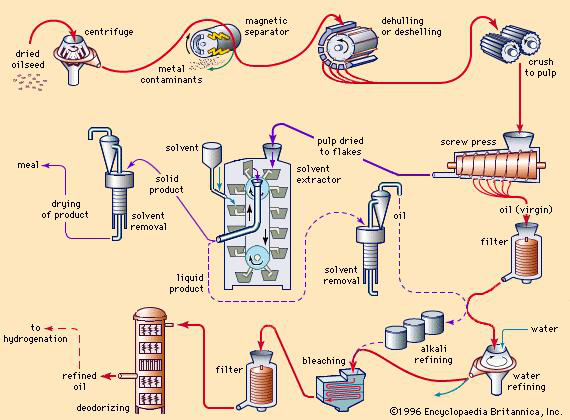
Figure 1
Rendering
Fruits and seeds
The crudest method of rendering oil from oleaginous fruits, still practiced in some countries, consists of heaping them in piles, exposing them to the sun, and collecting the oil that exudes. In a somewhat improved form, this process is used in the preparation of palm oil; the fresh palm fruits are boiled in water, and the oil is skimmed from the surface. Such processes can be used only with seeds or fruits (such as olive and palm) that contain large quantities of easily released fatty matter.
Animal fats
The rendering process is applied on a large scale to the production of animal fats such as tallow, lard, bone fat, and whale oil. It consists of cutting or chopping the fatty tissue into small pieces that are boiled in open vats or cooked in steam digesters. The fat, gradually liberated from the cells, floats to the surface of the water, where it is collected by skimming. The membranous matter (greaves) is separated from the aqueous (gluey) phase by pressing in hydraulic or screw presses; additional fat is thereby obtained. The residue is used for animal feed or fertilizer. Several centrifugal separation processes were developed in the 1960s. Cells of the fatty tissues are ruptured in special disintegrators under close temperature control. The protein tissue is separated from the liquid phase in a desludging type of centrifuge, following which a second centrifuge separates the fat from the aqueous protein layer. Compared with conventional rendering, the centrifugal methods provide a higher yield of better-quality fat, and the separated protein has potential as an edible meat product.
Pressing
Pressing processes
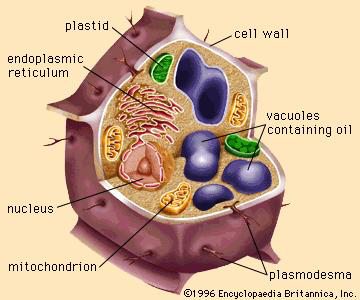
With many oil-bearing seeds and nuts, rendering will not liberate the oil from the cellular structures in which it is held (see Figure 2). In these cases the cell walls are broken by grinding, flaking, rolling, or pressing under high pressures to liberate the oil. The general sequence of modern operations in pressing oilseeds and nuts is as follows: (1) the seeds are passed over magnetic separators to remove any stray bits of metal; (2) if necessary, the shells or hulls are removed; (3) the kernels or meats are converted to coarse meal by grinding them between grooved rollers or with special types of hammer mills; and (4) they are pressed in hydraulic or screw presses with or without preliminary heating, depending on the type of oil-bearing material and the quality of oil desired. Oil expressed without heating contains the least amount of impurities and is often of edible quality without refining or further processing. Such oils are known as cold-drawn, cold-pressed, or virgin oils. Pressing the coarse meal while it is heated removes more oil and also greater quantities of nonglyceride impurities such as phospholipids, colour bodies, and unsaponifiable matter. Such oil is more highly coloured than cold-pressed oils. Residual meals are concentrated sources of high-quality protein and are generally used in animal feeds.
Figure 2: Some of the structures of an oilseed cell, including oil-containing vacuoles.
Pressing machines
Many different mechanical devices have been used for pressing. The Romans developed a screw press, described by Pliny, for the production of olive oil. Centuries ago, the Chinese employed the same series of operations followed in modern pressing mills—namely, bruising or grinding the seeds in stone mills, heating the meal in open pans, and then pressing out the oil in a wedge press. The Dutch, or stamper, press invented in the 17th century was used almost exclusively in Europe for pressing oilseeds until the early part of the 19th century, when the hydraulic press was developed. The yield of oil from the hydraulic press was considerably higher than that from earlier processing methods because of the much higher applied pressures. In open presses, the ground seed material was confined in cloths of human hair or, less commonly, camel hair. Pressures on the cake varied from approximately 70 to 140 kilograms per square centimetre (1,000 to 2,000 pounds per square inch), and in the closed-type press, in which the oil-containing material was confined in a strong perforated steel cage during the pressing operation, pressures of approximately 400 kilograms per square centimetre or more were attained. Under ideal conditions the oil content of the hydraulic-press cake can be reduced to about 3 percent, but in practical operation a 5 percent level is average. The modern screw press replaced many of the hydraulic presses because it is a continuous process, has greater capacity, requires less labour, and will generally remove more oil. As ground seed is fed continuously into the mechanical press, a worm screw increases the pressure progressively as the material moves through a slotted barrel. Pressures from 700 to 2,100 kilograms per square centimetre are attained, and the oil is squeezed out through the slots, leaving a cake containing 3 to 3.5 percent oil under optimum processing and 4 to 5 percent oil under average conditions.
Solvent extraction Processes
Cakes obtained by pressing operations still retain 3 to 15 percent of residual oil. When the value of the oil is considerably greater as oil than as a part of the meal, it is desirable to obtain more complete extraction with solvents. Modern commercial methods of solvent extraction use volatile purified hydrocarbons, especially the various grades of petroleum benzin (commonly known as petroleum ether, commercial hexane, or heptane). In large-scale operations, solvent extraction is a more economical means of recovering oil than is mechanical pressing. In the United States and increasingly in Europe, there are many instances of simple petroleum benzin extraction of seeds, mainly soybeans. For seeds or nuts containing a higher oil content than soybeans it became customary to press the material in screw presses to remove a large proportion of the oil before extraction. Since this prepressing also ruptures the cellular structures of oil-bearing materials, most of the residual oil is easily removed with solvents.
A typical extraction system consists of (1) cleaning to remove tramp iron, dirt, foreign weed seeds, and stones, (2) removing hulls or cortex in cracking, aspirating, or screening operations, (3) cracking or rough grinding the kernels, meats, or prepressed cake, (4) steaming (tempering or cooking) of the meats, (5) flaking the small pieces between smooth flaking rolls, (6) extracting the oil with solvent, (7) separating the meal, or marc, from the oil-solvent solution, called miscella, and (8) removing the solvent from both the miscella and the marc. The marc may be toasted or pelletized, or both, for use in animal feeds. Most extracted meals contain less than 1 percent of residual oil. The amount varies depending on the amount of prepressing, the type of material being extracted, and the efficiency of the extracting system.
Extractors
Solvent extraction was first practiced in Europe, using batch extractors for the recovery of additional oil from the residues obtained from mechanical pressing. The greater efficiency of solvent extraction encouraged direct application to oilseeds, and the batch extractor gradually gave way to continuous units in which fresh flakes are added continuously and subjected to a counterflow of solvent. One of the earliest continuous extractors, and a type still considered to be one of the best, was the Bollman or Hansa-Mühle unit from Germany, in which solvent percolates through oilseed flakes contained in perforated baskets moving on an endless chain. After the extraction cycle is complete, the baskets of extracted flakes are dumped automatically and then refilled with fresh flakes to initiate another cycle. Many extractor designs have been proposed, but only a few have found wide acceptance. In the DeSmet extractor, popular in Europe and in a number of developing countries, a bed of flakes on an endless horizontal traveling belt is extracted by solvent percolation. The Blaw-Knox Rotocell has become the most popular extractor in the huge American soybean industry. The flakes are conveyed into wedge-shaped segments of a large cylindrical vessel. Solvent percolating through the cells falls into the bottom of the extractor housing, where it is picked up by a series of pumps and recirculated countercurrent to the flakes.
Processing Of Extracted Oil
The extent of processing applied to fats depends on their source, quality, and ultimate use. Many fats are used for edible purposes after only a single processing step—i.e., clarification by settling or filtering. Most cold-pressed oils (for example, cold-pressed olive, peanut, and some coconut and sunflower oils) can be used in food products without further processing. Tremendous quantities of butter and lard are used without special treatment after churning or rendering. The growing demand for bland-tasting and stable salad oils and shortening, however, has led to extensive processing techniques. (See Figure 1.)
Refining
The nonglyceride components contribute practically all the colour and flavour to fats. In addition, such materials as the free fatty acids, waxes, colour bodies, mucilaginous materials, phospholipids, carotenoids, and gossypol (a yellow pigment found only in cottonseed oil) contribute other undesirable properties in fats used for edible and, to some extent, industrial purposes.
Alkali refining
Many of these can be removed by treating fats at 40° to 85° C (104° to 185° F) with an aqueous solution of caustic soda (sodium hydroxide) or soda ash (sodium carbonate). The refining may be done in a tank (in which case it is called batch or tank refining) or in a continuous system. In batch refining, the aqueous emulsion of soaps formed from free fatty acids, along with other impurities (soapstock), settles to the bottom and is drawn off. In the continuous system the emulsion is separated with centrifuges. After the fat has been refined, it is usually washed with water to remove traces of alkali and soapstock. Oils that have been refined with soda ash or ammonia generally require a light re-refining with caustic soda to improve colour. After water washing, the oil may be dried by heating in a vacuum or by filtering through a dry filter-aid material. The refined oil may be used for industrial purposes or may be processed further to edible oils. Usually, the refined oils are neutral (i.e., neither acidic nor alkaline), free of material that separates on heating (break material), lighter in colour, less viscous, and more susceptible to rancidity.
Water refining
Water refining, usually called degumming, consists of treating the natural oil with a small amount of water, followed by centrifugal separation. The process is applied to many oils that contain phospholipids in significant amounts. Since the separated phospholipids are rather waxy or gummy solids, the term degumming was quite naturally applied to the separation. The separated phospholipid emulsion layer from oils such as corn (maize) and soybean oils may be dried (commercially, these products are called lecithin) and used as emulsifiers in such products as margarine, chocolate products, and emulsion paints. The degumming of crude soybean oil, which has an average phospholipid content of 1.8 percent, provides the primary source of commercial lecithin. To obtain products of lighter colour, hydrogen peroxide may be added as a bleaching agent during the drying of lecithin. The degummed oil may be used directly in industrial applications, such as in paints or alkyd resins, or refined with alkalies for ultimate edible consumption.
Bleaching
If further colour removal is desired, the fat may be treated with various bleaching agents. Heated oils are treated with fuller’s earth (a natural earthy material that will decolorize oils), activated carbon, or activated clays. Many impurities, including chlorophyll and carotenoid pigments, are adsorbed onto such agents and removed by filtration. Bleaching often reduces the resistance of oils to rancidity, because some natural antioxidants are removed together with impurities. When many oils are heated to more than 175° C (347° F), a phenomenon known as heat bleaching takes place. Apparently the heat decomposes some pigments, such as the carotenoids, and converts them to colourless materials.
Destearinating or winterizing
It is often desirable to remove the traces of waxes (e.g., cuticle wax from seed coats) and the higher-melting glycerides from fats. Waxes can generally be removed by rapid chilling and filtering. Separation of high-melting glycerides, or stearine, usually requires very slow cooling in order to form crystals that are large enough to be removed by filtration or centrifuging. Thus linseed oil may be winterized to remove traces of waxes that otherwise interfere with its use in paints and varnishes. Stearine may be removed from fish oils in order to separate the solid glycerides that would detract from its use in paints and alkyd resins. At the same time, fish stearine is more suitable than whole oil for edible purposes. Cottonseed and peanut oils may be destearinated to produce salad oils that remain liquid at low temperatures. Tallows and other animal fats may be destearinated for simultaneous production of hard fats (high in stearic acid content for special uses such as in making candles) and of liquid oil called oleo oil.
Hydrogenation
For many edible purposes and for some commercial applications it is desirable to produce solid fats. Many shortenings and margarines contain hydrogenated (hardened) oils as their major ingredients. The development of margarine and shortening products resulted from the invention of a successful method for converting low-melting unsaturated fatty acids and glycerides to higher-melting saturated products. The process consists of the addition of hydrogen in the presence of a catalyst to the double (unsaturated) bonds. Thus oleic or linoleic acid (or their acid radicals in glycerides), which are normally liquid at room temperature, can be converted to stearic acid or the acid radical by the addition of hydrogen.
Limited use was made of this hydrogenation technology in Europe; the greatest potential use for the process lay in the United States, where a vast production of cottonseed oil, a by-product of the Southern cotton industry, awaited developments that would permit its conversion to a plastic fat. The hardening of cottonseed oil in the early 1900s gave birth to the shortening industry. Practical hydrogenation then spread to all countries where margarines and shortenings are produced from liquid oils.
Hydrogenation reactions
In commercial practice, hydrogenation is usually carried out with vigorous agitation or hydrogen dispersion with a narrow range of catalyst concentration (about 0.05 to 0.10 percent of finely divided nickel suspended on kieselguhr, or diatomaceous earth) in a steel pressure-reaction vessel. The ordinary ranges of temperature and pressure are from 100° to 200° C (212° to 392° F) and from atmospheric pressure to 42 kilograms per square centimetre, respectively. These conditions can be controlled to make the hydrogenation reaction somewhat selective—i.e., to add hydrogen to the linolenic (three double bonds) and linoleic (two double bonds) acid radicals before adding to the oleic (one double bond) acid radicals. The most unsaturated fatty acid groups are most easily hydrogenated and thus react first with the hydrogen if conditions are right. Copper-containing catalysts are especially selective in the hydrogenation of vegetable oils. If very hard fats with low amounts of unsaturation are desired and selectivity is unimportant, higher temperatures and pressures are employed to shorten the reaction time and to use partially spent catalyst that would otherwise be wasted. After hydrogenation, the hot oil is filtered to remove the metallic catalyst for either reuse or recovery.
Isomerization reactions
During the catalytic treatment another reaction also takes place—isomerization (rearrangement of the molecular structure) of unsaturated fatty acid radicals to form isooleic, isolinoleic, and similar groups. Because these isomers have higher melting points than do the natural acids, they contribute to the hardening effect. The unsaturation of natural oils has the cis configuration, in which hydrogen atoms lie on one side of a plane cutting through the double bond and alkyl groups lie on the other side. During hydrogenation some of the unsaturation is converted to the trans configuration, with like groups on opposite sides of the plane. The trans isomers are much higher melting than the natural cis form. Simultaneously with the change of some of the unsaturation to the trans configuration there is a migration of double bonds along the chain. Thus isomers of oleic acid may be formed with the double bond in any position from carbon atom 2 to carbon atom 17. Many of these isomerized acids are higher melting than the natural oleic acid. Infrared analysis is useful for quantitative measurement of changes occurring during hydrogenation.
Deodorization
Odourless and tasteless fats first came into high demand as ingredients for the manufacture of margarine, a product designed to duplicate the flavour and texture of butter. Most fats, even after refining, have characteristic flavours and odours, and vegetable fats especially have a relatively strong taste that is foreign to that of butter. The deodorization process consists of blowing steam through heated fat held under a high vacuum. Small quantities of volatile components, responsible for tastes and odours, distill, leaving a neutral, virtually odourless fat that is suitable for the manufacture of bland shortening or delicately flavoured margarine. Originally, deodorization was a batch process, but increasingly, continuous systems are being used in which hot fat flows through an evacuated column countercurrent to the upward passage of steam. In Europe, a deodorization temperature of 175°–205° C (347°–401° F) is common, but in the United States, higher temperatures of 235°–250° C (455°–483° F) are usually employed. About 0.01 percent of citric acid is commonly added to deodorized oils to inactivate trace-metal contaminants such as soluble iron or copper compounds that otherwise would promote oxidation and the development of rancidity.
Olive oil is invariably marketed in undeodorized form. The natural flavour is an important asset, and olive oil, as is true of butter, commands a premium in the market because of its distinctive and prized flavour. The common cooking oils of Asia—soybean, rapeseed, peanut, sesame, and coconut—are consumed in their crude form as expressed from oilseeds. In contrast, deodorized oils are in particular demand in the United States and Europe. For many years the only important vegetable oil consumed in the United States was cottonseed oil, which in its crude form has such a strong and unpleasant flavour that further processing was an absolute necessity in order to render it suitable for consumption. Because of widespread sale of neutral-flavoured cottonseed oil products over many years, a general preference was developed for odourless and tasteless fats.
Another reason for the practice of deodorizing edible oils in Europe and America relates to differences in oil quality by Western and Eastern extraction techniques. In China and Southeast Asia, edible oils have been produced principally by small, relatively crude equipment. The yield of oil is relatively low, and a minimum amount of nonglyceride substances is expressed from the seed, with the result that the flavour of the oil is fairly mild. In Europe and the United States, oil extraction is carried out in large factories that operate on an extremely competitive basis. Very-high-pressure expression or solvent extraction is used, and in order to improve yields the seeds are heat-treated prior to extraction. Oils obtained in high yield under such conditions are stronger in flavour than oils prepared by low-pressure expression, and the refining and deodorizing steps are required to improve palatability. The improvement in yields more than compensates for the added costs of refining and deodorizing.
When fats are hydrogenated for manufacture of margarine and shortening, they develop a characteristic sweet, but rather unpleasant, “hydrogenation odour” that must be removed from edible fats by deodorization.
The oil and fat products used for edible purposes can be divided into two distinct classes: liquid oils, such as olive oil, peanut oil, soybean oil, or sunflower oil; and plastic fats, such as lard, shortening, butter, and margarine. The physical nature of the fatty material is unimportant for some uses, but the consistency is a matter of consequence for other products. As a dressing on green salads, for example, a liquid oil is used to provide a coating on the ingredients; a plastic fat such as lard or butter would be unsuitable. Spreads for bread, foods that require a highly developed dough structure, or icings and fillings with a plastic structure require plastic fats rather than liquid oils.
For reasons related to both history and climate, there are pronounced geographic patterns of consumption of fats and oils. The ancestors of the present inhabitants of central and northern Europe obtained their edible fats almost exclusively from domestic animals. The food habits and the cuisine depended on the availability of plastic fats; and butter, lard, margarine, and shortening continue to be their primary fatty food materials. In contrast, population pressures in the older civilizations of the Orient and the Mediterranean countries of southern Europe, northern Africa, and the Middle East have long since made extensive raising of livestock impractical, necessitating that the edible oils of these regions be derived primarily from intensively cultivated vegetable crops. In the tropics, conditions are relatively unfavourable for livestock but are well suited to culture of a variety of oil-bearing plants, many of which flourish in the wild state. In contrast to most high-population-density tropical areas, cattle abound in India. Clarified butter or ghee is an important item of Indian cookery, and a hydrogenated shortening called vanaspati is designed to reproduce the coarsely crystalline plastic texture of ghee.
More than 90 percent of the world production of fats and oils is used in edible products, and the objective of most processing steps is to convert crude fats of low palatability or undesirable physical form into refined products that meet the regional requirements for food fats. The annual consumption of visible fats—such as lard, butter, shortening, or salad oils that have been separated from the original animal or plant source—ranges from 18 to 25 kilograms (40 to 55 pounds) per person in various highly industrialized European countries to 23 kilograms per person in the United States. For the world as a whole, the average available supply is 10 kilograms per person; and in many areas of South America, Africa, and Southeast Asia, the annual consumption is 5 kilograms or less per person.
About 40 percent of the dietary fat in the developed countries comes from isolated fats and oils, with 60 percent obtained from basic foods, whereas in the less developed countries most of the dietary fat is obtained from fruits, cereals, vegetables, dairy products, and meats, and relatively little is consumed in the form of isolated fat products. The quantities of fats and oils in conventional food supplies vary over wide ranges. Most fruits and vegetables have from 0.1 to 2.0 percent fat, with the exception of avocados and olives, which are exceptional in their high fat content. Cereals range from 1 to 7 percent, and nuts may contain as much as 70 percent fat.
General Methods Of Extraction
The raw materials for the fat and oil industry are animal by-products from the slaughter of cattle, hogs, and sheep; fatty fish and marine mammals; a few fleshy fruits (palm and olive); and various oilseeds. Most oilseeds are grown specifically for processing to oils and protein meals, but several important vegetable oils are obtained from by-product raw materials. Cottonseed is a by-product of cotton grown for fibre, and corn oil is obtained from the corn germ that accumulates from the corn-milling industry, whose primary products are corn grits, starch, and syrup.
Fats may be recovered from oil-bearing tissues by three general methods, with varying degrees of mechanical simplicity: (1) rendering, (2) pressing with mechanical presses, and (3) extracting with volatile solvents. (See Figure 1.)
Figure 1
Rendering
Fruits and seeds
The crudest method of rendering oil from oleaginous fruits, still practiced in some countries, consists of heaping them in piles, exposing them to the sun, and collecting the oil that exudes. In a somewhat improved form, this process is used in the preparation of palm oil; the fresh palm fruits are boiled in water, and the oil is skimmed from the surface. Such processes can be used only with seeds or fruits (such as olive and palm) that contain large quantities of easily released fatty matter.
Animal fats
The rendering process is applied on a large scale to the production of animal fats such as tallow, lard, bone fat, and whale oil. It consists of cutting or chopping the fatty tissue into small pieces that are boiled in open vats or cooked in steam digesters. The fat, gradually liberated from the cells, floats to the surface of the water, where it is collected by skimming. The membranous matter (greaves) is separated from the aqueous (gluey) phase by pressing in hydraulic or screw presses; additional fat is thereby obtained. The residue is used for animal feed or fertilizer. Several centrifugal separation processes were developed in the 1960s. Cells of the fatty tissues are ruptured in special disintegrators under close temperature control. The protein tissue is separated from the liquid phase in a desludging type of centrifuge, following which a second centrifuge separates the fat from the aqueous protein layer. Compared with conventional rendering, the centrifugal methods provide a higher yield of better-quality fat, and the separated protein has potential as an edible meat product.
Pressing
Pressing processes
With many oil-bearing seeds and nuts, rendering will not liberate the oil from the cellular structures in which it is held (see Figure 2). In these cases the cell walls are broken by grinding, flaking, rolling, or pressing under high pressures to liberate the oil. The general sequence of modern operations in pressing oilseeds and nuts is as follows: (1) the seeds are passed over magnetic separators to remove any stray bits of metal; (2) if necessary, the shells or hulls are removed; (3) the kernels or meats are converted to coarse meal by grinding them between grooved rollers or with special types of hammer mills; and (4) they are pressed in hydraulic or screw presses with or without preliminary heating, depending on the type of oil-bearing material and the quality of oil desired. Oil expressed without heating contains the least amount of impurities and is often of edible quality without refining or further processing. Such oils are known as cold-drawn, cold-pressed, or virgin oils. Pressing the coarse meal while it is heated removes more oil and also greater quantities of nonglyceride impurities such as phospholipids, colour bodies, and unsaponifiable matter. Such oil is more highly coloured than cold-pressed oils. Residual meals are concentrated sources of high-quality protein and are generally used in animal feeds.
Figure 2: Some of the structures of an oilseed cell, including oil-containing vacuoles.
Pressing machines
Many different mechanical devices have been used for pressing. The Romans developed a screw press, described by Pliny, for the production of olive oil. Centuries ago, the Chinese employed the same series of operations followed in modern pressing mills—namely, bruising or grinding the seeds in stone mills, heating the meal in open pans, and then pressing out the oil in a wedge press. The Dutch, or stamper, press invented in the 17th century was used almost exclusively in Europe for pressing oilseeds until the early part of the 19th century, when the hydraulic press was developed. The yield of oil from the hydraulic press was considerably higher than that from earlier processing methods because of the much higher applied pressures. In open presses, the ground seed material was confined in cloths of human hair or, less commonly, camel hair. Pressures on the cake varied from approximately 70 to 140 kilograms per square centimetre (1,000 to 2,000 pounds per square inch), and in the closed-type press, in which the oil-containing material was confined in a strong perforated steel cage during the pressing operation, pressures of approximately 400 kilograms per square centimetre or more were attained. Under ideal conditions the oil content of the hydraulic-press cake can be reduced to about 3 percent, but in practical operation a 5 percent level is average. The modern screw press replaced many of the hydraulic presses because it is a continuous process, has greater capacity, requires less labour, and will generally remove more oil. As ground seed is fed continuously into the mechanical press, a worm screw increases the pressure progressively as the material moves through a slotted barrel. Pressures from 700 to 2,100 kilograms per square centimetre are attained, and the oil is squeezed out through the slots, leaving a cake containing 3 to 3.5 percent oil under optimum processing and 4 to 5 percent oil under average conditions.
Solvent extraction Processes
Cakes obtained by pressing operations still retain 3 to 15 percent of residual oil. When the value of the oil is considerably greater as oil than as a part of the meal, it is desirable to obtain more complete extraction with solvents. Modern commercial methods of solvent extraction use volatile purified hydrocarbons, especially the various grades of petroleum benzin (commonly known as petroleum ether, commercial hexane, or heptane). In large-scale operations, solvent extraction is a more economical means of recovering oil than is mechanical pressing. In the United States and increasingly in Europe, there are many instances of simple petroleum benzin extraction of seeds, mainly soybeans. For seeds or nuts containing a higher oil content than soybeans it became customary to press the material in screw presses to remove a large proportion of the oil before extraction. Since this prepressing also ruptures the cellular structures of oil-bearing materials, most of the residual oil is easily removed with solvents.
A typical extraction system consists of (1) cleaning to remove tramp iron, dirt, foreign weed seeds, and stones, (2) removing hulls or cortex in cracking, aspirating, or screening operations, (3) cracking or rough grinding the kernels, meats, or prepressed cake, (4) steaming (tempering or cooking) of the meats, (5) flaking the small pieces between smooth flaking rolls, (6) extracting the oil with solvent, (7) separating the meal, or marc, from the oil-solvent solution, called miscella, and (8) removing the solvent from both the miscella and the marc. The marc may be toasted or pelletized, or both, for use in animal feeds. Most extracted meals contain less than 1 percent of residual oil. The amount varies depending on the amount of prepressing, the type of material being extracted, and the efficiency of the extracting system.
Extractors
Solvent extraction was first practiced in Europe, using batch extractors for the recovery of additional oil from the residues obtained from mechanical pressing. The greater efficiency of solvent extraction encouraged direct application to oilseeds, and the batch extractor gradually gave way to continuous units in which fresh flakes are added continuously and subjected to a counterflow of solvent. One of the earliest continuous extractors, and a type still considered to be one of the best, was the Bollman or Hansa-Mühle unit from Germany, in which solvent percolates through oilseed flakes contained in perforated baskets moving on an endless chain. After the extraction cycle is complete, the baskets of extracted flakes are dumped automatically and then refilled with fresh flakes to initiate another cycle. Many extractor designs have been proposed, but only a few have found wide acceptance. In the DeSmet extractor, popular in Europe and in a number of developing countries, a bed of flakes on an endless horizontal traveling belt is extracted by solvent percolation. The Blaw-Knox Rotocell has become the most popular extractor in the huge American soybean industry. The flakes are conveyed into wedge-shaped segments of a large cylindrical vessel. Solvent percolating through the cells falls into the bottom of the extractor housing, where it is picked up by a series of pumps and recirculated countercurrent to the flakes.
Processing Of Extracted Oil
The extent of processing applied to fats depends on their source, quality, and ultimate use. Many fats are used for edible purposes after only a single processing step—i.e., clarification by settling or filtering. Most cold-pressed oils (for example, cold-pressed olive, peanut, and some coconut and sunflower oils) can be used in food products without further processing. Tremendous quantities of butter and lard are used without special treatment after churning or rendering. The growing demand for bland-tasting and stable salad oils and shortening, however, has led to extensive processing techniques. (See Figure 1.)
Refining
The nonglyceride components contribute practically all the colour and flavour to fats. In addition, such materials as the free fatty acids, waxes, colour bodies, mucilaginous materials, phospholipids, carotenoids, and gossypol (a yellow pigment found only in cottonseed oil) contribute other undesirable properties in fats used for edible and, to some extent, industrial purposes.
Alkali refining
Many of these can be removed by treating fats at 40° to 85° C (104° to 185° F) with an aqueous solution of caustic soda (sodium hydroxide) or soda ash (sodium carbonate). The refining may be done in a tank (in which case it is called batch or tank refining) or in a continuous system. In batch refining, the aqueous emulsion of soaps formed from free fatty acids, along with other impurities (soapstock), settles to the bottom and is drawn off. In the continuous system the emulsion is separated with centrifuges. After the fat has been refined, it is usually washed with water to remove traces of alkali and soapstock. Oils that have been refined with soda ash or ammonia generally require a light re-refining with caustic soda to improve colour. After water washing, the oil may be dried by heating in a vacuum or by filtering through a dry filter-aid material. The refined oil may be used for industrial purposes or may be processed further to edible oils. Usually, the refined oils are neutral (i.e., neither acidic nor alkaline), free of material that separates on heating (break material), lighter in colour, less viscous, and more susceptible to rancidity.
Water refining
Water refining, usually called degumming, consists of treating the natural oil with a small amount of water, followed by centrifugal separation. The process is applied to many oils that contain phospholipids in significant amounts. Since the separated phospholipids are rather waxy or gummy solids, the term degumming was quite naturally applied to the separation. The separated phospholipid emulsion layer from oils such as corn (maize) and soybean oils may be dried (commercially, these products are called lecithin) and used as emulsifiers in such products as margarine, chocolate products, and emulsion paints. The degumming of crude soybean oil, which has an average phospholipid content of 1.8 percent, provides the primary source of commercial lecithin. To obtain products of lighter colour, hydrogen peroxide may be added as a bleaching agent during the drying of lecithin. The degummed oil may be used directly in industrial applications, such as in paints or alkyd resins, or refined with alkalies for ultimate edible consumption.
Bleaching
If further colour removal is desired, the fat may be treated with various bleaching agents. Heated oils are treated with fuller’s earth (a natural earthy material that will decolorize oils), activated carbon, or activated clays. Many impurities, including chlorophyll and carotenoid pigments, are adsorbed onto such agents and removed by filtration. Bleaching often reduces the resistance of oils to rancidity, because some natural antioxidants are removed together with impurities. When many oils are heated to more than 175° C (347° F), a phenomenon known as heat bleaching takes place. Apparently the heat decomposes some pigments, such as the carotenoids, and converts them to colourless materials.
Destearinating or winterizing
It is often desirable to remove the traces of waxes (e.g., cuticle wax from seed coats) and the higher-melting glycerides from fats. Waxes can generally be removed by rapid chilling and filtering. Separation of high-melting glycerides, or stearine, usually requires very slow cooling in order to form crystals that are large enough to be removed by filtration or centrifuging. Thus linseed oil may be winterized to remove traces of waxes that otherwise interfere with its use in paints and varnishes. Stearine may be removed from fish oils in order to separate the solid glycerides that would detract from its use in paints and alkyd resins. At the same time, fish stearine is more suitable than whole oil for edible purposes. Cottonseed and peanut oils may be destearinated to produce salad oils that remain liquid at low temperatures. Tallows and other animal fats may be destearinated for simultaneous production of hard fats (high in stearic acid content for special uses such as in making candles) and of liquid oil called oleo oil.
Hydrogenation
For many edible purposes and for some commercial applications it is desirable to produce solid fats. Many shortenings and margarines contain hydrogenated (hardened) oils as their major ingredients. The development of margarine and shortening products resulted from the invention of a successful method for converting low-melting unsaturated fatty acids and glycerides to higher-melting saturated products. The process consists of the addition of hydrogen in the presence of a catalyst to the double (unsaturated) bonds. Thus oleic or linoleic acid (or their acid radicals in glycerides), which are normally liquid at room temperature, can be converted to stearic acid or the acid radical by the addition of hydrogen.
Limited use was made of this hydrogenation technology in Europe; the greatest potential use for the process lay in the United States, where a vast production of cottonseed oil, a by-product of the Southern cotton industry, awaited developments that would permit its conversion to a plastic fat. The hardening of cottonseed oil in the early 1900s gave birth to the shortening industry. Practical hydrogenation then spread to all countries where margarines and shortenings are produced from liquid oils.
Hydrogenation reactions
In commercial practice, hydrogenation is usually carried out with vigorous agitation or hydrogen dispersion with a narrow range of catalyst concentration (about 0.05 to 0.10 percent of finely divided nickel suspended on kieselguhr, or diatomaceous earth) in a steel pressure-reaction vessel. The ordinary ranges of temperature and pressure are from 100° to 200° C (212° to 392° F) and from atmospheric pressure to 42 kilograms per square centimetre, respectively. These conditions can be controlled to make the hydrogenation reaction somewhat selective—i.e., to add hydrogen to the linolenic (three double bonds) and linoleic (two double bonds) acid radicals before adding to the oleic (one double bond) acid radicals. The most unsaturated fatty acid groups are most easily hydrogenated and thus react first with the hydrogen if conditions are right. Copper-containing catalysts are especially selective in the hydrogenation of vegetable oils. If very hard fats with low amounts of unsaturation are desired and selectivity is unimportant, higher temperatures and pressures are employed to shorten the reaction time and to use partially spent catalyst that would otherwise be wasted. After hydrogenation, the hot oil is filtered to remove the metallic catalyst for either reuse or recovery.
Isomerization reactions
During the catalytic treatment another reaction also takes place—isomerization (rearrangement of the molecular structure) of unsaturated fatty acid radicals to form isooleic, isolinoleic, and similar groups. Because these isomers have higher melting points than do the natural acids, they contribute to the hardening effect. The unsaturation of natural oils has the cis configuration, in which hydrogen atoms lie on one side of a plane cutting through the double bond and alkyl groups lie on the other side. During hydrogenation some of the unsaturation is converted to the trans configuration, with like groups on opposite sides of the plane. The trans isomers are much higher melting than the natural cis form. Simultaneously with the change of some of the unsaturation to the trans configuration there is a migration of double bonds along the chain. Thus isomers of oleic acid may be formed with the double bond in any position from carbon atom 2 to carbon atom 17. Many of these isomerized acids are higher melting than the natural oleic acid. Infrared analysis is useful for quantitative measurement of changes occurring during hydrogenation.
Deodorization
Odourless and tasteless fats first came into high demand as ingredients for the manufacture of margarine, a product designed to duplicate the flavour and texture of butter. Most fats, even after refining, have characteristic flavours and odours, and vegetable fats especially have a relatively strong taste that is foreign to that of butter. The deodorization process consists of blowing steam through heated fat held under a high vacuum. Small quantities of volatile components, responsible for tastes and odours, distill, leaving a neutral, virtually odourless fat that is suitable for the manufacture of bland shortening or delicately flavoured margarine. Originally, deodorization was a batch process, but increasingly, continuous systems are being used in which hot fat flows through an evacuated column countercurrent to the upward passage of steam. In Europe, a deodorization temperature of 175°–205° C (347°–401° F) is common, but in the United States, higher temperatures of 235°–250° C (455°–483° F) are usually employed. About 0.01 percent of citric acid is commonly added to deodorized oils to inactivate trace-metal contaminants such as soluble iron or copper compounds that otherwise would promote oxidation and the development of rancidity.
Olive oil is invariably marketed in undeodorized form. The natural flavour is an important asset, and olive oil, as is true of butter, commands a premium in the market because of its distinctive and prized flavour. The common cooking oils of Asia—soybean, rapeseed, peanut, sesame, and coconut—are consumed in their crude form as expressed from oilseeds. In contrast, deodorized oils are in particular demand in the United States and Europe. For many years the only important vegetable oil consumed in the United States was cottonseed oil, which in its crude form has such a strong and unpleasant flavour that further processing was an absolute necessity in order to render it suitable for consumption. Because of widespread sale of neutral-flavoured cottonseed oil products over many years, a general preference was developed for odourless and tasteless fats.
Another reason for the practice of deodorizing edible oils in Europe and America relates to differences in oil quality by Western and Eastern extraction techniques. In China and Southeast Asia, edible oils have been produced principally by small, relatively crude equipment. The yield of oil is relatively low, and a minimum amount of nonglyceride substances is expressed from the seed, with the result that the flavour of the oil is fairly mild. In Europe and the United States, oil extraction is carried out in large factories that operate on an extremely competitive basis. Very-high-pressure expression or solvent extraction is used, and in order to improve yields the seeds are heat-treated prior to extraction. Oils obtained in high yield under such conditions are stronger in flavour than oils prepared by low-pressure expression, and the refining and deodorizing steps are required to improve palatability. The improvement in yields more than compensates for the added costs of refining and deodorizing.
When fats are hydrogenated for manufacture of margarine and shortening, they develop a characteristic sweet, but rather unpleasant, “hydrogenation odour” that must be removed from edible fats by deodorization.
Which is better, the pressed oil or the extracted oil?
Life is not little firewood rice oil salt sauce vinegar tea, cooking oil is an indispensable part of the table, it can provide some essential nutrients and nutrients for the human body.Each kind of fat contains many kinds of fatty acids, among which linoleic acid, linolenic acid and arachidonic acid cannot be synthesized by human body and must be obtained from food. Therefore, these three fatty acids are also known as "essential fatty acids".
If children lack linoleic acid, the skin becomes dry, scales thicken and grows slowly.Eat edible oil all year round, a lot of housewife also cannot distinguish the distinction between a few edible oil, let farmer next nutrition expert explain with you in detail.
Oil or fat?
At room temperature the solid is called fat, while the liquid is called oil. Oils and fats are triglycerides. Usually, animal fats such as lard are called lipids.
Vegetable oils such as peanut oil, sunflower oil and soybean oil are called oils. The proposal should control the proportion that eats animal fat, eat a few vegetable oil more.
Is it better to eat pressed oil or solvent extraction oil?
The factory uses mechanical press and solvent leaching to make oil, so the oil is divided into press oil and leaching oil. In theory, the pressing oil is safer because it uses the traditional pressing process and does not contain any chemical additives. The leaching oil is subjected to multiple processes such as deodorization, which contains chemical additives. At present, the state stipulates that the quality of the pressing oil and the leaching oil is qualified. Can eat.
Freshly pressed oil is a traditional physical pressing process. It extracts pure earthworm oil and earthen tea oil from the countryside. 100% only takes the first press oil, retains the original flavor of the oil, and does not contain any chemical additives. Edible oil that has passed the quality inspection and meets the national quality inspection standards has been sold in supermarkets and community stores in many cities and is very popular.
Eat refined oil or eat crude oil?
Oil, whether pressed or leached, is only crude oil. Crude oil is a mixture, in addition to oil also contains several hundred kinds of impurities such as phospholipids, aspergillus flavus, pesticide, residual solvent and so on. After oil is refined, the harmful substances such as aflatoxin, pesticide and gossypol are removed, so the nutrition experts suggest that the refined oil should be eaten instead of the hairy oil.
Freshly squeezed oil is processed on the basis of the oil, on the one hand to remove impurities and harmful substances on the human body, on the other hand, the most possible preservation of the nutrition and flavor of the oil.
Which is better, peanut oil or blending oil?
No matter which brand of blending oil, several oils are mixed in proportion to improve the fatty acid composition and taste of the oil. Because people's food structure is very complicated, there are oils in fish, meat, eggs, milk, vegetables, grains, fruits and other foods. Each blending oil can only explain the proportion of fatty acids in the oil. It is impossible to calculate the per-food consumption. The content of each fatty acid in the food, so the nutritional value and taste of the blended oil is hard to say better than the single variety of oil.
If children lack linoleic acid, the skin becomes dry, scales thicken and grows slowly.Eat edible oil all year round, a lot of housewife also cannot distinguish the distinction between a few edible oil, let farmer next nutrition expert explain with you in detail.
Oil or fat?
At room temperature the solid is called fat, while the liquid is called oil. Oils and fats are triglycerides. Usually, animal fats such as lard are called lipids.
Vegetable oils such as peanut oil, sunflower oil and soybean oil are called oils. The proposal should control the proportion that eats animal fat, eat a few vegetable oil more.
Is it better to eat pressed oil or solvent extraction oil?
The factory uses mechanical press and solvent leaching to make oil, so the oil is divided into press oil and leaching oil. In theory, the pressing oil is safer because it uses the traditional pressing process and does not contain any chemical additives. The leaching oil is subjected to multiple processes such as deodorization, which contains chemical additives. At present, the state stipulates that the quality of the pressing oil and the leaching oil is qualified. Can eat.
Freshly pressed oil is a traditional physical pressing process. It extracts pure earthworm oil and earthen tea oil from the countryside. 100% only takes the first press oil, retains the original flavor of the oil, and does not contain any chemical additives. Edible oil that has passed the quality inspection and meets the national quality inspection standards has been sold in supermarkets and community stores in many cities and is very popular.
Eat refined oil or eat crude oil?
Oil, whether pressed or leached, is only crude oil. Crude oil is a mixture, in addition to oil also contains several hundred kinds of impurities such as phospholipids, aspergillus flavus, pesticide, residual solvent and so on. After oil is refined, the harmful substances such as aflatoxin, pesticide and gossypol are removed, so the nutrition experts suggest that the refined oil should be eaten instead of the hairy oil.
Freshly squeezed oil is processed on the basis of the oil, on the one hand to remove impurities and harmful substances on the human body, on the other hand, the most possible preservation of the nutrition and flavor of the oil.
Which is better, peanut oil or blending oil?
No matter which brand of blending oil, several oils are mixed in proportion to improve the fatty acid composition and taste of the oil. Because people's food structure is very complicated, there are oils in fish, meat, eggs, milk, vegetables, grains, fruits and other foods. Each blending oil can only explain the proportion of fatty acids in the oil. It is impossible to calculate the per-food consumption. The content of each fatty acid in the food, so the nutritional value and taste of the blended oil is hard to say better than the single variety of oil.
Why Refining Edible Oil?
Oil Refining is a progress of removing the impurities such as phospholipids, FFA, pigment, off-flavor in cruel oil before edible application. Oil refining machine is used for producing the first or second-grade edible oil. We are able to supply the professional oil refining plant and related oil refining equipment. With the high degree of automation, the oil refining machinery can refine 20 kinds of edible oil, such as soybean oil, rape seeds oil, peanut oil, etc. in a small production line or in large oil plant.
Edible oil refinery caters to people need in pursuing quality life and exports from abroad. Why refine edible oil?
–The oil without refining will give out quite a lot smoke and make people uncomfortable. Refined oil is less smoke and preserves more authentic flavor.
–Refining mainly aims to purify edible oil by degumming and neutralizing and get high-quality edible oil.
Oil Refinery Progress
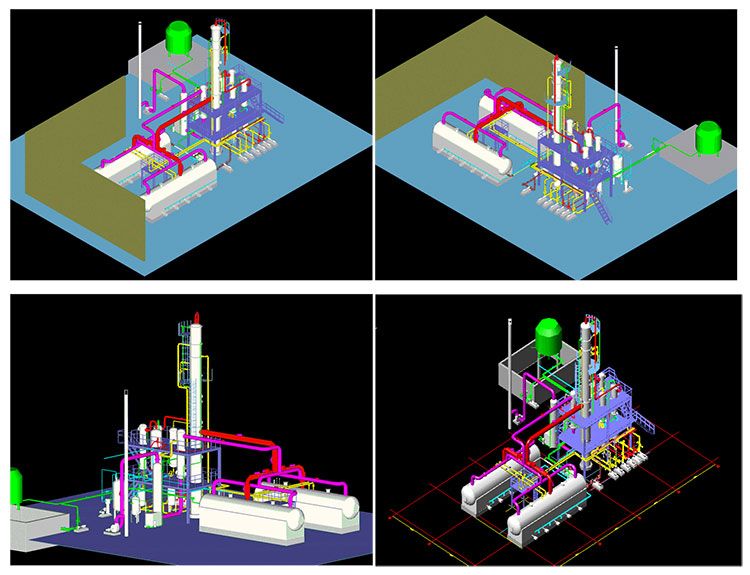
Degumming
This progress adopts hydration by adding hot water to remove the agglomerated and deposited hydrosol and phosphatide because of their water affinity. The separated gum (after being dried) can be made into lecithin or added into cakes or meals in the extraction workshop. Hydration degumming process can improve oil edibility, storage and do well to downstream neutralization section.
Neutralizing
Oil containing fatty acid is mixed mechanically with a slight excess of alkali to react with fatty acids present to form soaps. The mixture is centrifuged to separate oil from soapstock. After washing with water, the water is separated from the oil in a second centrifuge.
Bleaching
Degummed and neutralized oil are pumped into this system and mixed with by the use of bleaching earth, a special soap, gum, and pigment attracting adsorbent. The mixture enters the Pre-filtration Dryer where the moisture in the oil and adsorbent is evaporated. Then the oil is pumped through an automatically closed filter to remove clay.
Deodorization
The oil contains the disagreeable flavor and odors that are naturally present or created during processing. All odoriferous matter is distilled off by injecting high-pressure steam through the vacuum system. Then the product achieves the national standard.
订阅:
博文 (Atom)