显示标签为“peanut oil”的博文。显示所有博文

Canola Oil vs. Peanut Oil


Oils that contain higher amounts of monounsaturated fats, such as canola and peanut oil, tend to be among the healthier options since they help lower your low-density lipoprotein, or bad cholesterol, while increasing your high-density lipoprotein, or good cholesterol. Understanding the composition, smoke point and flavors of these oils can help you determine which is the best to use in any given situation.


Oil Composition


Canola oil is one of the oils highest in monounsaturated fat, with 62 percent, along with 7 percent saturated fat and 31 percent polyunsaturated fat. A small amount of the polyunsaturated fat consists of essential omega-3 fats, according to Cleveland Clinic. Peanut oil is higher in saturated fat, with 18 percent, making it slightly less healthy than canola oil, but it still contains 48 percent monounsaturated fat and 34 percent polyunsaturated fat.


Smoke Point


Oils shouldn't be used at temperatures higher than their smoke point, since this produces dangerous fumes and substances called free radicals that can damage your cells. If you want to cook using a method requiring high heat, such as frying, peanut oil is a better choice than canola oil since it has a higher smoke point. While canola oil has a smoke point of 400 degrees Fahrenheit, peanut oil can be safely used at temperatures of up to 450 degrees Fahrenheit.


Typical Use


Peanut oil is a good option for deep frying, dipping sauces, stir-frying, oven cooking, salad dressings and general cooking. It is particularly good in Asian dishes since it can have a subtle peanut flavor. Canola oil has a light flavor and can be used to replace butter or margarine in cooking or baking. Use it to oil pans or your grill, stir-fry or saute, make salad dressings or cook in the oven.


Other Considerations


Peanut oil isn't safe for people with peanut allergies, so avoid using it if you are bringing food to share with other people and aren't sure whether they have any food allergies. You shouldn't use canola oil if you are trying to avoid foods containing genetically modified ingredients, or GMOs, since the rapeseed plants used to make canola oil have been genetically modified to remove a harmful compound called erucic acid.


Pressing, cold pressing and leaching of edible oil

Pressing - a method of making edible oil

This method relies on physical pressure to separate the oil directly from the oil. There is no chemical additive in the whole process to ensure the product is safe, hygienic, non-polluting and the natural nutrients are not damaged.

The difference between pressed oil and leaching oil

At present, the production method of edible oil in China is divided into two types: pressing (physical) and leaching (chemical). Leaching is to use a chemical substance to get the oil out. The oil production rate is higher than that of the pressing method, but a chemical in the leaching method is used. The substance will always be stored in the body for a long time, and it will not be exhausted for decades. So now there are so many people with various cancers in China. It is definitely a problem to eat this kind of leaching oil regularly. Especially cooking oil is something we eat every day, so we must pay close attention.

Different processing techniques

The processing technology of the pressing oil is the "physical pressing method", and the processing technology of the leaching oil is the "chemical leaching method". The production process of the physical pressing method requires the raw materials to be selected. The oil is crushed, steamed and extruded after being removed from the stone, and the oil is separated from the oil. The fried seeds are added during the pressing process and are pressed by the press. After that, it is made by high-tech natural filtration and purification technology. It maintains the original flavor of peanuts, has a rich aroma, is rich in vitamin E, has a long shelf life, and has no additives, no solvent residue and soap content. It is a pure natural green food produced by combining modern technology with traditional techniques. .

The chemical leaching method is a method of applying chemical extraction, using an organic solvent capable of dissolving oil and fat, and extracting (soaking or spraying) with the oil to make the oil in the oil material extracted. The leaching method has the advantages of low residual oil (high oil yield) and low labor intensity, but the leached oil can be eaten after chemical treatment such as dewaxing, degumming, dehydration, deodorization, deacidification and decolorization. Or peanut oil that does not meet the primary and secondary crushing standards, plus some oil refined by leaching, to achieve the original standard one, two or new standard leaching oil grades three and four, due to multi-channel chemistry During processing, some of the natural components in the oil are destroyed and there is solvent residue.

Different nutrients

The pressed peanut oil has complete color, aroma and taste, and retains the characteristics of various nutrients.

The leaching oil is colorless and odorless, and most of the nutrients are destroyed after processing.

The peanut oil standard drafted by the National Grain Bureau has been implemented, and the old standards formulated in 1986 and 1988, which are currently used in China, have been removed. The new standard stipulates that: pressing peanut oil and leaching peanut oil should be labeled “squeezing” and “marking” in the product label. Leaching.

With the advancement of society and the improvement of people's living standards, diet and nutrition and health have become the pursuit of people. The transparent production process of peanut oil is to let consumers understand the production process of peanut oil, give the right to know to consumers, and choose The right is given to the consumer.

Different raw material requirements

“machine-pressed peanut oil” uses pure physical pressing method to retain the original flavor of peanuts and raw materials. Therefore, the requirements for peanut raw materials are very strict, raw materials are required to be fresh, acid value and peroxide value are low, so the price is relatively high; Only pressing, the residual oil in the peanut cake is high, and the oil yield of the pressed oil is relatively low. Therefore, the price of pressed peanut oil is relatively high.

Cold pressing is a machine in which the oil can be pressed without being fry, and the machine that can press the oil is called a cold press. Cold pressed oil color is good, relatively light, but the oil is not fragrant, not on fire. The key is that the cold-pressed oil will not foam when it is fried, and it will not clot.

The cooked squeeze is that the oil is fried after being fried in a wok, and the cooked oil is pure and fragrant, especially the sesame peanuts are rich in oil. The disadvantage is that the casserole will be foamed when the pot is fried without treatment, but this problem can be solved with a simple treatment.

The combination of both hot and cold is the combination of both.


Physical cold press:

At present, the production process of camellia oil mainly includes cold pressing method, hot pressing method and leaching method. Among them, the cold pressing method is processed under the environment of less than 60 ° C, and the nutrient composition is most intact. Since the cold pressing method has only half the oil extraction rate, the price of most cold pressed oil is about 50% higher than that of hot pressed oil.

Because the cold-pressing oil yield is very low, it is only professionally distinguished: low-temperature press oil extraction, and normal press oil extraction. Generally, the oil pressure is required to ensure a certain temperature of the press, and in order to speed up the process of pressing the oil, it is necessary to heat the steamed oil. Of course, without steaming and heating, the oil can only be slowly pressed. Tea seed oil is generally pre-pressed oil, which is a comprehensive method of oil extraction, which is an efficient method.


What is low temperature cold pressed peanut oil

Low-temperature cold-pressed peanut oil is a healthy edible oil that is comparable to Western olive oil. It is more suitable for the oriental people in terms of color, taste and taste. The low-temperature cold-pressed peanut oil adopts the low-temperature cold-pressing technology to make the characteristics of the color, aroma and taste of peanut oil to the extreme.

Low-temperature cold-pressed peanut oil is selected from export-grade large peanuts and pressed at 60°C. At the same time, in the production process, the peanut oil produced by the machine is screened, photoelectrically selected, and red-coated. Cool and golden. The "60 ° C cold pressing" technology also allows the peanut oil to completely retain the natural aroma components of the peanuts, thereby giving off the original peanut flavor. The peanut oil processed under this process is more pure in quality, and the taste is better, soft, delicate, smooth, fragrant and not greasy. The low-temperature cold-pressed peanut oil satisfies the Chinese people's requirements for the color, fragrance and taste of the dishes.

The soot that we usually produce is a large amount of thermal oxidative decomposition products produced by credit oil and food under high temperature conditions. A total of more than 220 chemical substances, including aldehydes, hydrocarbons, fatty acids, alcohols, aromatic compounds, esters, lactones, and heterocyclic compounds, were detected in the samples of soot that were frequently fried in the households of the relevant departments. Some mutant carcinogens such as volatile nitrosamines were also found in cooking fumes.

The appearance of low-temperature cold-pressed peanut oil is a good way to prevent the production of these substances. Due to its use in the production process, it adopts the international leading "cold press technology" and presses under 60 °C to ensure the accuracy of peanut oil. At the same time, the adoption of cold pressing technology ensures the solidification state of various active ingredients in peanuts from the beginning of pressing, and reduces the heat denaturation caused by high temperature. Therefore, the smoke point is nearly 240 ° C, which is much higher than that of high temperature pressing. Peanut oil.

In the face of increasingly serious food safety issues, relevant experts also remind consumers: when buying, you should pay attention to the purchase of higher cooking oil.
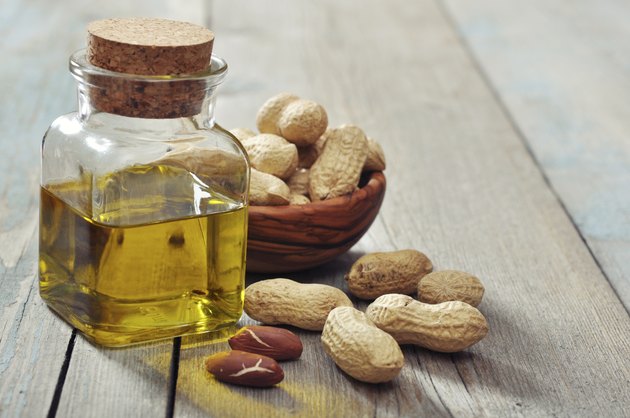
Is peanut oil a good substitute for vegetable oil?


Yes, Peanut oil is good substitute for vegetable oil; Peanut oil contains heart-solid monounsaturated fats. It has no Trans fat or cholesterol, and minimal immersed fat. Nut oil is a favored fat for profound singing, sautéing and burning on account of its high smoke point and protection from warm harm. Expecting you are searing, there are great substitutes for peanut oil.


Monounsaturated


Various oils that are, similar to peanut oil, essentially made out of monounsaturated fats are normally the best options. They too have high smoke focuses and hold up well against extraordinary warmth, making them perfect for browning,which has a 420-degree smoke point; avocado oil, with a 520-degree smoke point; canola oil, which has a 400-degree smoke point; macadamia nut oil, with a 390-degree smoke point; rice wheat oil, which has a 490-degree smoke point; and walnut oil, with a 400-degree smoke point. Olive oil is another basic option, and its smoke point shifts relying upon which squeezing the specific item was produced using.


Polyunsaturated


Polyunsaturated fat-based oils, got from vegetables, seeds and nuts, can be exchanged for nut oil. While you can utilize these oils to broil or burn, they are for the most part favored for sauteing and for cool employments. This is on the grounds that they regularly have brought down smoke indicates and less opposition warm harm. Normal cooking oils containing basically polyunsaturated fats that can be substituted for peanut oil oil incorporate corn oil, which has a 450-degree smoke point; cottonseed oil, with a 420-degree smoke point; grape seed oil, which has a 392-degree smoke point; sesame oil, with a 410-degree smoke point; sunflower oil, which has a 450-degree smoke point; and vegetable oil, which is a mix of different polyunsaturated fat oils.


Saturated Fats


Some immersed fats can substitute for peanut oil. These are less heart-solid since they raise terrible cholesterol levels more than some other dietary factor. These options are all the more ordinarily utilized as a part of preparing, yet they can be utilized on the stove top, as well, if vital. Spread, with a 350-degree smoke point, is the most regularly utilized soaked fat for broiling. Elucidated margarine, with a higher smoke point that fluctuates relying upon it immaculateness, is a shockingly better option for peanut oil.

Is peanut oil healthy?

With so many cooking oils on the market, it's hard to know which ones are most beneficial to your health. Peanut oil is a commonly used cooking oil, especially in fried foods. Although it may have some health benefits, it also has some obvious disadvantages.

Potential benefits of peanut oil

1、Peanut oil is rich in vitamin E.

A tablespoon of peanut oil contains 11% of the recommended daily intake of vitamin E. The main function of vitamin E is as an antioxidant to protect the body from harmful substances such as free radicals. If the content of free radicals is too high in the body, it will cause damage to cells. More importantly, vitamin E helps to keep the immune system working properly, thus protecting the body from bacteria and viruses. This powerful antioxidant can reduce the risk of heart disease, certain cancers, cataracts, and even prevent age-related mental decline.

2、Peanut oil can reduce the risk of heart disease.

Peanut oil has high levels of monounsaturated and polyunsaturated fats, both of which have been extensively studied in reducing heart disease. There is ample evidence that eating unsaturated fats can reduce some risk factors associated with heart disease. However, these benefits occur only when saturated fats are replaced by monounsaturated fats and polyunsaturated fats. It's not clear whether adding more of these fats to your diet will have a positive impact on heart health without changing other dietary ingredients.

3、Peanut oil improves insulin sensitivity.


Studies have shown that monounsaturated and polyunsaturated fats can improve blood sugar control in diabetic patients. Eating carbohydrate fats can help slow down the absorption of sugar in the digestive tract and slow down the rise of blood sugar. However, monounsaturated fatty acids and polyunsaturated fats may play a more important role in blood sugar control. In a review of 102 clinical studies, including 4220 adults, researchers found that replacing 5% of saturated fat with polyunsaturated fat significantly lowered blood sugar levels.


Potential health risks

Peanut oil is rich in Omega-6 fatty acids

Omega-6 fatty acid is a kind of polyunsaturated fat. It's a fatty acid that the body can't produce on its own, but it's essential. You have to eat to get it. The omega-6 fatty acid content in modern diet is too high. Over the past decades, omega-6 intake has risen dramatically, accompanied by an increase in the incidence of inflammatory diseases such as heart disease, obesity, inflammatory bowel disease and cancer. Peanut oil contains high - 6 fatty acids and needs to be limited in intake.


Peanut oil may promote oxidation


Peanut oil contains a lot of polyunsaturated fats, which need to be used at high temperature to make it easier to oxidize. Free radicals produced when peanut oil is oxidized can cause damage to the body. This damage can even lead to premature aging, some cancers and heart disease.


Summary

Peanut oil is a common edible oil. It is a source of antioxidant vitamin E, which can help reduce the risk factors for heart disease. It may also help improve insulin sensitivity and blood sugar in diabetic patients. However, it also has some shortcomings. It contains high levels of proinflammatory Omega-6 fatty acids, which are easily oxidized and may increase the risk of certain diseases.

There are other better options in the market that can bring more benefits to health while reducing potential risks. For example, extra virgin olive oil, coconut oil or avocado oil.

What is Peanut Oil?


Peanut oil, which may be called groundnut oil in the UK, is a highly desirable oil for deep-frying. It is made from the legumes called peanuts, and it is known for its high smoke point, the point at which the oil begins to give off smoke and start to burn. Refined oil, the type that people are most likely to buy in a grocery store, has a smoke point of 450°F (232.22°C). Other, comparable oils in this respect include ghee, sesame oil, refined safflower oil, extra light olive oil, and most versions of canola oil.

People can find peanut oil used quite a bit in the US, especially to fry French fries or make fried chicken, and most experts on deep frying turkey recommend it as the oil of choice. It also has many applications in Asian cooking. Authentic Asian cooking, especially in places like China, uses an oil that is less refined, retaining a little bit more of the protein of the peanut and producing a stronger flavor. Most US versions, unless they are sold as organic, tend to filter out much of the taste of the peanuts, and all of its protein.


This is good news for people who suffer from peanut allergies. In most cases, food prepared in filtered peanut oil does not provoke an allergic response, because the allergy to peanuts tends to be to proteins contained in them. People who have a strong allergic response to peanuts should check with a medical professional first, but in general, they may not have an allergic reaction to the oil. People who fry things in organic oil, or who are visiting a country that uses a less refined version, may have an allergic reaction, however.

When most people think of oils used in cooking, they want to know the calorie content and composition of the oil. A tablespoon (approximately 14.7 ml) of peanut oil has just under 120 calories. This amount provides 21% of the daily recommended intake of total fats, has 2.28 grams of saturated fat, 4.32 grams of polyunsaturated fat, and 6.24 grams of monounsaturated fat. The saturated fat in this serving size counts for 11% of the US Daily Value of saturated fat intake.

From a nutritional standpoint, many oils are considered superior to peanut, but this variety remains a popular choice. For people who are looking for a good substitute, the smoke points of canola and extra light olive oil are comparable, and from a health perspective they both are much higher in monounsaturated fat. There are a few other oils that make worthy substitutes.

Cooks who use this oil sparingly, especially unfiltered or organic types, can often get some of the rich taste of peanuts that is missing from other oils. In salad dressing, for instance, it can add an extra flavor. Though all oils should be used with caution, peanut oil is just as worthy as some, and better than others, and many love its taste and its ability to produce terrific fried foods.

How Do I Choose the Best Peanut Oil?


Peanut oil offers more than great taste. Due to its high smoke point, meaning that it can be used at high temperatures for longer periods of time, it tends to be a favorite option for creating delicious fried foods. This popular oil even offers few health benefits that other oils cannot. It contains a high concentration of “good” fats, and is therefore preferred over many other varieties. Be aware that peanuts can cause very serious allergic reactions and make sure not to use peanut oil when cooking for or near anyone with peanut sensitivities.

Oils, including peanut oil, have long been extracted from plants in a variety of ways. The main methods today are chemical extraction and mechanical extraction. For those who are trying to maintain healthier lifestyles, choosing mechanically extracted oils will likely be a better choice than purchasing those that are chemically processed. Look for these or “pressed” oils in health food and specialty stores or in the health food section of your favorite supermarket.

When turkey fryers were new, people dashed out to buy gallon after gallon of cooking oil, especially peanut oil. There is a good reason for that. Turkey, deep fried in peanut oil, creates a memorable meal. It can also make for a somewhat expensive Thanksgiving dinner, so look for lower priced brands, coupons, or sales.


There are less costly oil blends, and while they can be decent, blends are not the same quality as pure peanut oil. They may not be appropriate for higher temperatures. They may also contain more “bad” fats, so choosing a pure option is generally best.

In large fryers such as fish or turkey fryers, peanut oil works very well, but as noted, it can also be somewhat expensive. This popular oil is frequently more economical to purchase in a large container, two gallons or more, than it is to purchase in one gallon or less sizes. Compare prices and check for sales before a choice. Also note that peanut oil often goes on sale just before Thanksgiving.

Due to its longer shelf life and fairly high cost, some people try to strain the oil — long after it has cooled — so they can re-use it at a later date. Doing so is not generally recommended due to potential food contamination issues, so try not to use more than necessary. While any unused peanut oil still in the container can be safely stored for several months, it is best to keep it in a cool place away from light sources. Refrigerating the oil is the best method for long-term storage.

Peanut Oil Production Line


Fragrant Peanut Oil Production Line


The peanut oil production line is the extraction process of fragrant oil from peanut kernel by adopting the unique pressing technology. Peanuts are high-oil-containing oilseeds. Currently, the unique pressing processes are suited to extract high-flavored edible oils, which has really achieved “no chemical production”. The fragrant peanut oil obtained by pressing process maintains the natural ingredients and aroma of peanut oil, and it is rich in antioxidant vitamin E and has a long shelf life, so there is no need to add chemical antioxidants for storage; it is a pure natural oil products that are produced by combination of modern and traditional technology. With the improvement of living standards, the fragrant peanut oil is deeply loved by consumers for its unique pure fragrant flavor and have a broad market prospect. And the production line can be customer-made according to material variety, factory location, and labor resource.

pressed peanut oil manufactured by peanut oil pressing production line


Peanut Oil Production Process and Operating Points


In order to ensure the nutrition, flavor, and safety of fragrant peanut oil and reduce the cost, we adopt a physical squeezed method in the peanut oil production line. And the features of the pressing line are: (1) Extraction adopts pure physical pressing method to completely avoids the contact of raw materials and chemical solvents throughout the entire production process; (2) To abolish the unfavorable refining process which affects the quality of finished oil, such as solvent leaching, alkali refining and deodorization, so as to ensure the natural nutrients in the refined oil. (3) The refined oil is stored in an underground storage and the cooling water coil technology is used to ensure long-term storage.

1. Production Processes


1.1 Raw Material


The raw material which is used to produce fragrant peanut oil is fresh, full-grained, undamaged, mildew-free, free of insects and has not undergone an aging period. Raw materials would be cleaned by removing immature, damaged, and moldy grains during the cleaning process.

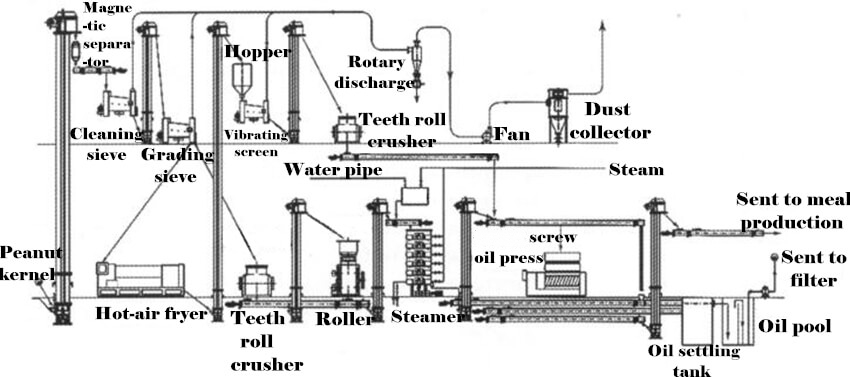
1.2 Process Flow of Peanut Oil Production Line


1.3 Process Parameters and Procedures


Peanuts are cleaned and shelled, medium-sized peanuts are screened (about 25% of the treated amount), and the rest are large- and small-sized peanuts (about 75% of the treated amount). The large-sized and small-sized peanuts are broken, rolled and steamed. The medium-sized peanuts are crushed and cleaned by red skin eliminator, then being baked. Finally, the three sized materials are mixed and then pressed in the press to obtain the crude oil. After pressing, the oil is settled and filtered to produce a fragrant peanut oil.

1.4 Operating Points


Stones, metals, etc. may damage mechanical equipment; moldy, insect-infested peanuts will seriously affect the quality of the oil. In order to reduce oil loss, improve oil yield, ensure high quality of oil, and prolong the service life of equipment, the cleaning process should be strictly controlled. Metals could be removed by magnetic separation, using magnets to remove magnetic impurities in raw materials. Other impurities like stones are removed by self-regulation vibrating sieve, using peanuts and impurities’ difference in the particle size and weight, with the help of peanuts and impurities in the relative movement of the screen surface.

  • Equipment: Self-regulation vibrating sieve, magnetic separator


The magnetic separator has the horizontal and vertical type. The separator is made of stainless steel, and the raw peanut flows through the body and the magnet separator extracts contaminants.Self-regulation vibrating sieve is widely used for separating impurities of large, medium and little-sized in grain, the machine has many features like the simple structure, smooth operation, low noises and consumption, good cleaning results, etc.


1.5 Peanut Oil Storage


The appropriate condition for peanut oil storage is 8% moisture content and the temperature which does not exceed 20℃. Sealed storage can prevent the infection of pests and the influence of the outside temperature and humidity, which is conducive to maintaining a low temperature.

Peanut oil is stored at a temperature below 15℃ in a sealed container to prevent lipase hydrolysis and oxidation, and to avoid the increase in acid number and peroxide value. The average temperature of the ground below 4m is below 20℃, so the storage house is built underground.


Factors That Affects the Fragrance of Peanut Oil


groundnut oil

The Effect of Peanut Raw Material Itself


The oilseed used to produce fragrant peanut oil requires full grain without aging period. Immature, broken, mildew and aged grains cannot be used to produce aromatic peanut oil: The acid value of oil produced by immature and aged grains is higher and the flavor is poor, while moldy and damaged grains are liable to be contaminated by aflatoxin. Therefore, in the production process, these oilseeds must be separated for the ordinary secondary oil processing alone.

The Effect of Baking Temperature


Hot-air roasting is a key process for the production of fragrant peanut oil. The flavor of peanut oil has a direct relationship with the baking temperature. The temperature is too low and the fragrance is lighter; the temperature is too high and the oil is prone to scorching. The baking temperature is generally controlled at 180℃~ 200℃. In order to prevent the gelatinization and spontaneous combustion of the oil, it should be cooled immediately after baking.

The Influence of Steaming


The steaming of embryo is another important step in the production of strong fragrant peanut oil. The level of oil content, flavor and color, and the content of phospholipids and pectin-soluble components in fragrant peanut oil are directly related to the steaming process. High-moisture steaming embryo technology should be adopted to adjust the moisture content of the oil in the steaming cooker to 12% to 13%; within the pressure range that the equipment can withstand, try to increase the pressure of indirect water vapor, generally controlled at 0.6MPa~MPa; and enterprises with conditions shall be encouraged to use hot water steam. In the process of steam cooking, it is necessary to make the phospholipids and peptic substances absorb water to combine with the protein, which is the key to guarantee the qualified test of the refined oil 280℃ heating and improve the transparency of refined oil.


11 Amazing Health Benefits of Peanut Oil

Peanut Oil health benefits includes controlling cholesterol levels, may help prevent cancer, can help lower blood pressure, helps promote good skin, helps relieve constipation, improves blood flow, helps preserve neurological function, may be used to relieve arthritis pain, helps soothe dandruff, promotes health of hair, and helps manage acne.

What is Peanut Oil?

Peanuts are widely consumed and available the world over, and are known to possess health benefits that most people can use to optimize their quality of living. Known scientifically as Arachis hypogaea, the peanut is not actually a nut, but rather a legume like various types of peas. The peanut seems to have originated in the Northern part of Argentina, and is today commonly cultivated in many sub-tropical climates.
Over time, extraction of oil from the peanut began, and today it is one of the most common vegetable oils used in cooking and for various other purposes. The oil makes it extremely convenient to experience the benefits it has on offer, eliminating your excuses from not consuming it either.
Peanut oil is also known as arachis or groundnut oil in some places, and is used frequently in Asian cooking, and for exotic meals thanks to its unique flavor. Regardless, its health benefits are what most people are after. Not sure what it can do for you? You’re in luck. Read on and discover how this tasty oil can improve your health!

Nutrition Info (per tsp)

Calories- 40
Total Fat- 4.5g
Vitamin E- 0.7mg 4% RDA

11 Amazing Health Benefits of Peanut Oil

1. Can Help Control Cholesterol Levels

There is a major myth that peanut oil adversely affects your cholesterol levels, though this is false for the majority of people. In reality, peanut oil can help to reduce cholesterol levels, since they contain phytosterols that are plant based compounds that help to reduce cholesterol levels. Phytosterols inhibit the absorption of cholesterol and promote its excretion, effectively reducing cholesterol levels by as much as 15% overtime.

2. May Help Prevent Cancer

Recently, there has been a lot of negative press surrounding synthetic vegetable oils, even though peanut oil should be exempt from the criticisms. Peanut oil is rich in anti-oxidants, most notably resveratrol, which is a super health promoting compound that is associated with grapes and red wine. Unknown to many, peanuts are good sources of this compound, which help to eliminate free radicals that can cause cancerous changes to occur at the cellular level. This makes peanut oil an anti-inflammatory oil, in stark contrast to many other vegetable oils which are regarded as pro-inflammatory.

3. Can Help To Lower Blood Pressure

Resveratrol also has additional effects that extend beyond anti-oxidant actions, as it can help to control blood pressure as well. A hormone known as angiotensin plays an important role in constricting blood vessels, leading to increases in blood pressure. However, this same mechanism is what causes high blood pressure to occur, as often this hormone works overtime when it shouldn’t be. Resveratrol is able to counteract the effects of this hormone, reducing the stress placed on your heart to pump blood under high pressure.

4. Helps Promote Good Skin

Using peanut oil daily in your cooking offers excellent support for the health of your skin, since it contains a high amount of vitamin E, but it can also be applied to the skin daily to prevent excessive UV damage. Purified peanut oil is virtually devoid of any odors, so you will not walk around smelling like peanuts if you use an oil that has been extracted properly. It also functions as an excellent moisturizing agent to prevent excess drying out of the skin.

5. Helps Relieve Constipation

While most oils can be used to remedy constipation, they are not ideal and often end up shooting off in the opposite end of the spectrum, causing diarrhea. As little as a teaspoon of peanut oil may be sufficient to relieve constipation, even better when combined with adequate water intake.

6. May Improve Blood Flow

Peanut oil is a rich source of linoleic acid, a precursor fatty acid of chemical mediators in the body known as prostaglandins. Prostaglandins have numerous functions in the body, but among them are dilation of peripheral arteries, improving blood flow in the process. This typically also contributes to lowering of blood pressure, and could explain another mechanism besides resveratrol’s effect on blood pressure.

7. May Help To Preserve Neurological Function

Neurological decline occurs normally with advancing age, but may be accelerated under the influence of excess oxidation. Peanut oil is known to be an anti-oxidant oil, and thanks to the presence of resveratrol, it is able to exert even greater potential in preservation of neurological function. Red wine is touted as an effective deterrent to Alzheimer’s and Parkinson’s disease, largely because of its resveratrol content.

8. May Be Used To Relieve Arthritis Pain

Peanut oil possesses anti-inflammatory and analgesic (pain relieving) properties that can be applied topically to affected joints to relieve the classic manifestations of arthritis afflicted joints. While it can be massaged as-is, you can also mix into a petroleum jelly base, or warm the oil before application to either prolong the time it spends in contact with the joint, or to improve circulation- both of which may aid the pain relief process.

9. Can Be Applied To The Scalp To Soothe Dandruff

Dandruff is often times causes by excessive production of sebum from the scalp, or can even be precipitated by use of hair products that one is relatively allergic to, resulting in a condition known as seborrheic dermatitis. The result is rapid accumulation of dead skin cells that clump together and push upwards, producing the need to scratch and manifesting as dry, white itchy patches. Peanut oil hydrates the scalp, can reduce sebum production and in turn tends to decrease the accumulation of these flakes.

10. Useful For Promoting Health Of Your Hair

More and more hair care brands have begun including peanut oil in their products, simply because it shows great promise in helping to benefit multiple aspects of hair health. For example, products containing peanut oil have been shown to reduce split ends, which is typically indicative of a protein deficiency. Peanut oil, also contains generous linoleic acid, which helps to improve blood flow to the scalp via production of the prostaglandins. This also contributes to reversing hair loss, especially in women who do not often experience male pattern baldness (which is for the most part irreversible). Finally, peanut oil prevents excessive loss of moisture from the hair and scalp, and keeps your hair looking rich and vibrant all day long. Not dry and frizzy and desperately waiting for a downpour of rain to fix you up!

11. Can Help Manage Acne

Peanut oil combined with a few drops of lemon juice reportedly has great efficacy on reducing acne breakouts and shrinking pores, thanks to the astringent nature of lemon as well. Peanut oil also helps to reduce bacterial colonies, and can reduce pimples and inflammation. Scarring is subsequently minimized and skin appearance stays smooth and adequately hydrated.

Conclusion

Peanut oil is an often overlooked oil when it comes to health, but is actually superior to many synthetically produced vegetable oil when it comes down to it. Just ensure that you are not allergic to peanuts, since the oil maintains many of its constituent amino acids in its chemical structure. Peanut oil is excellent for adding a “nutty” flavor to lightly cooked meals and salads, especially when the nuts were roasted prior to oil extraction.
We need Peanut Oil Press Machine to contact us

How to buy cooking oil?

Common edible oils are mostly vegetable oils, including corn oil, peanut oil, olive oil, camellia oil, canola oil, sunflower oil, soybean oil, sesame oil, walnut oil and the like.
Three tips for eating and drinking in your life:
1. depends on the color. Generally speaking, the higher the degree of refining, the lighter the color of the oil. Of course, all kinds of vegetable oils have a unique color, and it is impossible and unnecessary to refine to no color.
2. we must look at transparency. We must choose clear and transparent oil. The higher the transparency, the better.
3. you should smell and tasteless. Take one or two drops of oil on your palm. After rubbing your hands and heat, you can’t smell the smell (halal or irritating). If you have odor, don’t buy it.