Pressing - a method of making edible oil
This method relies on physical pressure to separate the oil directly from the oil. There is no chemical additive in the whole process to ensure the product is safe, hygienic, non-polluting and the natural nutrients are not damaged.
The difference between pressed oil and leaching oil
At present, the production method of edible oil in China is divided into two types: pressing (physical) and leaching (chemical). Leaching is to use a chemical substance to get the oil out. The oil production rate is higher than that of the pressing method, but a chemical in the leaching method is used. The substance will always be stored in the body for a long time, and it will not be exhausted for decades. So now there are so many people with various cancers in China. It is definitely a problem to eat this kind of leaching oil regularly. Especially cooking oil is something we eat every day, so we must pay close attention.
Different processing techniques
The processing technology of the pressing oil is the "physical pressing method", and the processing technology of the leaching oil is the "chemical leaching method". The production process of the physical pressing method requires the raw materials to be selected. The oil is crushed, steamed and extruded after being removed from the stone, and the oil is separated from the oil. The fried seeds are added during the pressing process and are pressed by the press. After that, it is made by high-tech natural filtration and purification technology. It maintains the original flavor of peanuts, has a rich aroma, is rich in vitamin E, has a long shelf life, and has no additives, no solvent residue and soap content. It is a pure natural green food produced by combining modern technology with traditional techniques. .
The chemical leaching method is a method of applying chemical extraction, using an organic solvent capable of dissolving oil and fat, and extracting (soaking or spraying) with the oil to make the oil in the oil material extracted. The leaching method has the advantages of low residual oil (high oil yield) and low labor intensity, but the leached oil can be eaten after chemical treatment such as dewaxing, degumming, dehydration, deodorization, deacidification and decolorization. Or peanut oil that does not meet the primary and secondary crushing standards, plus some oil refined by leaching, to achieve the original standard one, two or new standard leaching oil grades three and four, due to multi-channel chemistry During processing, some of the natural components in the oil are destroyed and there is solvent residue.
Different nutrients
The pressed peanut oil has complete color, aroma and taste, and retains the characteristics of various nutrients.
The leaching oil is colorless and odorless, and most of the nutrients are destroyed after processing.
The peanut oil standard drafted by the National Grain Bureau has been implemented, and the old standards formulated in 1986 and 1988, which are currently used in China, have been removed. The new standard stipulates that: pressing peanut oil and leaching peanut oil should be labeled “squeezing” and “marking” in the product label. Leaching.
With the advancement of society and the improvement of people's living standards, diet and nutrition and health have become the pursuit of people. The transparent production process of peanut oil is to let consumers understand the production process of peanut oil, give the right to know to consumers, and choose The right is given to the consumer.
Different raw material requirements
“machine-pressed peanut oil” uses pure physical pressing method to retain the original flavor of peanuts and raw materials. Therefore, the requirements for peanut raw materials are very strict, raw materials are required to be fresh, acid value and peroxide value are low, so the price is relatively high; Only pressing, the residual oil in the peanut cake is high, and the oil yield of the pressed oil is relatively low. Therefore, the price of pressed peanut oil is relatively high.
Cold pressing is a machine in which the oil can be pressed without being fry, and the machine that can press the oil is called a cold press. Cold pressed oil color is good, relatively light, but the oil is not fragrant, not on fire. The key is that the cold-pressed oil will not foam when it is fried, and it will not clot.
The cooked squeeze is that the oil is fried after being fried in a wok, and the cooked oil is pure and fragrant, especially the sesame peanuts are rich in oil. The disadvantage is that the casserole will be foamed when the pot is fried without treatment, but this problem can be solved with a simple treatment.
The combination of both hot and cold is the combination of both.
Physical cold press:
At present, the production process of camellia oil mainly includes cold pressing method, hot pressing method and leaching method. Among them, the cold pressing method is processed under the environment of less than 60 ° C, and the nutrient composition is most intact. Since the cold pressing method has only half the oil extraction rate, the price of most cold pressed oil is about 50% higher than that of hot pressed oil.
Because the cold-pressing oil yield is very low, it is only professionally distinguished: low-temperature press oil extraction, and normal press oil extraction. Generally, the oil pressure is required to ensure a certain temperature of the press, and in order to speed up the process of pressing the oil, it is necessary to heat the steamed oil. Of course, without steaming and heating, the oil can only be slowly pressed. Tea seed oil is generally pre-pressed oil, which is a comprehensive method of oil extraction, which is an efficient method.
What is low temperature cold pressed peanut oil
Low-temperature cold-pressed peanut oil is a healthy edible oil that is comparable to Western olive oil. It is more suitable for the oriental people in terms of color, taste and taste. The low-temperature cold-pressed peanut oil adopts the low-temperature cold-pressing technology to make the characteristics of the color, aroma and taste of peanut oil to the extreme.
Low-temperature cold-pressed peanut oil is selected from export-grade large peanuts and pressed at 60°C. At the same time, in the production process, the peanut oil produced by the machine is screened, photoelectrically selected, and red-coated. Cool and golden. The "60 ° C cold pressing" technology also allows the peanut oil to completely retain the natural aroma components of the peanuts, thereby giving off the original peanut flavor. The peanut oil processed under this process is more pure in quality, and the taste is better, soft, delicate, smooth, fragrant and not greasy. The low-temperature cold-pressed peanut oil satisfies the Chinese people's requirements for the color, fragrance and taste of the dishes.
The soot that we usually produce is a large amount of thermal oxidative decomposition products produced by credit oil and food under high temperature conditions. A total of more than 220 chemical substances, including aldehydes, hydrocarbons, fatty acids, alcohols, aromatic compounds, esters, lactones, and heterocyclic compounds, were detected in the samples of soot that were frequently fried in the households of the relevant departments. Some mutant carcinogens such as volatile nitrosamines were also found in cooking fumes.
The appearance of low-temperature cold-pressed peanut oil is a good way to prevent the production of these substances. Due to its use in the production process, it adopts the international leading "cold press technology" and presses under 60 °C to ensure the accuracy of peanut oil. At the same time, the adoption of cold pressing technology ensures the solidification state of various active ingredients in peanuts from the beginning of pressing, and reduces the heat denaturation caused by high temperature. Therefore, the smoke point is nearly 240 ° C, which is much higher than that of high temperature pressing. Peanut oil.
In the face of increasingly serious food safety issues, relevant experts also remind consumers: when buying, you should pay attention to the purchase of higher cooking oil.
Why Refining Edible Oil?
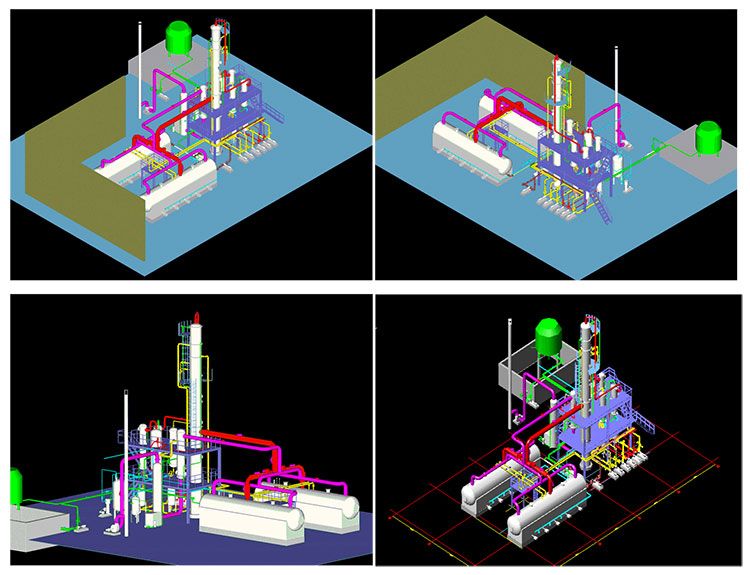
Oil Refining is a progress of removing the impurities such as phospholipids, FFA, pigment, off-flavor in cruel oil before edible application. Oil refining machine is used for producing the first or second-grade edible oil. We are able to supply the professional oil refining plant and related oil refining equipment. With the high degree of automation, the oil refining machinery can refine 20 kinds of edible oil, such as soybean oil, rape seeds oil, peanut oil, etc. in a small production line or in large oil plant.
Edible oil refinery caters to people need in pursuing quality life and exports from abroad. Why refine edible oil?
–The oil without refining will give out quite a lot smoke and make people uncomfortable. Refined oil is less smoke and preserves more authentic flavor.
–Refining mainly aims to purify edible oil by degumming and neutralizing and get high-quality edible oil.
Oil Refinery Progress
Degumming
This progress adopts hydration by adding hot water to remove the agglomerated and deposited hydrosol and phosphatide because of their water affinity. The separated gum (after being dried) can be made into lecithin or added into cakes or meals in the extraction workshop. Hydration degumming process can improve oil edibility, storage and do well to downstream neutralization section.
Neutralizing
Oil containing fatty acid is mixed mechanically with a slight excess of alkali to react with fatty acids present to form soaps. The mixture is centrifuged to separate oil from soapstock. After washing with water, the water is separated from the oil in a second centrifuge.
Bleaching
Degummed and neutralized oil are pumped into this system and mixed with by the use of bleaching earth, a special soap, gum, and pigment attracting adsorbent. The mixture enters the Pre-filtration Dryer where the moisture in the oil and adsorbent is evaporated. Then the oil is pumped through an automatically closed filter to remove clay.
Deodorization
The oil contains the disagreeable flavor and odors that are naturally present or created during processing. All odoriferous matter is distilled off by injecting high-pressure steam through the vacuum system. Then the product achieves the national standard.

Knowledge of Edible Oil
Types of Edible Oil
According to the source of oil, edible oil is divided into animal oil and vegetable oil.
1.Animal oil refers to the oil that is fried and refined from animal fat, containing high saturated fatty acids and cholesterol. Such as lard, sheep oil, butter and so on.
Advantages: tastes sweet, and the flavor has the function of promoting the absorption of fat-soluble vitamins A, D, E, K, etc. The cholesterol in it is an important component of human tissue and cells, and an important raw material for the synthesis of bile and some hormones.
Disadvantages: long-term consumption will lead to high cholesterol, elevated triglycerides, atherosclerosis, elevated blood lipids, elevated blood pressure, elevated blood sugar, coronary heart disease and other diseases. So we can not eat more, should try to eat less.
2.Vegetable oil is a compound of saturated and unsaturated fatty acids, obtained from the fruits, seeds and germ of plants.Such as corn oil, peanut oil, soybean oil, olive oil, rapeseed oil, raphani seed oil.Vegetable oil mainly contains vitamin E, K, calcium, iron, phosphorus, potassium and other minerals and fatty acids.
Grades of Vegetable Oil
The vegetable oil grade in our country is divided into four grades: first grade, second grade, third grade and fourth grade.
Here you will definitely think that the higher the grade of oil is, the better. Actually, it is not. All oil is good.Grade 3 and grade 4 oils have some inherent flavor and are odor-free.So usually buy some time do not need to buy the oil of high grade painstakingly, according to the way that cook and oneself taste go choosing is ok.
The Processing Technology of Vegetable Oil
Chemical Leaching and Physical Pressing
1.Physical pressing is the physical machinery of the enormous pressure to separate oil from the raw materials, refined and refined.
The pure physical pressing method integrates modern science and technology, especially in the process of full closed, pollution-free mechanized pressure oil production technology, high-tech extraction and other technologies.It has the features of the whole process free of pollution, natural nutrition of the product free from damage, original taste and flavor.Its safety, health, nutrition by domestic and foreign consumers love.
2.Chemical leaching: the separation of oil from oil plants by chemical method.
The "no. 6" solvent oil (no. 6 light gasoline) is mainly used to soak oil raw materials, then extract them at high temperature, and then refine them through the 6 process (i.e., degreasing, degumming, dewaxing, decolorization, deodorization and deacidification).This production method has high oil yield and low cost, but it is inevitable that there will be solvent residue in edible oil. Therefore, the state leaching residual solvent has a strict regulation.
According to the source of oil, edible oil is divided into animal oil and vegetable oil.
1.Animal oil refers to the oil that is fried and refined from animal fat, containing high saturated fatty acids and cholesterol. Such as lard, sheep oil, butter and so on.
Advantages: tastes sweet, and the flavor has the function of promoting the absorption of fat-soluble vitamins A, D, E, K, etc. The cholesterol in it is an important component of human tissue and cells, and an important raw material for the synthesis of bile and some hormones.
Disadvantages: long-term consumption will lead to high cholesterol, elevated triglycerides, atherosclerosis, elevated blood lipids, elevated blood pressure, elevated blood sugar, coronary heart disease and other diseases. So we can not eat more, should try to eat less.
2.Vegetable oil is a compound of saturated and unsaturated fatty acids, obtained from the fruits, seeds and germ of plants.Such as corn oil, peanut oil, soybean oil, olive oil, rapeseed oil, raphani seed oil.Vegetable oil mainly contains vitamin E, K, calcium, iron, phosphorus, potassium and other minerals and fatty acids.
Grades of Vegetable Oil
The vegetable oil grade in our country is divided into four grades: first grade, second grade, third grade and fourth grade.
Here you will definitely think that the higher the grade of oil is, the better. Actually, it is not. All oil is good.Grade 3 and grade 4 oils have some inherent flavor and are odor-free.So usually buy some time do not need to buy the oil of high grade painstakingly, according to the way that cook and oneself taste go choosing is ok.
The Processing Technology of Vegetable Oil
Chemical Leaching and Physical Pressing
1.Physical pressing is the physical machinery of the enormous pressure to separate oil from the raw materials, refined and refined.
The pure physical pressing method integrates modern science and technology, especially in the process of full closed, pollution-free mechanized pressure oil production technology, high-tech extraction and other technologies.It has the features of the whole process free of pollution, natural nutrition of the product free from damage, original taste and flavor.Its safety, health, nutrition by domestic and foreign consumers love.
2.Chemical leaching: the separation of oil from oil plants by chemical method.
The "no. 6" solvent oil (no. 6 light gasoline) is mainly used to soak oil raw materials, then extract them at high temperature, and then refine them through the 6 process (i.e., degreasing, degumming, dewaxing, decolorization, deodorization and deacidification).This production method has high oil yield and low cost, but it is inevitable that there will be solvent residue in edible oil. Therefore, the state leaching residual solvent has a strict regulation.
订阅:
博文 (Atom)