显示标签为“Biodiesel”的博文。显示所有博文

Jatropha: Biodiesel and More

Jatropha seed oil is used in soaps, and energy for lighting and heating in subtropical and tropical areas where it is planted as living fences to stop soil erosion. Its biodiesel potential is being researched because the seeds contain from 25% to 40% oil.

Contents


Introduction


Jatropha curcas is an oilseed tree or shrub that grows in almost all subtropical and tropical areas. It has been heralded as a new biodiesel feedstock because it is a non-food crop that can grow without much water.

Biodiesel producers in the U.S. are sometimes curious about jatropha because of all the things they have heard. Keep in mind that jatropha is not frost-tolerant, and will only grow in the warmest areas of the United States.

In addition, yields from jatropha are very variable. For example, with good soil and adequate rainfall, jatropha can produce 5 to 7 tonnes of seed per hectare. Under semi-arid conditions, the yield can drop to 1 to 3 tonnes per hectare. Although the tree will survive without much water, it may not produce nuts.


Jatropha for Biodiesel


The physical and chemical properties of jatropha oil can vary based on environmental factors, genetics, and the maturity of the seeds. This may make it more challenging to use as a biodiesel feedstock because process adjustments may be required to compensate for the property changes.

Because jatropha is a wild plant that is often harvested by low-income farmers in poor countries, the characteristics of the oil are expected to be variable. For example, oil from seeds of over-ripe fruit, or seeds that have been stored in high humidity conditions, will be high in free fatty acids.

The University of Idaho tested the oil content of jatropha seeds from Florida and Guatemala. The results are in the table below.

Percent of Oil in Jatropha Seeds


Seeds% Oil, whole% Oil, no shell% Shell% Meat
Florida36.254.135.9264.08
Guatemala28.141.836.5663.44

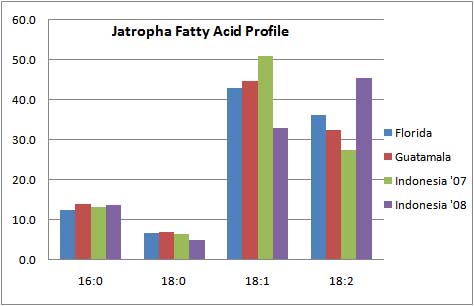
The bar graph below shows the fatty acid profiles of jatropha varieties grown in Florida, Guatemala, and Indonesia. They all have fairly low levels of the saturated fatty acids palmitic (16:0) and stearic (18:0), and much higher levels of unsaturated fatty acids oleic (18:1) and linoleic (18.2). Therefore, biodiesel from jatropha would have better cold flow properties but less oxidative stability than a more saturated oil. An interesting point is that the Indonesian variety had significantly higher oleic than linoleic fatty acids in 2007, but the opposite in 2008, suggesting a response to different growing conditions.
Fatty acid profile of Jatropha oil


Biodiesel made from jatropha oil has a cloud point of 8 degrees Celsius, according to tests conducted at the University of Idaho. This is primarily due to the 20% saturated fat content of jatropha, compared with 15% saturated fat in soybean oil, and 6% in canola. Biodiesel from saturated fats tends to gel at higher temperatures.


Jatropha oil has a high cetane rating and low sulfur content, both of which are beneficial for biodiesel production.


Jatropha is Not Edible


Jatropha seeds and oil are poisonous. While all parts of the plant contain toxins, the seeds are considered the most poisonous part of the plant: as few as one to three seeds can cause abdominal pain, nausea, and diarrhea in humans. This poses a problem in terms of producing biodiesel, since the seed cake left over after oil extraction cannot be fed to animals.

Matt Morra and Vladimir Borek of the University of Idaho’s soil science department have been conducting research to determine whether the toxic compounds survive the process of converting the oil into biodiesel.


Versatility of Jatropha


A 114-page report published by the Food and Agriculture Organization of the United Nations, Jatropha: A Smallholder Bioenergy Crop, The Potential for Pro-Poor Development, points out that jatropha has many other uses in addition to biodiesel. This versatility may make it useful in remote areas where other fuel is not available, and on degraded land not suitable for farming. The following sections of this article are summarized from the FAO report.


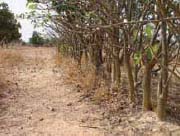
Jatropha "Living Fence" in Mali, West Africa. Copyright FAO, UN


Jatropha planted from seed will develop a tap root that allows it to bring up water from deep in the soil. The tap root also extracts minerals far down in the soil profile. The plant then returns those minerals to the surface of the soil through leaf fall and other debris. Therefore, jatropha can be used to reclaim degraded farmland.

Jatropha is often planted as a “living fence” to keep out livestock and reduce wind erosion. The surface roots help prevent soil erosion.

In Madagascar and Uganda, jatropha is grown to provide support and shade for vanilla plants.Plant extracts of jatropha are used for dying cloth, and as a traditional medicine for humans and animals. Jatropha seed cake has a high nitrogen content, similar to chicken manure, and can be used as an organic fertilizer.


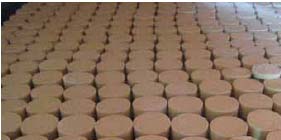
Jatropha Soap in Tanzania. Copyright FAO, UN


The seed cake, fruit shells, and seed husks can be used as biomass fuel. Jatropha oil can be used for lighting, soap-making, and heating, in addition to biodiesel.


Growth Habits


Jatropha is a succulent perennial shrub or small tree that can grow up to five feet tall under optimal conditions. It does not do well in shade, but can tolerate bright light.

Each fruit contains two or three black seeds, around 2 cm x 1 cm in size. The seeds contain from 25% to 40% oil. The tree generally takes four to five years to reach maturity.

With adequate water, flowering and fruiting are continuous, meaning that mature and immature fruits are present at the same time, and harvesting must be done by hand.


Origin and Spread


Jatropha originated in Central America and Mexico. It is now widespread in subtropical and tropical areas.

In the 20th century, several African countries exported jatropha seeds – the oil was used in soap-making. However, this trade ended in the 1970s, when cheaper synthetic detergents entered the market. During World War II, jatropha oil was used as a diesel fuel substitute in Africa.

Jatropha plantings cover an estimated 900,000 hectares globally. More than 85 percent of jatropha plantings are in Asia, and 12% are in African countries. Latin America grows a small amount of jatropha, mostly in Brazil.

Indirect Land Use Impacts of Biofuels

Can we reduce greenhouse gases with biofuels? Explore biofuels, the carbon cycle and potential impacts.

Table of Contents


Biofuels and the Carbon Cycle


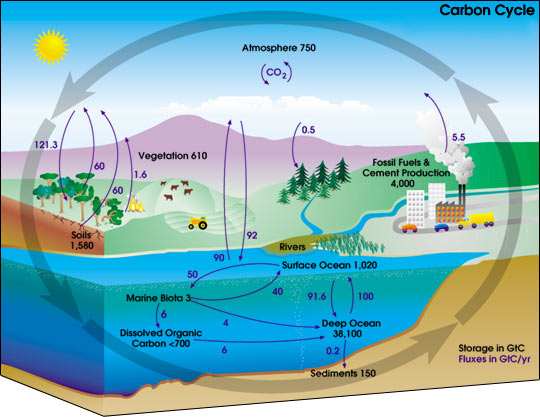
From the standpoint of human-released carbon dioxide, other greenhouse gas emissions, and contributions to climate change biofuels have one large advantage over gasoline, diesel and other fossil fuels: The feedstocks for biofuels are part of the above-ground carbon cycle. Unlike petroleum or coal, the soybeans, corn,switchgrass and other biological materials that are made into biofuels are not dug up from underground, nor do they release long-stored carbon as carbon dioxide into the atmosphere when burned. Instead, when biofuels are burned, carbon dioxide they recently captured is release back into the atmosphere.


This carbon cycle diagram shows the storage and annual exchange of carbon between the atmosphere, hydrosphere and geosphere in gigatons - or billions of tons - of carbon (GtC). Burning fossil fuels adds about 5.5 GtC of carbon per year into the atmosphere. Carbon released by burning biofuels is partly balanced by carbon fixed during biofuel feedstock growth.


This advantage has sometimes been exaggerated into the claim that biodiesel, ethanol and other biofuels are carbon neutral.Unfortunately, this is not always true. For example, fossil fuels that release carbon dioxide are used in farming, fertilizer production, transportation and many aspects of biofuel processing during the full life cycle of most biofuels.


Indirect Land Use Impacts of Biofuels


Cropping changes, the conversion of forests into cropland and other land-use changes connected with the growing of biofuel crops all have greenhouse gas, and thus climate change implications. Worldwide land-use patterns can be affected by small variations in commodity prices, and these effects need to be considered in a full life-cycle analysis.

Two articles in the February 2008 issue of the journal Science called widespread attention to these so-called indirect land use impacts of biofuels. (See Fargione et al, 2008 and Searchinger et al, 2008.)

The study of indirect land-use impacts is in its infancy, and predictions and measurements of these impacts are highly uncertain. Biotech companies and others have claimed that crop yield improvements will reduce greenhouse gas emissions by making farmland more productive, meeting the world’s food and fuel needs with fewer acres, and reducing pressure to convert forests to farmland. In an ideal world this might all be true. But in the real world, land use change is driven by complex economic, social and political forces. Productivity is only one factor.


Differences among Biofuels


Various efforts have begun to evaluate the sustainability of biofuel production systems. For example, some groups are working to create third-party certification standards, reflecting a growing awareness that there are great differences among the greenhouse gas footprints and other environmental and social impacts of biofuels. In one extreme and widely publicized example, the clearing and burning of rainforests for oil palm plantations in Indonesia is alleged to have caused enormous releases of carbon dioxide and other greenhouse gases as well as other serious environmental problems. At the other end of the spectrum, fuel made from waste vegetable oil or spoiled grain typically causes few concerns.

Estimating the net effect of any given biofuel on atmospheric greenhouse gas levels or climate change requires extremely complicated calculations with many debatable assumptions. Many of the analyses to date have concluded that grain ethanol, biodiesel, and especially cellulosic ethanol substantially reduce greenhouse gas emissions, in comparison to gasoline and diesel. Other researchers have called these results into question, however. (See, for example, Pimentel and Patzek, 2005.) Despite these different views, it is clear that biofuels are most likely to contribute to greenhouse gas reductions if they are produced with a minimum of fossil energy inputs and without significant land use changes.

Rapeseed and Canola for Biodiesel Production

Oil from rapeseed or canola seed, the edible crop varieties, is used in biodiesel energy production. The oil has a low cloud point so it gels at lower temperatures than many other feedstocks.

Contents


Rapeseed — An Ancient Crop


Rapeseed is related to mustard and to other cabbage-family crops.

According to the Canola Council of Canada, rapeseed has been cultivated since the 20th century B.C. Because the plant can grow with less sunlight and at lower temperatures than other crops, it was cultivated in Europe as early as the 13th century A.D.

Rapeseed oil has been used for cooking, lighting, and industrial uses. However, traditional rapeseed contains high quantities of erucic acid and glucosinolates,which make the seed meal unpalatable and possibly dangerous to livestock if fed in large quantities.


Canola — An Edible Variety of Rapeseed


Canola is an edible variety of rapeseed with a low percentage of erucic acid and low levels of glucosinolates. It was developed by Canadian plant breeders in the 1970s.

The word “canola” was coined from "Canada" and from "oleo" (oil). According to the Canola Council of Canada, the term is no longer a trademark. “Canola” can be applied to varieties of rapeseed with 2% or less erucic acid and less than 30 micromoles of glucosinolates per gram of oil-free meal.

Much of the rapeseed grown in Europe is of canola quality but retains the name rapeseed probably because the word "rape" does not have the negative connotations in Europe that it does in English-speaking countries.


Current Potential for Use as Feedstock for Biofuel


Soybeans are the major oilseed used for biodiesel production in the United States. Edible rapeseed is the most common oilseed used for biodiesel in Europe.

Biodiesel made from canola or edible rapeseed gels at a lower temperature than biodiesel produced from other feedstocks, making canola biodiesel a more suitable fuel for colder regions. University of Idaho research showed that canola biodiesel had a "cloud point" of 1°C and a "pour point" of -9°C (Peterson et al., 1997).

The cloud point is the temperature of the fuel at which small, solid crystals can be observed as the fuel cools. These crystals will clog vehicle filters. The pour point refers to the lowest temperature at which there is movement of the fuel when the container is tipped. Because canola biodiesel has a slightly lower cloud point and pour point than soy biodiesel, and a much lower cloud point and pour point than biodiesel made from animal fats, canola biodiesel is useful in cold climates.

Canola and rapeseed contain about 40% oil and have a high yield of oil per acre: 127 to 160 gallons per acre, compared to 48 gallons per acre for soybeans (Pahl, 2008, pp. 40-42).

Canola oil is high in oleic acid, which makes it competitive with other cooking oils, a market in which it is well established. The oil is also a high-grade lubricant and fuel additive; conversion to biodiesel, therefore, is just one of its several potential end uses.

Canola meal (what's left after the oil is extracted) is a good source of protein, containing 38 to 42% protein and a favorable balance of amino acids. It can be used as a feed additive for livestock rations.

Industrial rapeseed makes a biodiesel with very good low temperature performance. University of Idaho research showed that rapeseed biodiesel had a cloud point of 0°C and a pour point of -15°C . However, comparatively little of this crop is grown because the market for canola and edible rapeseed is much larger than the market for industrial rapeseed.

Industrial rapeseed contains more long-chain fatty acids than canola. Therefore, sometimes industrial rapeseed biodiesel turns out to be slightly more viscous (thicker) and may have a higher distillation temperature than the ASTM D6751 specification allows. In this case, the rapeseed biodiesel can be blended with other fuels (such as canola or soy biodiesel) in order to meet the specification.


Biology and Adaptation


Rapeseed and canola divide into two main species: Brassica rapa, known as “Polish type,” and Brassica napus, known as “Argentine." Canadian breeders have also developed a low erucic acid, low glucosinolates variety of brown mustard (Brassica juncea).

There are both spring and winter (fall planting) types in canola and rapeseed species. The species differ in agronomic characteristics and yield. These differences must be evaluated when selecting a variety to grow.


Production


In temperate climates such as the Pacific Northwest, canola/rapeseed can be planted either in the fall or spring. Fall-planted canola or rapeseed can develop more extensive root systems and is more drought hardy, but excessively cold winter weather or wet winter growing conditions can reduce yield potential, so the advantage may lie with spring planting dates. Canola must be planted in time to ensure maturity before the onset of hot weather. Winter canola must be planted in time to ensure significant plant development (six leaves or more) before hard freezing weather.

Most canola in the United States is produced in North Dakota.

Responses to fertilizer and soil fertility are similar to those for small grains; however, canola is a heavy user of sulfur. In a 2,000 lb/acre crop, for example, about 12 and 15 lb/acre of sulfur are in the straw and seed, respectively. Canola competes well with weeds, and herbicides are registered for use in the crop.

Seed size ranges from 80,000 to 135,000 seeds/lb, depending on variety. (Seed size can significantly affect seeding rate in pounds per acre.) Canola is handled and stored like flax; tight containers are necessary to avoid loss in transit.


Potential Yields


Yields of oil per acre vary from about 75 gallons per acre to about 240 gallons per acre.

In Oregon canola trials, yields ranged from 1,900 to 4,800 pounds of seed per acre. Since canola is about 40% oil, and since a gallon of vegetable oil weighs about 8 pounds, this comes out to about 95 to 240 gallons of oil per acre.

The 2009 canola trials in North Dakota resulted in an average yield of 1,900 pounds of seed per acre, with an average oil content of 45%. This works out to about 107 gallons of oil per acre.

Recent trials in Maine (where the crop is relatively new) resulted in 75 to 100 gallons of oil per acre.

Trials in Minnesota resulted in an average of about 96 gallons of oil per acre. The average percentage of oil in the seeds was 46%.


Production Challenges


Since it is a Brassica crop, canola can cross pollinate with other Brassicas such as rutabaga, Chinese cabbage, broccoli rabe, and turnip unless buffer distances are adequate. In addition, it is problematic to grow canola among infestations of mustard-family weeds.

Canola grows on most soil types but requires good drainage. The emerging crop is very susceptible to soil crusting; seedbed preparation is important. Canola is susceptible to blackleg and Sclerotinia stem rot. If not rotated with resistant crops, seed treatment may be necessary.

Seed shattering at harvest is a potential problem, so crops commonly are swathed or “pushed” (mechanically bent over without cutting the stem) when seed moisture is about 35%.

Indirect Land Use Impacts of Biofuels

What is Indirect Land Use Change?


Indirect land use change (iLUC) is a widely debated concept that seeks to quantify the impact a new policy or commercial activity has on global patterns of existing land use. These impacts differ from direct land use changes because they are induced or caused by secondary factors such as price changes.

For example, current U.S. biofuel policy seeks to produce more renewable energy from agricultural feedstocks. The direct impact of this policy is that U.S. farmers will shift some of their existing acreage from production of food crops to an energy crop. However, because less food is now produced, food prices rise, which induces other farmers to convert non-crop lands (forests, conservation, marginal) to agricultural production. This conversion may occur in both the United States and abroad.

Non-crop lands, particularly forested land, store vast amounts of carbon in what is known as a carbon sink. When trees are removed and land is tilled and prepared for crop production, much of the carbon that has been sequestered is released. This increases the potential for global warming.


Do Indirect Land Use Changes Impact GHG Emissions?


At issue is whether or not the current amount of land available for agricultural production can support the growing global population's demand for both food and fuel. If it cannot, more land will be converted into production for crops.

The issue focuses on many developing countries because a combination of lax environmental regulations, rapid economic growth and a burgeoning population have historically led to environmental degradation. In places like Brazil and Indonesia, agriculture and biofuels represent a significant percentage of potential economic growth. But one of the few places left to expand crop production is in environmentally sensitive ecosystems such as tropical forests. According to rainforest conservationist rainforest conservationist Rhett A. Butler, U.S. biofuel policy motivated this deforestation which has lead to sizeable releases of carbon into the atmosphere when the trees are burned and land cleared.

Critics of iLUC argue that induced price changes lead to other behaviorial responses and technology adoption on the part of farmers, in addition to land conversion, which lessens the overall environmental impact of expanded biofuel production. Moreover, converted lands may originate in less environmentally sensitive regions. Finally, they argue that induced environmental impacts of existing oil exploration activites and fossil fuel development be considered for a balanced analysis.


Can We Find a Carbon-Neutral (or Carbon-Negative) Biofuel?


One potential answer to this problem lies in second generation biofuels, including those grown on degraded lands unsuitable for normal cultivation as well as waste biomass . There is also the possibility that biofuel crops can be grown on fertile land without interfering with current crop yields. Not enough research has been conducted in this area, and indirect land use impacts are unknown.


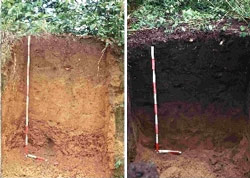
A nutrient-poor oxisol (left) can be made more fertile through biochar addition (right). Bruno Glaser photo.


Another method of biofuel production that shows potential is biochar sequestration, where biomass is burned using a special method called pyrolysis for carbon-neutral heat energy. The remaining ash, "biochar," can then be incorporated into soil.

Use of carbon credits to offset the impact of indirect land use change is another possible solution.


Differing Perspectives on the Impact of Biofuel Productions on Indirect Land Use Change


According to a landmark 2008 study by Princeton professor Tim Searchinger et al. titled Use of U.S. Croplands for Biofuels Increases Greenhouse Gases Through Emissions from Land-Use Change in Science Magazine, previous assessments of biofuels failed to take into account indirect land use impacts of biofuels, which resulted in misleading information. Searchinger argues that from a cradle-to-grave standpoint, increased biofuel crop production will result in more conversion of carbon sequestering ecosystems (such as forests and wetlands) into cropland. Converting carbon-rich ecosystems into cropland releases a great deal of carbon dioxide into the atmosphere, which undermines one of the most important benefits of biofuel use. By taking into account land-use changes, Searchinger argues that biofuels have a net gain, not a reduction, in total carbon dioxide emissions.

Another study published in Science Magazine, titled Land Clearing and the Biofuel Carbon Debt by Fargione et al. in 2008 concluded that this net gain in carbon dioxide emissions from biofuel production, or "carbon debt," could be reduced if second-generation biofuel sources were used.

However, in a response to the 2008 Searchinger study, Michael Wang at the Argonne National Laboratory argues that Searchinger and his co-authors improperly estimated indirect land use impacts of biofuels. According to Wang, the researchers did not properly take into account increasing annual corn yield per acre, which reduces the need to produce replacement food on other acreage. Wang argues that U.S. biofuel production has resulted in moderate greenhouse gas(GHG) reductions, and that it has not led to indirect land use changes in other countries because U.S. corn exports have remained steady at 2 billion bushels annually.

Searchinger's response defends his findings from Wang's criticisms. Searchinger and Wang represent the two sides of the indirect land use issue, and the two men have become so prominent in the field that their back-and-forth arguing has been dubbed the Searchinger-Wang debate.

Estimating indirect land use impacts from biofuels continues to be problematic. It is difficult to assess what causes land-use changes (such as deforestation) in other countries and how much of an impact U.S. biofuel production has on these changes. Why deforestation occurs within a country–whether it is simply natural causes, clearing land for crops or just cutting down trees for lumber–remains difficult to estimate.

Biodiesel and the Food vs. Fuel Debate

Does biodiesel production impact food supplies? Learn about the “fuel versus food” debate, examine scenarios showing impacts and factors considered by scientists trying to unravel this complex question.

Contents


Introduction


Because biodiesel can displace petroleum diesel, and because it produces less air pollution and has a low carbon footprint, some people hope biodiesel and other biofuels can be the answer to our dependence on imported oil and the environmental problems caused by fossil fuels. Other people worry that, if we vastly increase the amount of acreage given to growing crops for biofuels production, we will cause a food shortage. This debate is termed “food versus fuel.”


Biodiesel and Ethanol


Before getting into the details of the food versus fuel debate, we would like to offer a clarification. Only two different major types of biofuels are used as transportation fuels at the present time: ethanol and biodiesel. Ethanol is made from corn, sorghum, or sugar cane, and is used in engines that run on gasoline. Biodiesel is made from vegetable oils or animal fats, and is used in diesel engines. Worldwide, significantly more ethanol is produced than biodiesel. In 2008, the United States produced roughly nine billion gallons of ethanol, and nearly 700 million gallons of biodiesel (Renewable Fuels Association; National Biodiesel Board).

Most of the food versus fuel debate involves ethanol. We will focus on biodiesel in this article. For more information on ethanol and food, see Food vs. Fuel Biofuels Debate.


Five Traditional Uses of Biomass


John Gardner, Vice President of Economic Development and Global Engagement at Washington State University, explains that biomass (which includes oilseed crops) has historically had five general uses: food, fuel, animal feed, fiber, and functionality (cycling back into the ecosystem). Societies must always make decisions about how to allocate biomass use among these five.


Does Biodiesel Production Cut into Food Supplies?


It can be difficult to tell if oilseed production for biodiesel is cutting into food supplies, since many outside factors influence food prices, including trade policies, worldwide population growth, and bad weather, which reduced yields in many countries in 2007 and 2008. One way of gauging the effect of biodiesel production on food prices is to compare changes in how much consumers pay for food, with changes in the price farmers receive for oilseed crops.

For example, in the United States, as the price of oilseeds bought from farmers peaked in 2008, so did food prices to consumers. The food versus fuel debate was covered widely at this time, with several articles in national news magazines. But when the price of oilseeds from farmers fell, food prices to consumers dipped just a bit. In reality, the ingredients in food are just one small part of the price of food. Vegetable oils in particular are a small part of most foods.

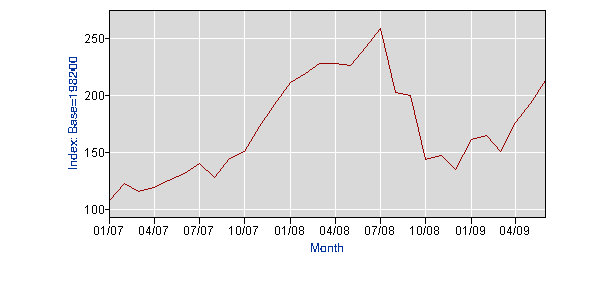
Figure 1 shows that the price farmers received for soybeans (the major oilseed crop in the United States) more than doubled from the beginning of 2007 to mid-2008, and then dropped by over 40 percent before starting to rise again through 2009. This time period coincides with the period of rapid growth of the biodiesel industry, which reached a peak production of 700 million gallons in 2008. Although other oils are used in the United States, soy oil is by far the most common, and the prices of other oils tend to follow soy oil prices.


Figure 1. Producer Price Index, Soybeans


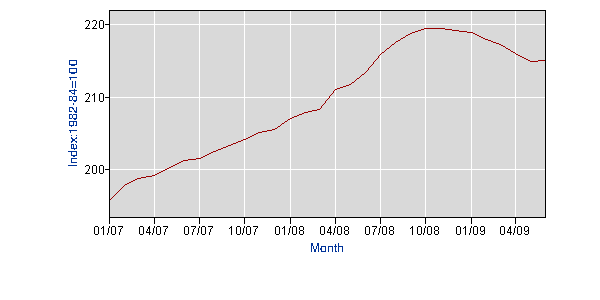
When the price of soy oil dropped, consumer food prices continued to rise through the end of 2008, peaking as the price of soybeans hit a low in October, and falling barely two percent in 2009, as shown in Figure 2. This indicates only a weak connection between the price paid for soybeans, which is determined by supply and demand, and food prices paid by consumers.


Figure 2. Consumer Price Index, Food at Home


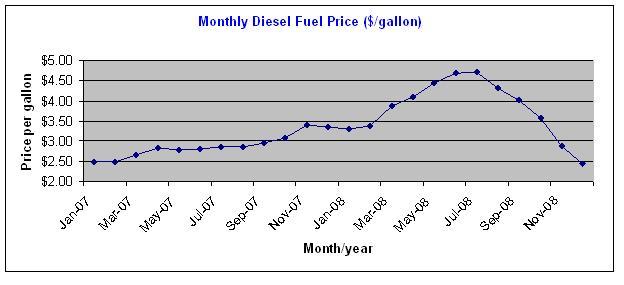
One other very relevant factor with a significant impact on food prices is the cost of energy, and, in particular, petroleum. Petroleum, mainly in the form of diesel fuel, is used throughout the food chain in tractors for growing the commodity crop, for chemical and fertilizer manufacture, in trucks to transport the raw materials to processing facilities, and for distribution to the end-use consumer. Therefore, the price of petroleum can affect the final price of food to consumers. The following graph (Figure 3) presents data on the monthly price of diesel fuel from 2007 through 2008. The price nearly doubled during this brief period of time.


Figure 3. Monthly Diesel Fuel Price


From these data, it does not appear that processing oil into biodiesel is cutting into the U.S. food supply or affecting the price of food at the present time. These data represent only a brief snapshot of the economic balance between food and fuel. Increasing yields of oilseeds will play an important role in the ongoing balance between these two societal needs.

If, as a country, we were to decide to vastly increase the amount of acres devoted to oilseed crops for biodiesel production, this could conceivably cut into food production. For example, in order to grow enough rapeseed (which produces more oil per acre than soybeans) to replace the petro-diesel currently used for on-highway transportation in the United States, all available harvested and idle land would have to be given over to rapeseed (Van Gerpen et al., 2007, pp. 15-16). Obviously, this would not be a good idea for our country.


Biodiesel is Often Made from Animal Feed By-products


In the United States, meal from soybeans is used primarily as animal feed. Biodiesel production uses only the soy oil, which is normally extracted from the beans before feeding the soy meal to livestock. Therefore, use of soy oil for biodiesel does not prevent animals from eating the soy meal left after the oil is extracted.

Other oilseed meals, such as canola meal, are also used for animal feed.


Biodiesel from Waste and Non-edible Biomass


Biodiesel can be produced in a way that does not cut into food supplies. For example, it certainly makes sense to use waste oil and fat from restaurants and food-processing plants to produce biodiesel. It makes sense to use extra stocks of oil not needed for other purposes, to research new oilseed crops that can be grown on marginal land and to use non-edible oils from plants already growing in many areas.

Scientists are currently researching ways to produce biodiesel using new feedstocks that are less limited by the availability of land. For example, some types of algae can produce oil. Scientists are also experimenting with producing fuel from inexpensive, non-edible biomass (such as agricultural residue, waste from the wood products industry, and switchgrass and other grasses) that can be converted into a diesel fuel replacement.

Biodiesel could be seen as just one part of an overall plan to reduce U.S. dependence on foreign oil and reduce our carbon footprint.


Biodiesel is an Additional Market for Farmers


Biodiesel could be seen not only as one way to displace petroleum-based fuel but also as a way to help farmers by providing an additional market for oilseed crops, particularly those grown primarily for animal feed. Farmers can grow oilseed crops in rotation with food crops such as wheat. Rural communities may benefit from having biodiesel processing facilities that supply jobs and other sources of income to the surrounding community. Small-scale biodiesel production that makes use of local crops and supplies local energy needs could be a viable solution to energy needs in rural areas.

A 2012 article in Food Policy journal makes the point that, because biofuels tend to increase income to farmers, those farmers who are net sellers of food will probably benefit economically. Laborers on those farms would also benefit. However, higher food prices could cause increased food insecurity for the urban poor or for those farmers who are net buyers of food. The article states that it is difficult to know exactly how increased use of biofuels might affect the poor because "there are few systematic efforts to track the pathways of biofuel production trends from the major producing countries to the developing world through models that account for the forces of global supply, demand and trade" (p. 440).

Renewable Fuel Standard (RFS2) Basics for Biodiesel


Introduction


If you’re in the biodiesel industry or are considering entering the industry, you may have heard of the Renewable Fuel Standard . It is important to understand this federal program since most biodiesel producers are required to participate in it, except for small or new biodiesel producers.


What is the Renewable Fuel Standard?


The Renewable Fuel Standard is a program developed by the Environmental Protection Agency to comply with the Clean Air Act and the Energy Independence and Security Act (EISA). The first Renewable Fuel Standard was finalized in 2007, and the second, known as RFS2, took effect for biodiesel in July of 2010. The Renewable Fuel Standard is designed to increase the amount of renewable fuels used in the United States, in order to reduce air pollution and greenhouse gas emissions. The Renewable Fuel Standard requires petroleum refiners and importers to blend a certain percentage of biofuels into their fuels.

The first Renewable Fuel Standard applied mainly to gasoline and ethanol. The second Renewable Fuel Standard mandates the inclusion of other biofuels such as biodiesel into the country’s petroleum fuel supply. RFS2 also mandates that biofuels used under the program cause less greenhouse gas emissions to enter the atmosphere compared to the petroleum fuels they replaced.


Who Must Participate?


Biodiesel producers and importers are required to participate in this program, as long as the fuel they make qualifies.

However, the law allows for some exemptions. Producers of less than 10,000 gallons per year are not required to participate, nor are new producers--those who make less than 125,000 gallons per year and are in their first three years of operation.


EPA Terms Applied to Biodiesel


Under RFS2, biodiesel can qualify as a renewable fuel, as biomass-based diesel, and as an advanced biofuel. Below are the EPA definitions.

  • Renewable fuel – “fuel produced from renewable biomass and that is used to replace or reduce the quantity of fossil fuel present in a transportation fuel.” In general, to qualify under the RFS2, renewable fuel must show a 20% greenhouse gas reduction compared to the fossil fuel it displaces.

  • Advanced biofuel – “a renewable fuel other than ethanol derived from corn starch and for which lifecycle GHG [greenhouse gas] emissions are at least 50% less than the gasoline or diesel fuel it displaces.” This can include ethanol from sugar or cellulosic material, as well as biomass-based diesel.

  • Biomass-based diesel—“includes both biodiesel (mono-alkyl esters) and non-ester renewable diesel (including cellulosic diesel).” Biomass-based diesel is a subset of the Advanced Biofuels category. The fuel must be made from renewable biomass; its lifecycle GHG emissions must be at least 50% less than the diesel fuel it displaces; and it cannot be co-processed with a petroleum feedstock.


If biodiesel does not meet one of the above definitions, it cannot generate RINs (Renewable Identification Numbers) under the RFS2 program. However, it could still be sold on the market without RINs.

Also, if you make biodiesel from a feedstock that has not yet been approved by the EPA to participate in the RFS2 program, you can still sell this biodiesel, but you would not be able to generate and sell RINs. The exception is plants that started construction before December 19, 2007 (in other words, before the enactment of EISA). These "grandfathered" plants can sell biodiesel and generate RINs under the "renewable fuels" category even if the feedstock has not yet been approved, as long as the feedstock qualifies as "renewable biomass." See the Greenhouse Gas Reduction section below for more information.

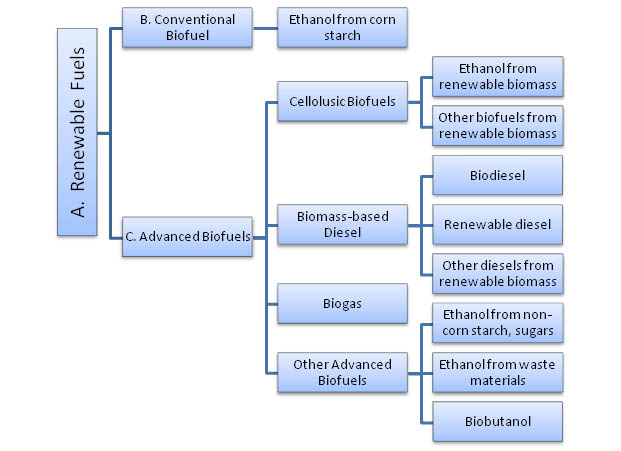
The chart below illustrates the various biofuels which qualify under RFS2. As explained above, biodiesel fits into several categories: biomass-based diesel, advanced biofuels, and renewable fuels.

 
RFS2 Fuels Chart


Other Criteria


There are a couple of other criteria to keep in mind. You’ll notice the definitions above make reference to “renewable biomass” and “greenhouse gas reduction.” Biofuels sold under RFS2 must be derived from renewable biomass, and must meet certain greenhouse gas reduction targets. The EPA has specific ways to determine whether a fuel meets these criteria.


Renewable Biomass


Under RFS 2 (see p. 14681), renewable biomass is defined as:

  1. Planted crops and crop residue harvested from agricultural land cleared or cultivated at any time prior to December 19, 2007 that is either actively managed or fallow, and nonforested.

  2. Planted trees and tree residue from actively managed tree plantations on non-federal land cleared at any time prior to enactment of this sentence, including land belonging to an Indian tribe or an Indian individual, that is held in trust by the United States or subject to a restriction against alienation imposed by the United States.

  3. Animal waste material and animal byproducts.

  4. Slash and pre-commercial thinnings that are from non-federal forestlands, including forestlands belonging to an Indian tribe or an Indian individual, that are held in trust by the United States or subject to a restriction against alienation imposed by the United States, but not forests or forestlands that are ecological communities with a global or State ranking of critically imperiled, imperiled, or rare pursuant to a State Natural Heritage Program, old growth forest, or late successional forest.

  5. Biomass obtained from the immediate vicinity of buildings and other areas regularly occupied by people, or of public infrastructure, at risk from wildfire.

  6. Algae

  7. Separated yard waste or food waste, including recycled cooking and trap grease.


In order to protect forests and other ecologically sensitive land, biomass taken from the following types of land is NOT included in the EPA's definition of renewable biomass: 1. forestland; 2. rangeland; 3. other ecologically sensitive land. In addition, crops or residues from land cleared for farming after December 19, 2007 are not eligible as renewable biomass.


Greenhouse Gas Reduction


The Renewable Fuel Standard "marks the first time that greenhouse gas emission performance is being applied in a regulatory context for a nationwide program," according to the RFS2 Final Rule(see p. 14670). In other words, for the first time a federal program is regulating transportation fuel according to its greenhouse gas emissions.

The EPA has done life cycle analyses for biodiesel from specific feedstocks, to determine if the fuel reduces greenhouse gas emissions by at least 50%, compared to petroleum diesel fuel.

As of February 2011, the EPA has approved biodiesel from soy oil, oil from annual cover crops, algae oil, waste grease, animal fats, non-food grade corn oil, and canola oil, as meeting the 50% greenhouse gas reduction necessary to be sold as "advanced biofuel" or "biomass-based diesel".

Keep in mind that individual plants proposing to use these approved feedstocks still need to be evaluated by the EPA to determine whether their processes are compliant with the 50% greenhouse gas reduction.


The EPA is currently reviewing data on palm oil biodiesel to see if this can be approved.

Biodiesel that does not meet the 50% target but does meet a 20% greenhouse gas reduction could still be sold under the "renewable fuel" definition. Thus far, all the biodiesel feedstocks that have gone through the EPA process meet the 50% reduction, so this is not really an issue as of 2011.

Biodiesel that does not meet even a 20% GHG reduction, or biodiesel from feedstock that has not yet gone through the life cycle analysis modeling process, could be sold and generate RINs as "renewable fuel" under the "grandfather" provision, as explained in the RFS2 Q & A page:

"Biodiesel facilities may qualify for the exemption under 80.1403(c) from the requirement that renewable fuels achieve a minimum 20% GHG reduction as compared to baseline fuels if they 'commenced construction' prior to the date of enactment of EISA. . . . However, the fuel must meet all other requirements of the definitions in 80.1401, including the renewable biomass requirement."


In other words, if the biodiesel plant commenced construction before December 19, 2007, and if this plant makes biodiesel from a feedstock that has not yet gone through the EPA's approval process, this biodiesel could still be sold and generate RINs under the "renewable fuel" category. In this case the biodiesel would generate 1 RIN per gallon. There is no "grandfather" provision for advanced biofuels or biomass-based diesel.


More about RINs


A RIN is a 38-digit number that is assigned to each batch of biodiesel that is sold. Biodiesel with a RIN sells for more money than biodiesel without a RIN, because petroleum refiners must show that they have obtained a certain amount of RINs in order to prove that they incorporated biofuels into their fuel.

RINs are generated when eligible renewable fuels are produced, or when eligible renewable fuels are imported. The producer or importer registers with the EPA and goes through an approval process. Then, when biofuels are produced or imported, the EPA assigns the RIN numbers. These RINs are sold with the fuel, and can only be separated when the fuel is blended with petroleum, or when a petroleum refiner or importer buys the renewable fuel. Once separated, these RINs can either be "retired" to show compliance with the law, or they can be sold separately.

When biodiesel is exported, the RINs must be separated and retired. They cannot be sold.

Fuel sold as "renewable fuel" (mostly corn-based ethanol at this point) carries 1 RIN per gallon.

Fuel sold as "advanced biofuel" or "biomass-based diesel" (biodiesel can fit into either category) carries 1.5 RINs per gallon. In other words, because biomass-based diesel is expected to achieve a greater greenhouse gas reduction than corn-based ethanol, it carries an "equivalence value" of 1.5 times that of ethanol.

There are also a few other categories of biomass-based diesel: "cellulosic diesel" and "renewable diesel." Cellulosic diesel is not being commercially produced at this point, but if it were commercially produced, producers would be able to participate in the RFS2 program. Renewable diesel is being produced by petroleum companies, who convert vegetable oil and animal fat to hydrocarbons instead of methyl esters. This renewable diesel is not sold but is simply blended into petro-diesel fuel. If it were sold in the marketplace, renewable diesel can also participate in the RFS2 program.

Cellulosic biodiesel is expected to achieve a 60% reduction of greenhouse gases and carries a RIN value of 1.7.

Handling Strong Bases in Biodiesel Production

Sodium and Potassium Hydroxides/Methoxides


Used to catalyze the transesterification reaction, sodium and potassium hydroxide are extremely corrosive.

The hydroxides are dry flakes or pellets and must be dissolved in methanol, which produces "methoxides" concentrated in methanol. The dust from the hydroxides is an airway irritant and will burn unprotected skin and eyes, especially when handled manually. Dissolving the hydroxides in alcohol is an exothermic reaction and can generate a considerable amount of heat. Stirring the liquid in an open container can produce a fine mist of liquid droplets. If this mist is accidentally inhaled, breathlessness and severe irritation of the respiratory tract can occur. Accidental swallowing can lead to major damage to the throat lining and digestive system. This methoxide liquid solution will kill nerve cells before pain can be felt.

When handling and mixing these materials, wear protective equipment, including

  • full-face shield

  • a respirator

  • impervious protective clothing.


In a commercial plant, the materials are mixed in a closed, nitrogen-blanketed tank. When mixing in the ambient atmosphere, always mix catalyst and methanol very slowly to prevent a sudden temperature rise and splashing. Mixing in a well-ventilated area is particularly important when using open-top vessels.

Store solid hydroxides in a cool, dry, well-ventilated area, and avoid any possible water contact. Store the methoxide mixture in a tightly closed container in a cool, dry, well-ventilated area away from sources of heat and moisture. Combustion of this product generates toxic fumes. In case of fire, do not use water or foam. Use dry chemical, soda ash, lime, or sand, or withdraw from the area and let the fire burn.

Be aware that empty containers of hydroxides and/or methoxides may contain hazardous residues.

An emergency plan can avoid confusion should incident occur.

First Aid for Strong Bases:  get help immediately.

Inhalation: Move victim to fresh air; if not breathing, give artificial respiration.

Ingestion: Get medical aid; do not induce vomiting; give large quantities of milk or water unless unconscious.

Skin Contact: Flush with plenty of water immediately for at least 15 minutes; remove contaminated clothing.

Eye Contact: Immediately flush with water from eye-wash station or portable eye-wash container for at least 15 minutes, lifting the eyelids occasionally.

Oilseed Handling for Biodiesel Production

Many types of oil-bearing seeds and nuts can be used to make biodiesel. Commonly used feedstocks for the production of biodiesel include soybean, rapeseed/canola, used (waste) vegetable oils, and tallow/lard (animal fat). Mustard biodiesel is being studied at the University of Idaho, and Montana State University is conducting research on camelina for biodiesel production.Safflower, sunflowers, corn, and even hazelnut produce oil that could be used for biodiesel. Warm-climate tree oils such as palm oil, coconut, and jatropha are used as biodiesel feedstocks in some parts of the world.

Feedstocks for biodiesel are generally chosen based on price and performance (some are better for cold temperature conditions). All the above feedstocks have alternative uses and markets, so the prices can fluctuate depending on demand. In addition to the oil, seeds and nuts provide food, fiber, and other supplements for animal and human nutrition, as well as raw material for other applications.

In general, seeds and nuts should be harvested at peak maturity, stored in cool and dry conditions, and processed quickly to avoid degradation. The seeds should be processed close to the time the oil will be made into biodiesel.

Prior to oil pressing or extraction, seeds must be cleaned, screened, and, in some cases, dehulled and hammered or pulverized. The meal or cake in some cases must be heated to deactivate toxic components before use as animal feed.

Energy Life Cycle Analysis of Biodiesel

Energy life cycle analysis (EgLCA), also popularly known as "energy balance," accounts for the amount and type of energy used in the production of a fuel and compares that to the amount of energy contained in the resulting fuel.

We prefer the term "energy life cycle analysis" over "energy balance" because the term "energy balance" could mislead people into thinking that the input and output energy should be balanced, or equal. Because EgLCA is usually concerned with the input of fossil fuel energy versus the energy in the fuel itself, usually the input of solar energy (captured during photosynthesis) is not accounted for.

The process is also called “energy life-cycle assessment.”

Energy life cycle analysis is different from Environmental Life Cycle Analysis (EvLCA), which measures the environmental impact or benefits of a product compared to other similar products. In other words, EgLCA is an energy accounting, whereas EvLCA is an accounting of greenhouse gas and other pollutants.


A Brief Review of Previous Energy Life-Cycle Analysis Studies


Several studies have been done on the energy life cycle of biodiesel. These studies often have widely differing results because the inputs were different, the assumptions were different, and the energy inputs were divided differently among the various products of the process (biodiesel, oilseed meal, and crude glycerin).

The “energy inputs” of biodiesel production include not only the energy used in the process of converting oil to biodiesel, but also could include the energy required to grow the soybeans, such as agricultural machinery use, and fertilizer and pesticide use; the energy required to transport the soybeans to the biodiesel production plant; and the energy required to construct the biodiesel plant. This is what makes EgLCA in general difficult and somewhat controversial. The energy contained in some of the consumables such as building material is hard to estimate. In addition, there is no specific rule on where to stop the accounting process: for example, should we include the energy used to construct the road to transport the soybeans to the crushing plant?

If the system boundaries (that is, what is included and what is excluded from accounting) were different for two comparable biofuel systems, comparing their performance would not only be meaningless, but also dangerously misleading. Therefore, before the results of an energy life-cycle analysis are interpreted, the assumptions and system boundaries should be carefully examined.

In addition, different studies have allocated the energy inputs differently to the oil and the meal resulting from extracting oil from soybeans. This can also produce widely differing results.

Because of the difficulties of comparing the various studies, and because some of the earlier studies used data that are no longer relevant to the biodiesel industry, the United States Department of Agriculture (USDA) publishes updated studies as new data becomes available. The latest study was published in 2011: Energy Life-Cycle Assessment of Soybean Biodiesel Revisited. This is an update of a 2009 study: Energy Life-Cycle Assessment of Soybean Biodiesel, which in turn updated a previous USDA study from 1998, Life Cycle Inventory of Biodiesel and Petroleum Diesel for Use in an Urban Bus, which was the first comprehensive life-cycle assessment of biodiesel.


Latest Study: Soy Biodiesel Yields 5.54 Times the Energy of the Fossil Energy Inputs


The 1998 USDA study found that soy biodiesel yielded 3.2 times the fossil energy needed to produce the fuel. The 2011 study found that soy biodiesel yields 5.54 times the fossil energy needed to produce it (Sheehan et al., 1998, p. v; Pradhan et al., 2011, p. 1031).

Why the difference? One reason is that soybean production takes less energy now — farmers have largely adopted a no-till approach to soybean planting, which requires less fuel. Soybean yields have improved, and newer soybean crushing facilities are more energy efficient.

Soybean agriculture and processing are expected to become even more energy efficient in the future, and so the ratio of energy input to output of biodiesel ought to continue to improve.


Why is Energy Life-Cycle Analysis Important?


Much of the attention directed toward biofuels production focuses on the perception that biofuels are renewable and have superior environmental attributes compared to their petroleum counterparts. Based on these assumptions, the government and private businesses have spent a lot of resources to develop the infrastructure for biodiesel.

The renewability assumption would be unarguably true if there were no nonrenewable resources such as diesel and gasoline used in the biodiesel production process. However, that is not the case. Some amount of nonrenewable resources are consumed in agriculture, either directly or indirectly.

The use of nonrenewable fossil fuel obviously makes biodiesel less than 100% renewable. The amount of renewability could range from 0% renewable to 100% renewable. If we use as much or more nonrenewable energy to make biodiesel, then the biodiesel is 0% renewable. At the other extreme, if no nonrenewable fuel is used, then the biodiesel is 100% renewable. So we cannot tell for sure without doing some basic calculations how renewable biodiesel is.

Now let us take a step back and revisit our assumption that biodiesel is a renewable fuel. What if the assumptions were wrong and the fuel turned out to be nonrenewable? In that case, biodiesel would take in more fossil energy than it delivers, and it would therefore be an environmentally unfriendly fuel. It would not help the agricultural community in the long run, as the fuel would not be sustainable.

Energy life-cycle analysis provides a way to compare the relative benefits among alternative fuel sources, helps identify a subsystem that may need improvement, and helps make a go or no-go decision for a particular biofuel. A biofuel that is developed after a well-conducted EgLCA with positive results will ensure benefit to the society, country, and the world. Without EgLCA, money and resources may be wasted by investing in something that turns out not to be beneficial.

It should be noted that while assessing biodiesel for renewability, only the nonrenewable fuel that went into production is counted. This is different from the net energy return, which is the comparison of total energy produced by biodiesel compared to total energy (renewable + nonrenewable) that went into making it. If total energy input of a biofuel is greater than the energy produced from the biofuel, then it is called a net negative system.

Although a net negative system sounds not so good, this in itself may not be a bad thing because it may be desirable to convert low-value agricultural products such as corn stover and forest wastes into useful liquid fuel. In such cases, the benefit should be justified separately. Therefore, in order to have a correct assessment of the benefits from biodiesel, or biofuel in general, an energy life-cycle assessment must be conducted.


Methods of Energy Life-Cycle Analysis


Energy life-cycle analysis, like any other life-cycle analysis, should follow the general guidelines established by ISO (2006). ISO 14040 defines LCA as a four-step process:

  1. the goal and scope definition phase,

  2. the inventory analysis phase,

  3. the impact assessment phase, and

  4. the interpretation phase.


ISO (2006) further states that the scope, including the system boundary and level of detail, of an LCA depends on the subject and the intended use of the study. The depth and the breadth of LCA can differ considerably depending on the goal of a particular LCA. Therefore, even though there is a general guideline provided in ISO 14040, an individual study could vary significantly depending on how the system boundary was set.

The system boundary defines what is included and excluded in a model. It is almost impossible to track all the energy used over the life cycle of a product because each input has a life cycle of its own, and in turn the inputs required to produce an input each have a unique life cycle. Therefore, a researcher must limit the system boundary used in the analysis and still provide a meaningful EgLCA.

For example, considerable discrepancies regarding the system boundary definition were observed among four models of biodiesel energy life-cycle analysis. After careful consideration of these models, Pradhan et al. (2008) tried to streamline the system boundary and the definition of EgLCA so that the final results are comparable. Their study proposed a modified system boundary based on the merits and demerits of the earlier models to answer the biodiesel renewability question. The following observations were made after carefully examining each of the four system boundaries:

  1. Human food consumption should not be included as an energy input from labor because it does not aid in answering the renewability question, and it creates a circular reference within the system boundary. In any case, since the calorific value provided by human labor accounts for a negligible fraction of the total energy, this can be excluded without introducing much error.

  2. Life-cycle energy (not the calorific value) should be assigned as the equivalent energy for all the inputs. Life-cycle energy is the energy consumed in producing a specific input.

  3. Energy associated with inputs, including machinery, fertilizer, pesticides, lime, chemicals, liquid fuel, electricity, and other fuels used in production and transportation and processing should be included.

  4. Energy required for building and maintaining the biodiesel infrastructure, such as a biodiesel plant, should be included and amortized per unit of biofuel production.

  5. Each co-product should share a portion of the energy input according to either their proportion by weight of the total output (i.e., their mass fraction), or their economic value. The choice depends on the type of research question being answered. For renewability analysis, distributing the energy input based on the mass fraction of the co-product is helpful in determining the energy balance. On the other hand, distributing the energy input based on the economic value of the co-product is suitable for analyzing economic viability of the energy production system.

  6. FER (fossil energy ratio) as defined in the following equation can be used to quantify the renewability of the biodiesel.


 FER=\frac{\mbox{Energy output from biodiesel}}{\mbox{Biodiesel share of nonrenewable energy input}}

Algae for Biofuel Production

Research is examining microalgae, 20 to 80 percent oil by dry weight biomass, as a biofuel energy crop. Learn about algae production in ponds and photobioreactors, yields, costs and challenges to this exciting new feedstock for biodiesel production.


Introduction Contents


Introduction
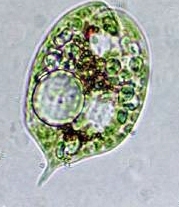


Algae are organisms that grow in aquatic environments and use light and carbon dioxide (CO2) to create biomass. There are two classifications of algae: macroalgae and microalgae. Macroalgae, which are measured in inches, are the large, multi-cellular algae often seen growing in ponds. These larger algae can grow in a variety of ways. The largest multicellular algae are called seaweed; an example is the giant kelp plant, which can be more than 100 feet long. Microalgae, on the other hand, are measured in micrometers and are tiny, unicellular algae that normally grow in suspension within a body of water.

Image of microalgae.
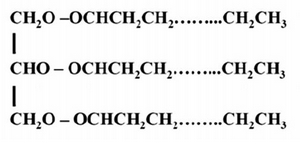


Figure 1. Molecular structure of tricylglycerols


Microalgae have long been recognized as potentially good sources for biofuel production because of their relatively high oil content and rapid biomass production. Microalgae grow very quickly compared to terrestrial crops; the practice of algal mass culture can be performed on non-arable lands using non-potable saline water and waste water. Thus, use of microalgae as an alternative biodiesel biofuel feedstock is gaining increasing interest from researchers, entrepreneurs, and the general public.


Current Potential for Use as a Biofuel


Algal biomass contains three main components: carbohydrates, proteins, and lipids/natural oils. Because the bulk of the natural oil made by microalgae is in the form of tricylglycerol (Figure 1), which is the right kind of oil for producing biodiesel, microalgae are the exclusive focus in the algae-to-biodiesel arena. In addition to biodiesel, microalgae can also be used to generate energy in several other ways. Some algal species can produce hydrogen gas under specialized growth conditions. The biomass from algae can also be burned similar to wood or anaerobically digested to produce methane biogas to generate heat and electricity. Algal biomass can also be treated by pyrolysis to generate crude bio-oil.


Biology and Adaptation


Microalgae grow quickly and contain high oil content compared with terrestrial crops, which take a season to grow and only contain a maximum of about 5 percent dry weight of oil, (Chisti, 2007). They commonly double in size every 24 hours. During the peak growth phase, some microalgae can double every three and one-half hours (Chisti, 2007). Oil content of microalgae is usually between 20 percent and 50 percent (dry weight, Table 1), while some strains can reach as high as 80 percent (Metting, 1996; Spolaore et al., 2006). This is why microalgae are the focus in the algae-to-biofuel arena.


Table 1. Oil content of microalgae.Table 2. Oil yields based on crop type.


MicroalgaOil content 
(% dry weight)
Botryococcus braunii25-75
Chlorella sp.28-32
Crypthecodinium cohnii20
Cylindrotheca sp.16-37
Nitzschia sp.45-47
Phaeodactylum tricornutum20-30
Schizochytrium sp.50-77
Tetraselmis suecia15-23


CropOil yield (gallons/acre)
Corn18
Soybeans48
Canola127
Jatropha202
Coconut287
Oil Palm636
Microalgae6283-14641


Production and Agronomic Information


Most microalgae are strictly photosynthetic — that is, they need a light and carbon dioxide as energy and carbon sources. This culture mode is usually called photoautotrophic. Some algae species, however, are capable of growing in darkness and using organic carbons such as glucose or acetate as energy and carbon sources. This culture mode is termed heterotrophic. Due to high capital and operational costs, heterotrophic algal culture is hard to justify for biodiesel production. In order to minimize costs, algal biofuel production usually relies on photoautotrophic culture that uses sunlight as a free source of light.

Phototrophic microalgae require light, carbon dioxide, water, and inorganic salts to grow. The culture temperature should be between 15 and 30°C (~60-80°F) for optimal growth. The growth medium must contribute the inorganic elements that help make up the algal cell, such as nitrogen, phosphorus, iron, and sometimes silicon (Grobbelaar, 2004). For large-scale production of microalgae, algal cells are continuously mixed to prevent the algal biomass from settling (Molina Grima et al., 1999), and nutrients are provided during daylight hours when the algae are reproducing. However, up to one-quarter of algal biomass produced during the day can be lost through respiration during the night (Chisti, 2007).

A variety of photoautotrophic-based microalgal culture systems are available. For example, the algae can be grown in suspension or attached on solid surface. Each system has its own advantages and disadvantages. Currently, the suspension-based open ponds and enclosed photobioreactors are commonly used for algal biofuel production. In general, an open pond is simply a series of raceways outside, while a photobioreactor is a sophisticated reactor design which can be placed indoors in a greenhouse, or outdoors. The details of the two systems are described below.
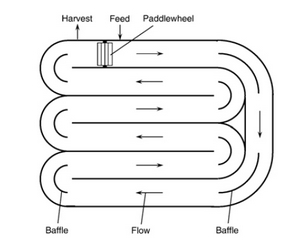


Figure 2. Schematic open pond system for algal culture.


Open ponds: Open ponds are the oldest and simplest systems for mass cultivation of microalgae. In this system, the shallow pond is usually about 1 foot deep; algae are cultured under conditions identical to their natural environment. The pond is designed in a raceway configuration, in which a paddlewheel provides circulation and mixing of the algal cells and nutrients (Figure 2). The raceways are typically made from poured concrete, or they are simply dug into the earth and lined with plastic to prevent the ground from soaking up the liquid. Baffles in the channel guide the flow around bends in order to minimize space. The system is often operated in a continuous mode — that is, the fresh feed containing nutrients including nitrogen phosphorus and inorganic salts is added in front of the paddle wheel. Algal broth is harvested behind the paddle wheel after it has circulated through the loop (Figure 2). Depending on the nutrients required by algal species, a variety of wastewater sources can be used for the algal culture, such as dairy/swine lagoon effluent and municipal wastewater. For some marine types of microalgae, seawater or water with high salinity can be used.

Although open ponds cost less to build and operate than enclosed photobioreactors, this culture system has its intrinsic disadvantages. Since these are open-air systems, they often experience a lot of water loss due to evaporation. Thus, microalgae growing in an open pond do not uptake carbon dioxide efficiently, and algal biomass production is limited (Chisti, 2007). Biomass productivity is also limited by contamination with unwanted algal species as well as other organisms from feed. In addition, optimal culture conditions are difficult to maintain in open ponds, and recovering the biomass from such a dilute culture is expensive (Molina Grima et al., 1999).
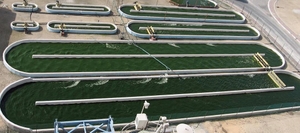


Image of an open pond system.
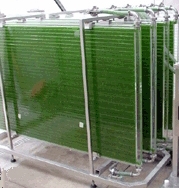


Image of an algae photobioreactor.


Enclosed photobioreactors:Enclosed photobioreactors have been employed to overcome the contamination and evaporation problems encountered in open ponds (Molina Grima et al., 1999). These systems are made of transparent materials and generally placed outdoors for illumination by natural light. The cultivation vessels have a large surface area-to-volume ratio.

The most widely used photobioreactor is a tubular design, which has a number of clear transparent tubes, usually aligned with the sun rays (Figure 3). The tubes are generally less than 10 centimeters in diameter to maximize sunlight penetration (Chisti, 2007). The medium broth is circulated through a pump to the tubes, where it is exposed to light for photosynthesis, and then back to a reservoir. The algal biomass is prevented from settling by maintaining a highly turbulent flow within the reactor, using either a mechanical pump or an airlift pump (Chisti, 2007). A portion of the algae is usually harvested after the solar collection tubes. In this way, continuous algal culture is possible (Chisti, 2007). In some photobioreactors, the tubes are coiled spirals to form what is known as a helical tubular photobioreactor, but these sometimes require artificial illumination, which adds to the production cost. Therefore, this technology is only used for high-value products, not biodiesel feedstock.
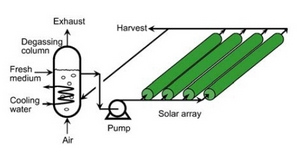


Figure 3. Schematic tubular photobioreactor.


The photosynthesis process generates oxygen. In an open-raceway system, this is not a problem as the oxygen is simply returned to the atmosphere. However, in the closed photobioreactor, the oxygen levels will build up until they inhibit and poison the algae. The culture must periodically be returned to a degassing zone, an area where the algal broth is bubbled with air to remove the excess oxygen. Also, the algae use carbon dioxide, which can cause carbon starvation and an increase in pH. Therefore, carbon dioxide must be fed into the system in order to successfully cultivate the microalgae on a large scale. Photobioreactors may require cooling during daylight hours, and the temperature must be regulated at night hours as well. This may be done through heat exchangers, located either in the tubes themselves or in the degassing column.

The advantages of the enclosed photobioreactors are obvious. They can overcome the problems of contamination and evaporation encountered in open ponds (Molina Grima et al., 1999). The biomass productivity of photobioreactors can be 13 times greater than that of a traditional raceway pond, on average (Chisti, 2007). Harvesting of biomass from photobioreactors is less expensive than that from a raceway pond, since the typical algal biomass is about 30 times as concentrated as the biomass found in raceways (Chisti, 2007). However, enclosed photobioreactors also have some disadvantages. For example, the reactors are more expensive and difficult to scale up. Moreover, light limitation cannot be entirely overcome since light penetration is inversely proportional to the cell concentration. Attachment of cells to the tube walls may also prevent light penetration. Although enclosed systems can enhance the biomass concentration, the growth of microalgae is still suboptimal due to variations in temperature and light intensity.

Harvesting: After growing in open ponds or photobioreactors, the microalgae biomass needs to be harvested for further processing. The commonly used harvest method is through gravity settlement, or centrifuge. The oil from the biomass will be removed through solvent extraction and further processed into biodiesel.


Potential Yields


Depending on the culture systems used (opens ponds vs.enclosed photobioreactors), microalgae production yield is expressed as the amount of biomass per unit of surface area (for open ponds), or per unit of reactor volume (for enclosed photobioreactors). A typical open pond can produce 5 to 10 grams of biomass (dry basis) per m2 of surface area per day, which translates to 7.4 to 14.8 tons (dry biomass) per acre per year. Some researchers reported that biomass yield can be as high as 50 g/m2 per day, i.e., 74 ton biomass/m2 per year in an open pond. For enclosed photobioreactors, the biomass yield can be approximately 2 to 3 gram/L per day, i.e., 0.73-1.05 ton (dry biomass)/m3 per year. The oil content of the dry biomass is a highly variable parameter (Table 1), while some strains can reach as high as 80 percent (Metting 1996; Spolaore et al. 2006). Table 2 lists the potential yields of oil produced by various crops and compares these values to oil yields from an open pond growing microalgae.


Production Challenges


The U.S. Department of Energy (DOE) has performed a significant effort to pursue the commercial production of algal biofuel through its ASP program from the 1980s to 1990s. After 16 years of research, DOE concluded that the algal biofuel production was still too expensive to be commercialized in the near future. Three major factors limiting commercial algal production exist: the difficulty of maintaining desirable species in the culture system, the low yield of algal oil, and the high cost of harvesting the algal biomass. DOE concluded that there was a significant amount of land, water, and CO2 to support the algal biofuel technology.

In recent years, algal biofuel production has gained renewed interest. Both university research groups and start-up businesses are researching and developing new methods to improve the algal process efficiency with a final goal of commercial algal biofuel production. The research and development efforts can be categorized into several areas:

  1. Increasing oil content of existing strains or selecting new strains with high oil content.

  2. Increasing growth rate of algae.

  3. Developing robust algal-growing systems in either an open-air environment or an enclosed environment.

  4. Co-product development other than the oil.

  5. Using algae in bioremediation.

  6. Developing an efficient oil-extraction method.


One way to achieve these goals is to genetically and metabolically alter algal species. The other is to develop new or improve existing growth technologies so that the same goals listed above are met. However, it should be noted that this new wave of interest has yet to result in a significant breakthrough.


Estimated Production Cost


The production cost of the algal oil depends on many factors such as the yield of biomass from the culture system, the oil content, the scale of production systems, and the cost of recovering oil from algal biomass. Currently, algal oil production is still far more expensive than petroleum diesel fuels. For example, Chisti (2007) estimated the production cost of algae oil from a photobioreactor with an annual production capacity of 10,000 tons per year. Assuming the oil content of the algae to be around 30 percent, the author determined a production cost of $2.80/L ($10.50/gallon) of algal oil. This estimation did not include the costs of converting algal oil to biodiesel, or the distribution and marketing cost for biodiesel and taxes. At the same time, the petroleum diesel price was $2.00 to $3.00 per gallon.

Whether algal oil can be an economic source for biofuel in the future is still highly dependent on the petroleum oil price. Chisti (2007) used the following equation to estimate the cost of algal oil where it can be a competitive substitute for petroleum diesel where Calgal oil is the price of microalgal oil in $/gallon, and Cpetroleum is the price of crude oil in $/barrel:

Calgal oil = 25.9 x 10⁻³ Cpetroleum

This equation assumes that algal oil has roughly 80 percent of the caloric energy value of crude petroleum. For example, with petroleum price at $100/barrel, algal oil should cost no more than $2.59/gallon in order to be competitive with petroleum diesel.


Environmental and Sustainability Issues


In addition to producing biofuel, algae can also be explored for a variety of other uses, such as fertilizer and pollution control. Certain species of algae can be land-applied for use as an organic fertilizer, either in its raw or semi-decomposed form (Thomas, 2002). Algae can be grown in ponds to collect fertilizer runoff from farms; the nutrient-rich algae can then be collected and reapplied as fertilizer, potentially reducing crop-production costs. In wastewater-treatment facilities, microalgae can be used to reduce the amount of chemicals needed to clean and purify water.

In addition, algae can also be used for reducing the emissions of CO2 from power plants. Coal is, by far, the largest fossil energy resource available in the world. About one-fourth of the world’s coal reserves reside in the United States. Consumption of coal will continue to grow over the coming decades, both in the United States and the world. Through photosynthetic metabolism, microalgae absorb CO2 and release oxygen. If an algae farm is built close to a power plant, CO2 produced by the power plant could be utilized as a carbon source for algal growth, and the carbon emissions would be reduced by recycling waste CO2 from power plants into clean-burning biodiesel.